


So, what’s a biobank actually for?
The most obvious answer is to preserve biological samples, but there’s much more to it than that.


“We aren’t stamp collectors. My worry is the samples that have not yet been analyzed. I would like each one of them to be useful.”
Alessandro De Grandi, Genetist
Numbers from the Biobank
1.068.058
samples in storage
354
studies authorized to date
Biobanks for therapy and for research

Composition of blood. 55% plasma: mainly water, then proteins, hormones, gases, waste products. <1%: ring of white blood cells and platelets. 45%: red blood cells.
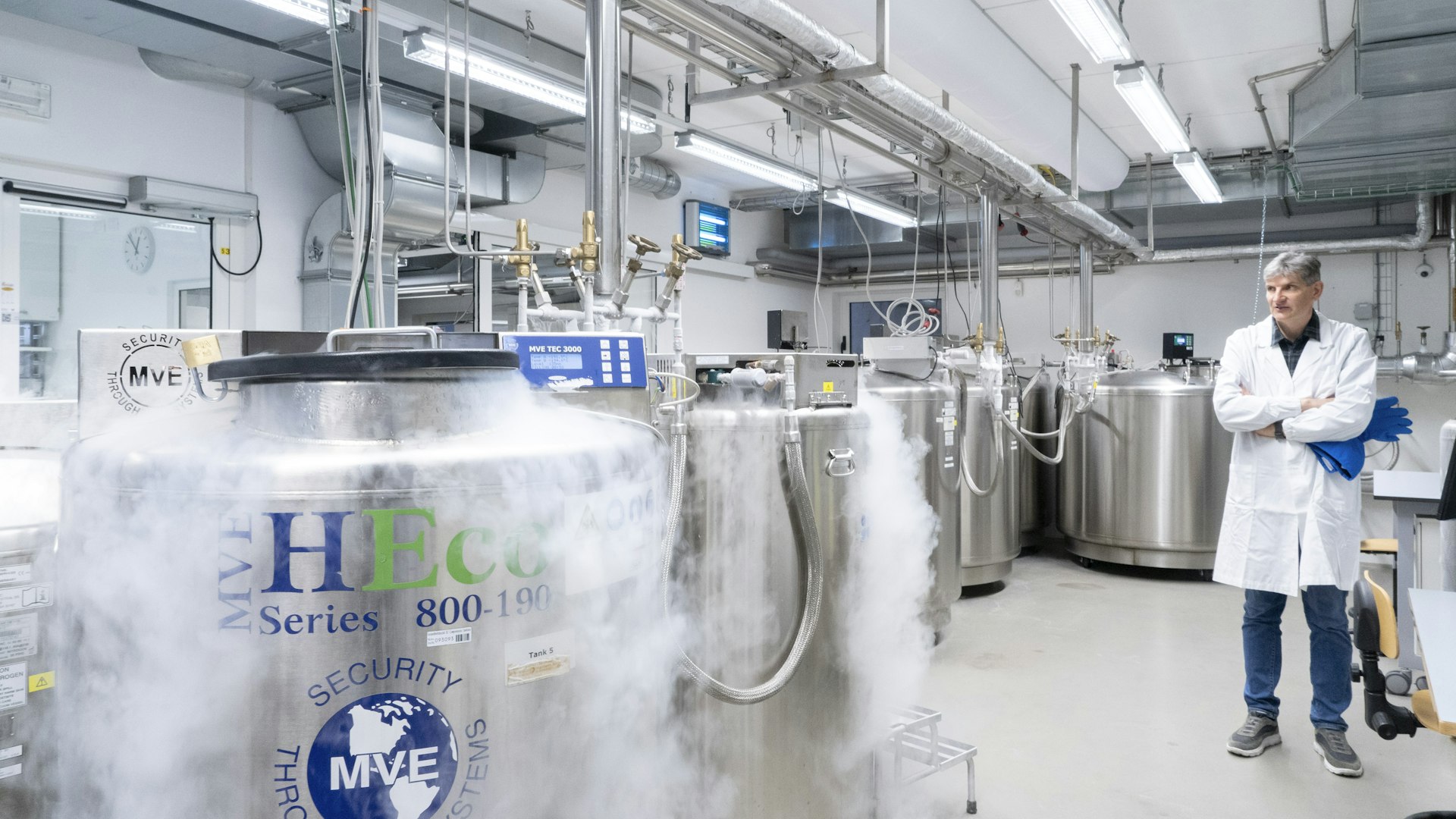
In Eurac Research’s biobank in Bolzano, there are five very low-temperature refrigerators. They contain whole blood cells, white blood cells and platelets. The temperature ranges from -80 to -197 °C and they are cooled with nitrogen. About 10,000 litres of nitrogen is needed every year for this.
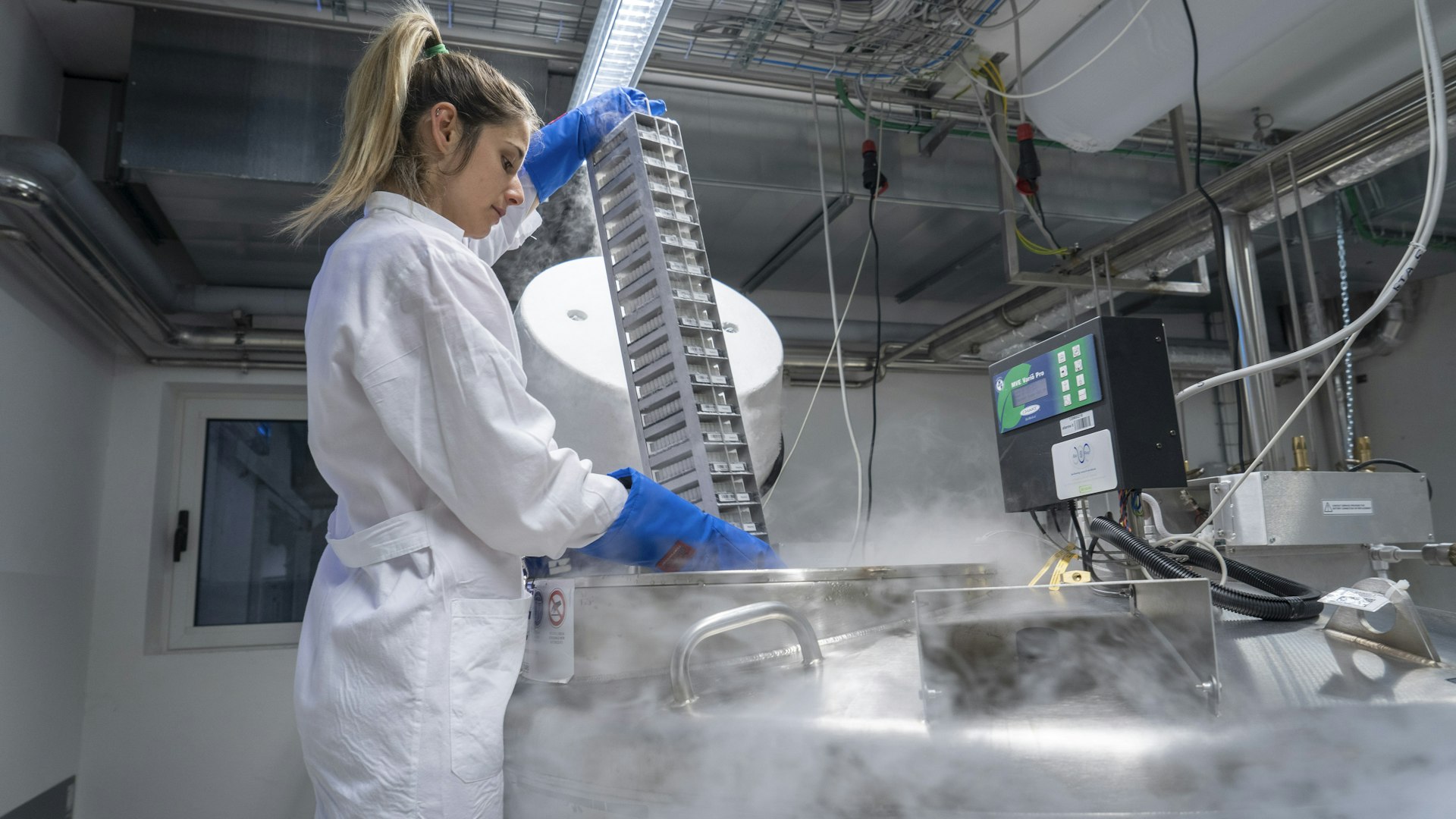
Every year, spring cleaning is also done in the biobank: tanks are checked and if there are any empty spaces left, the samples are redistributed in a more orderly manner.
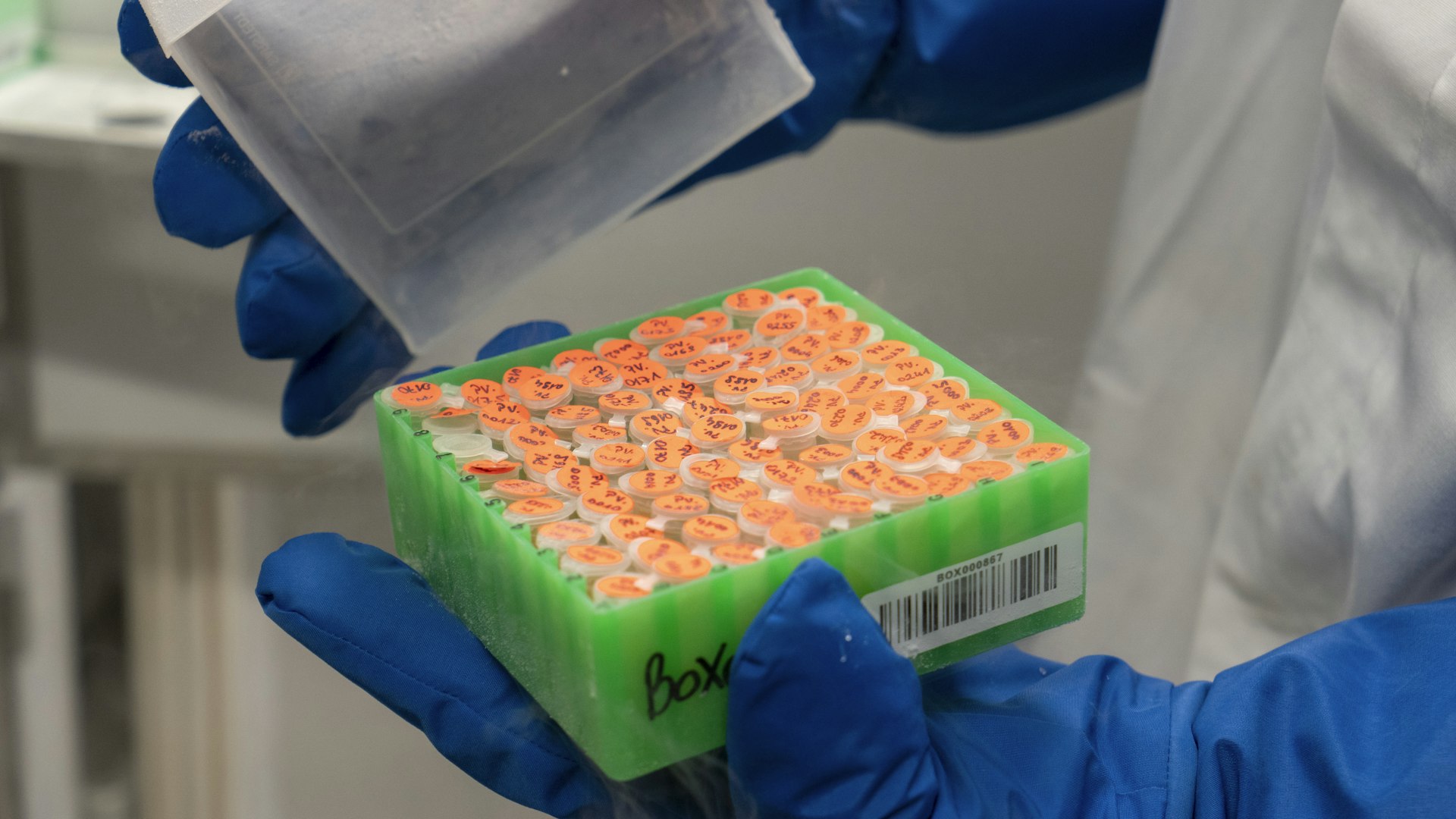
The oldest samples stored in the Bolzano biobank are more than 20 years old and come from the epidemiological MICROS study, which collected samples from around 1,500 people from Vinschgau/Venosta in 2002.
A combination of data
“We can provide both data and samples, although with the actual samples we are more cautious because they are a finite resource.”
Alessandro De Grandi, Genetist
Privacy and international geopolitics
The samples stored in the freezers are marked with so called “2D codes” that allow the identity of the person to be traced in case of need. However, this can only be decrypted by several security steps.








 My cookie preferences