


Whose body, whose choice? Women’s autonomy, politics and the right to abortion
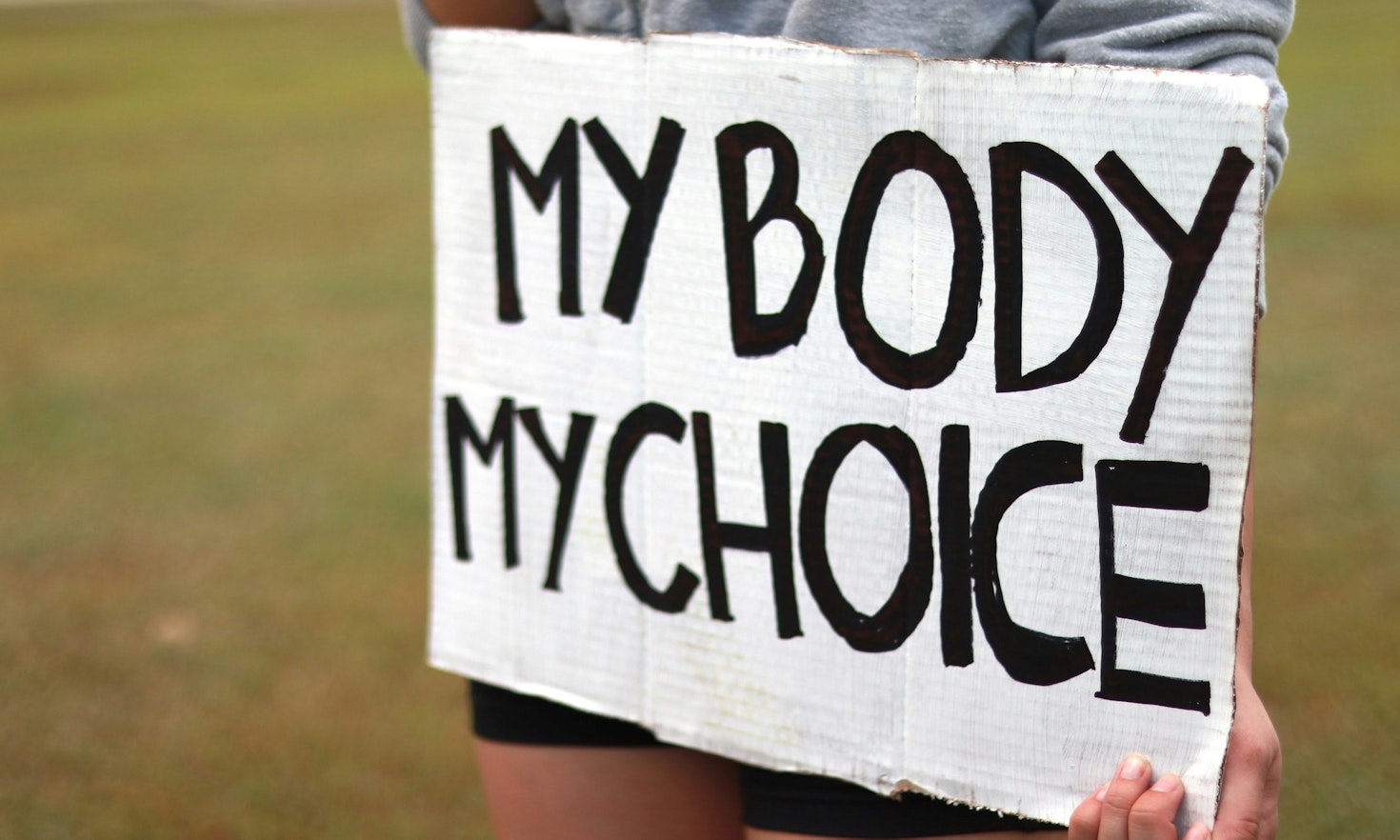
Across the world, abortion is one of the most contested issues of women’s rights. The overturning of Roe v. Wade in the United States marked a huge step backwards, and Europe is far from being immune: with the rise of far-right movements, efforts to roll back abortion rights are increasing in Hungary, Italy, and beyond. The abortion debate is not just about medicine or law. Ultimately, it is about power: about who gets to decide over women’s bodies.
There is no universal right to abortion or reproduction under international law. Instead, legality of abortion and access depend on national law, which varies widely in terms of the gestational timeframe, as well as the waiting period and medical coverage of the abortion procedure itself. This is also true across the European Union. Abortion laws are often influenced by political ideology and instrumentalized by parties to win votes and mobilize supporters. This became particularly clear after last year’s polarizing debates during the U.S. presidential elections, where Republicans argued “pro-life” and Democrats “pro-choice”. More importantly, abortion decisions are always taken by people in power although these people are usually, by majority, men. This is especially true in countries where abortion rights are most restricted. When men dominate the spaces where decisions about women’s bodies are made, female bodily autonomy is confined within the limits set by others. This imbalance shows how deeply patriarchal power still shapes whose voices count - and whose lives are decided for them. Reproductive rights aretied to gender roles, which expect women to embody values of care and men to embody values of power and control.
Anti-abortion figures in Europe
Some European leaders seem to have made it their personal mission to micromanage women’s wombs. Across the continent, nationalist and conservative figures cast abortion as a threat - not just to “(traditional) family values”, but also to the very survival of the nation - and insist that women’s primary role is to reproduce. As Europe faces demographic shifts and falling birth rates, women are tasked with sustaining the population, whether they want to, or not.
Hungary under Viktor Orbán provides a textbook example of this ideology in action. Since 2012, the Hungarian Constitution has declared that “the life of the fetus shall be protected from the moment of conception”. In 2022, the government went further, introducing a decree that forces women seeking abortions to listen to the fetus’s heartbeat before accessing the procedure. For Orbán, women are not citizens with rights but “baby-machines”, whose reproductive labor is in service of the nation. Feminism and gender equality are not rights to be protected; in his worldview, they are threats to be contained, and a woman’s value is measured solely by her service as a mother.
Italy’s President Giorgia Meloni - self-proclaimed Christian mother and friend of Orbán - is certainly not a “girl’s girl” and no supporter of abortion rights. Under the leadership of her party, Fratelli d’Italia, the legislative approved a measure allowing anti-abortion activists, so-called “pro-life associations”, access to family counselling centers under the pretext of “supporting motherhood” however in reality, these groups often create pressure, intimidation, and moral judgment, instead of real practical support for choosing maternity. In addition, in Italy, only about 64 percent of hospitals provide wards where the procedure can be carried out. Access is further restricted by the high rate of moral objection among medical staff: over 70 percent of doctors, anesthetists, and nurses refuse to perform abortions, and, in the South, the percentage exceeds 80 percent. Women struggle to find a doctor willing to perform the procedure, face long waiting periods, or are forced to travel to other regions, if not abroad, all while politicians lecture them on family values.
Orbán and Meloni are not outliers; other nationalist parties share their ideas. In Germany, the far-right party Alternative für Deutschland, which almost doubled its seats in the Bundestagswahl this year, has called for abortion to remain a rare “absolute exception”, promoting instead a “welcome culture for children”. Their platform seeks to restrict access to termination solely to cases of rape or serious risks to the mother’s health.
Why these rights matter and should the EU step in?
So, let us reemphasize that abortion is a matter of equality; without the ability to decide if and when to have children, people capable of becoming pregnant cannot fully exercise bodily autonomy, self-determination, or even participate equally in society. Also, research is clear: legalizing abortion does not increase the number of abortions - it makes them safer. The World Health Organization writes, “when people with unintended pregnancies face barriers to attaining safe, timely, affordable, geographically reachable, respectful and non-discriminatory abortion care, they often resort to unsafe abortion”, which can result in serious mental and physical complications.
So why is the European Union, the project built on the values of freedom, democracy, equality, and human rights, not stepping in? Motions and declarations have been made – most notably, when the European Parliament voted in favor of including the right to abortion in the Charter of Fundamental Rights of the EU. However, amending the Charter would require unanimous agreement among all 27 member states, which, as already pointed out, seems very out of reach in today’s political environment.
But, the EU still has a foot in the door: public health is a shared competence, through which the EU can facilitate access to safer healthcare, promote best practices, and coordinate policies. Building on this, the European Citizens’ Initiative “My Voice, My Choice: For Safe and Accessible Abortion” calls on the European Commission to provide financial support for safe abortion care across the Union. It does not seek to harmonize national laws but proposes an opt-in mechanism that would allow willing Member States to offer services to those who lack access, with EU funds covering the costs of this solidarity effort. The initiative is simply asking the EU to do the bare minimum, and the Union should use this chance to uphold abortion access instead of leaving it to national ideologies.
Women’s rights are backsliding, and the EU cannot afford to stay silent.
Recommended Readings:
EPF SRHR Policy Atlas. (2025). European Abortion Policy Atlas. Sexual and Reproductive Rights Policy Atlas. https://abortion.srhrpolicyhub.org
Loguercio, L. (2022, October 12). Il referendum sull’aborto si è tenuto quarant’anni fa e, guardando alle ultime elezioni, meglio così. The Vision. https://thevision.com/politica/referendum-aborto-italia/
My Voice, My Choice: For Safe And Accessible Abortion. (2024). European Citizens’ Initiative. https://citizens-initiative.europa.eu/initiatives/details/2024/000004_en
Sata, R. (2022). In the Name of the Family . Heinrich-Böll-Stiftung. https://www.gwi-boell.de/en/2022/01/31/im-namen-der-familie-wie-populistinnen-ungarn-gegen-geschlechtergleichstellung

Martina Senoner
Martina Senoner is a trainee researcher at the Institute for Minority Rights. She holds a Bachelor’s degree in European Studies from The Hague University of Applied Sciences and an LLM in European Union Law from the European Law and Governance School. She has participated in numerous youth exchanges across Europe, while her studies have taken her to the Netherlands, Greece and France. Committed to the European project, Martina wants to address cross-border challenges like inequality through policy and research.
Discover
Making research visible.
Find the connected experts, projects, publications, and research areas behind this blog post.


This content is licensed under a Creative Commons Attribution 4.0 International license except for third-party materials or where otherwise noted.








 My cookie preferences