


8 April – International Roma and Sinti day: Europe’s largest minority and its governance in Italy
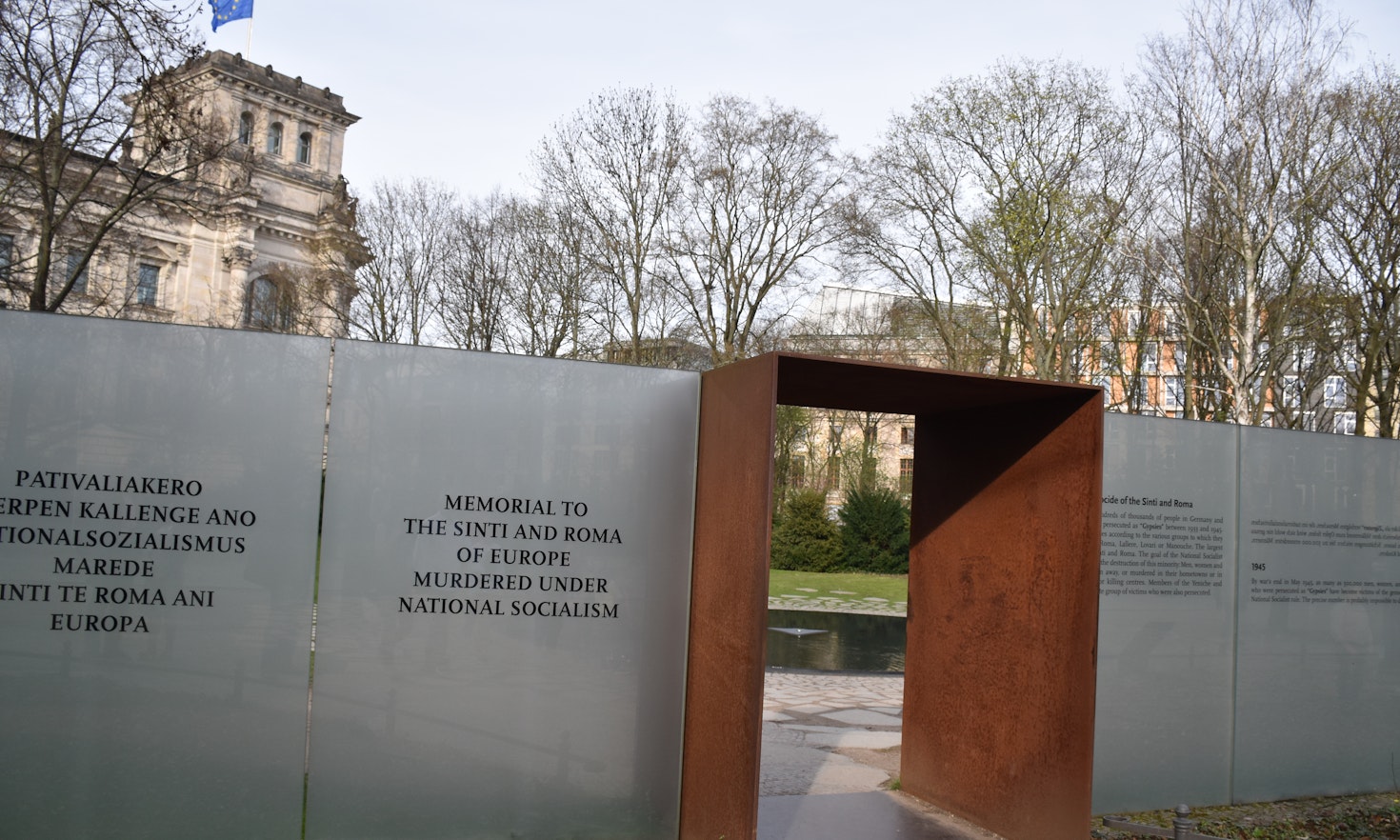
International Roma and Sinti Day, observed on 8 April, provides an opportunity to reflect on the status of one of Europe’s largest minorities, which continues to be characterised by structural weaknesses in terms of legal and political recognition. This contribution examines the position of Roma and Sinti communities in Europe and in Italy, with particular attention to the lack of recognition as a linguistic minority within the Italian legal system, ongoing legislative reform efforts, and a comparison with other European models of protection.
Introduction
International Roma and Sinti Day, celebrated annually on 8 April, was established in 1971 during the First World Romani Congress and represents a symbolic moment of recognition for one of the oldest and largest minorities in Europe.
Despite a centuries-long presence across the continent, Roma and Sinti communities continue to occupy an ambivalent position: numerically significant, yet politically and legally marginalised.
Europe’s Largest Minority
According to widely accepted estimates, the Roma population in Europe ranges between 10 and 12 million people, approximately half of whom live within the European Union. This makes the Roma the largest ethnic minority on the continent. However, this demographic relevance does not automatically translate into institutional recognition or social inclusion.
In Italy, estimates range between 120,000 and 180,000 individuals in communities thatinclude both long-established Italian citizens and more recent migrants. The majority of these communities are now sedentary, despite the persistent association with nomadism in public discourse.
The Lack of Legal Recognition in Italy
The central issue affecting Roma and Sinti communities in Italy concerns their lack of recognition as a linguistic minority.
Article 6 of the Italian Constitution provides for the protection of linguistic minorities; however, its implementing legislation (Law No. 482/1999) recognises only twelve “historical” minorities, based primarily on a territorial criterion.
This law constitutes the main instrument through which the Italian State protects historical linguistic minorities, while reaffirming the official status of the Italian language. Within this framework, the law provides a range of concrete measures, including the possibility of using minority languages in education, public administration, and—albeit in a limited form—in official acts, which nonetheless retain legal validity only in Italian.
The law also promotes the presence of minority languages in the media, supports cultural and publishing initiatives, and allows for the restoration of original place names and surnames. Specific funding is allocated to local authorities and educational projects, alongside measures aimed at combating discrimination. Overall, the system represents a comprehensive framework for linguistic and cultural protectionand it operates as a closed system, recognising a fixed list of communities selected on the basis of their historical presence and, above all, their settlement within clearly identifiable territories.
The twelve recognised linguistic minorities are:
- Albanians (Arbëreshë), mainly located in Southern Italy (Calabria, Sicily, Basilicata, Molise, Puglia, Campania);
- Catalans, in Alghero (Sardinia);
- Croats, in Molise (Acquaviva Collecroce, Montemitro, San Felice del Molise);
- Greeks (Griko/Grecanico), in Salento (Puglia) and Calabria;
- Slovenes, in Friuli Venezia Giulia (Trieste, Gorizia, border areas);
- French speakers, in the Aosta Valley;
- Franco-Provençal communities, in the Aosta Valley and the Alpine valleys of Piedmont;
- Occitans, in south-western Piedmont (Alpine valleys between Turin and Cuneo);
- Friulians, in Friuli Venezia Giulia (central area);
- Ladins, in the Dolomites (South Tyrol, Trentino, Veneto);
- German-speaking communities, in South Tyrol and Alpine linguistic enclaves (Trentino, Veneto, Friuli);
- Sardinians, in Sardinia.
It is precisely this criterion—territoriality—that constitutes the main limitation of the law. Non-territorialised minorities, such as Roma and Sinti, remain excluded from formal recognition, as they are considered to be dispersed across the national territory without a clearly defined geographical area.
This framework has led to significant consequences:
- the absence of formal recognition of the Romani language;
- the lack of cultural and linguistic protection mechanisms;
- weak institutional representation;
- a reliance on social policies rather than the recognition of collective rights.
Several international bodies, including the Council of Europe, have highlighted this gap and called on Italy to develop more inclusive protection frameworks.


Reform Attempts and Recognition Efforts
A significant attempt to address this normative gap is represented by the legislative proposal introduced by Senator Francesco Palermo (Bill proposal No. 770 developed during the 17th Legislature of the Italian Republic, which lasted from March 15, 2013 to March 22, 2018). This proposal introduces an innovative element into the Italian legal framework: the shift from a territorial model of minority protection to an individual one.
Unlike Law No. 482/1999, which grants linguistic rights only to minorities historically settled in defined areas, the proposal seeks to guarantee rights to Roma and Sinti as members of a cultural community, regardless of their geographic location.
The bill envisages the recognition of the Romani language, the promotion of cultural identity, the strengthening of social and political participation, and the adoption of inclusion measures in key sectors such as education, employment, and housing.
The proposal was not adopted, and no further discussions on the matter or new legislative proposals for the recognition of the Romani language have followed.
Although the proposal has not been adopted, it represents an important effort to adapt minority rights law to a “diffuse” reality and to align it more closely with European standards.
The European Framework: Comparative Models
At the European level, the condition of Roma communities is addressed through more articulated instruments. The European Union has adopted specific strategies for Roma equality, inclusion, and participation, recognising them as a significant transnational minority.
In several EU countries, more advanced forms of legal recognition exist:
- in Austria, Roma and Sinti are recognised as a national minority;
- in Sweden and Finland, they are included among official minorities with linguistic rights;
- in several Central and Eastern European countries, forms of political representation are in place, although often accompanied by persistent social challenges.
These examples demonstrate that effective protection mechanisms can be developed even in the absence of clear territorial anchoring, through more flexible and inclusive approaches.

Memory, Recognition, and Contemporary Challenges
Legal fragility is compounded by a historical memory that is often erased or forgotten. The genocide of Roma and Sinti under Nazism—known as the Porrajmos—resulted in hundreds of thousands of victims, yet this history was marginalized within European public narratives.
This historical amnesia has contributed to reinforcing the subordinate position of Roma communities in the post-war period. Precisely for this reason, April 8 serves to give voice to Roma and Sinti communities, to remember and raise awareness of this painful part of their history, and to allow us “gage” (non-Roma or Sinti) to better understand the history, culture, and traditions of these peoples.
Today, the issue of recognition intersects with new challenges, including social discrimination, economic exclusion, and limited access to fundamental rights
Conclusions
The case of Roma and Sinti challenges traditional models of minority protection, which are predominantly based on territorial criteria.
Their condition highlights the need to develop more flexible approaches capable of recognising dispersed and transnational minorities.
In this sense, 8 April is not merely a symbolic occasion, but an opportunity to reflect on the relationship between substantive rights, recognition, and the inclusion of all minorities in Europe.
Note: This article gives the views of the author and does not represent the position of the European Association for Daily Newspapers in Minority and Regional Languages (MIDAS) or Eurac Research.

Erjon Zeqo
Erjon Zeqo is a researcher and project manager at the Center for Autonomy Experience (CAE) and the Institute for Minority Rights (IMR) at Eurac Research in Bolzano, Italy. His work focuses on minority rights, migration and integration policies, social inclusion, and anti-discrimination, with particular attention to non-territorial and historically marginalised minorities, including Roma and Sinti communities.
Discover
Making research visible.
Find the connected experts, projects, publications, and research areas behind this blog post.


This content is licensed under a Creative Commons Attribution 4.0 International license except for third-party materials or where otherwise noted.








 My cookie preferences