Bernd Fabritius returns as Federal Government Commissioner for Matters Related to National Minorities
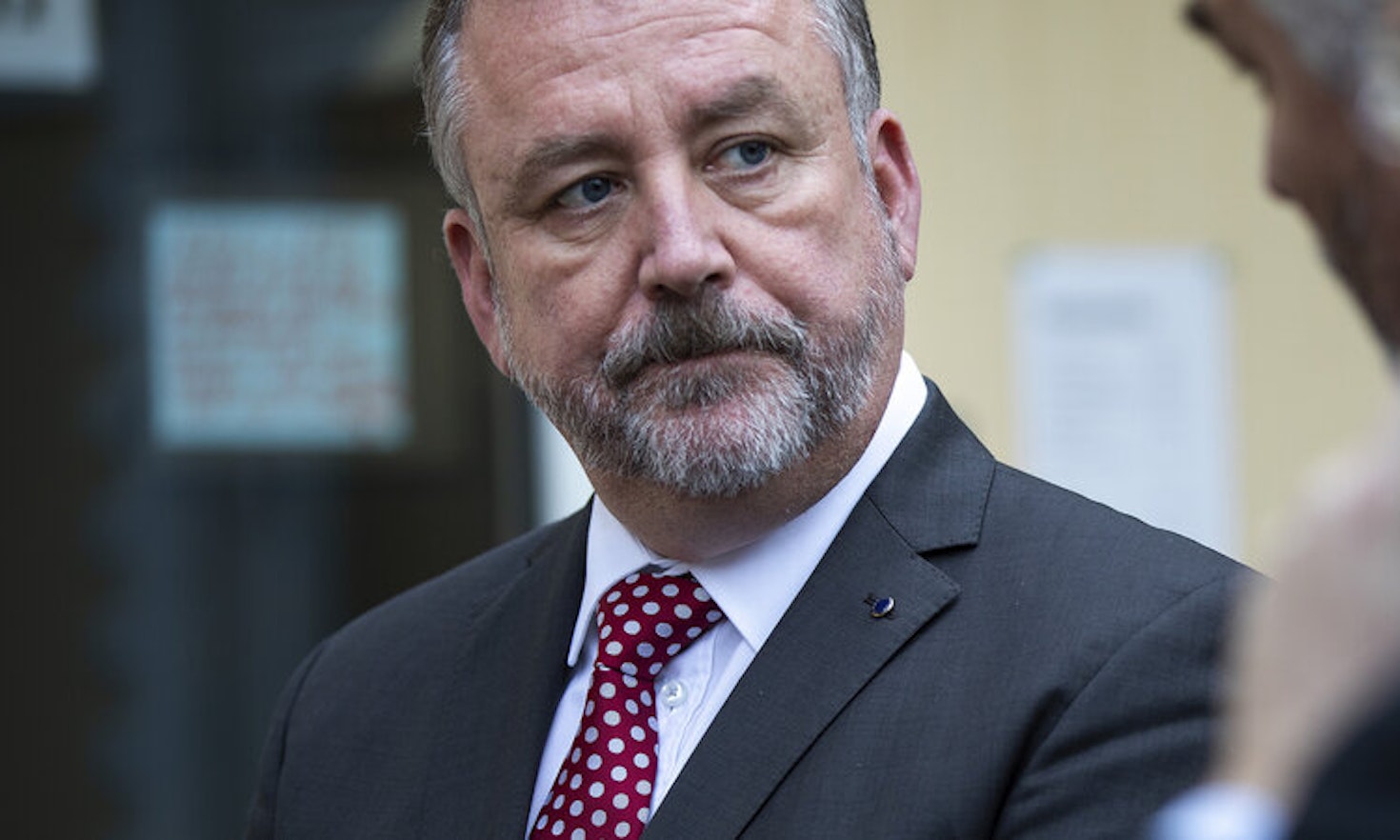
Bernd Fabritius (CSU) has been reappointed as the Federal Government Commissioner for Matters Related to Ethnic German Resettlers and National Minorities, succeeding Nathalie Pawlik (SPD) in Berlin. In an interview with Der Nordschleswiger, the 60-year-old reflects on his priorities and on recent political and social developments across Europe.
Gerrit Hencke: You already served as Minority Commissioner from 2018 to 2022. What made you take on this role again?
Bernd Fabritius: National minorities are a vital part of any society. They stand for cultural diversity and enrich the social fabric in countless ways. At the same time, they face significant challenges in maintaining that very diversity. I know this first-hand, having lived for many years as a member of the Transylvanian Saxon minority in Romania. That experience has shaped my deep commitment to the topic, and I’ve always felt a strong responsibility to support it.
Did you follow the work of your successor, Nathalie Pawlik?
Absolutely. I paid close attention to whether the achievements from my previous term were continued or whether new approaches were taken. These observations have added to the wealth of experience I now bring back into the role.
What would you say were your achievements, and was there a change in direction during your absence?
Most of the changes have occurred outside the area of national minorities, so I don't think it would be helpful to go into detail here. That said, I do plan to visit North Schleswig soon to discuss specific concerns on the ground.
Across Europe, I see a worrying rise in nationalist tendencies. This development poses a real threat to the well-being of national minorities.
Bernd Fabritius
You described this role as particularly challenging in today’s world. Could you elaborate, especially in relation to German minorities abroad, such as in North Schleswig?
Across Europe, I see a worrying rise in nationalist tendencies. This development poses a real threat to the well-being of national minorities. Nationalism often goes hand in hand with pressure to assimilate, which undermines a minority’s ability to preserve its cultural identity. That said, I am optimistic that the German minority in North Schleswig is not currently experiencing such pressures – and I will do everything I can to help ensure it stays that way.
You already know North Schleswig from your previous term. Is a visit planned in the near future?
Yes, I’ve already had an initial discussion with Hinrich Jürgensen and Uwe Jessen – the Chair and Secretary General of the Bund Deutscher Nordschleswiger – in Berlin, just days before my official appointment. We agreed to continue the conversation as soon as possible in North Schleswig.
Is there anything you particularly remember from your last term?
Absolutely. I learned not only a new word – hygge – but also what a truly heart-warming way of life it represents.
Have you already set any goals for the coming years?
I don’t want to define goals unilaterally. I believe in setting them together, in dialogue with the people I represent and support.
Some politicians who were strong voices for minorities in border regions, such as Petra Nicolaisen, are no longer in the Bundestag. My colleague Cornelius von Tiedemann called you a a ‘beacon in political Berlin’. How do you plan to raise awareness of minority issues in parliament?
Connecting the work of the Federal Commissioner to parliamentary processes is essential. From 2013 onwards, I served in the German Bundestag and took part in various committees. I also represented Germany in the Parliamentary Assembly of the Council of Europe, where I focused strongly on minority rights. Through this work, I built a broad network of understanding and support for the cause. Advisory committees – especially those concerned with national minorities – are also crucial in ensuring that parliamentary bodies remain focused on our shared concerns.
The German minority is currently facing delays in infrastructure projects, such as the renovation and construction plans for the Apenrade/Aabenraa campus, due to the provisional federal budget. Do you, as Commissioner, have a way to give voice to these financial concerns in Berlin?
We are facing challenging times across Europe, and this often results in tight budgets and tough priorities. Nevertheless, I intend to ensure that the concerns of national minorities are heard and treated with the importance they deserve.
Do you have other responsibilities in addition to your work as Minority Commissioner?
Yes. The position originally focused on issues affecting German expellees, resettlers and late repatriates. Over time, it was expanded to include national minorities in Germany and German minorities in neighbouring Central and Eastern European countries, as well as in Denmark. I believe these areas of responsibility complement each other very well and can generate valuable synergies.
How much of your time will be dedicated to minority issues?
A considerable amount – or to put it another way: exactly as much as is needed to do the job properly. I am fully committed to each area of responsibility and intend to approach them all with equal conviction and dedication.

Gerrit Hencke
Born in 1986 and raised in Rostock (Mecklenburg-Vorpommern), Gerrit Hencke studied Language and Cultural Mediation (sproglig og kulturel formidling) at the University of Southern Denmark in Sonderburg/Sønderborg and the University of Iceland in Reykjavik from 2006 to 2009. After completing an editorial internship at the ZGO Zeitungsgruppe in Aurich (Lower Saxony) in 2009, he pursued a Master’s degree in Communication and Media Management at the European University of Flensborg/Flensburg, graduating in 2012. From 2010 to 2014, he worked in editorial and distribution roles at the MoinMoin weekly newspaper in Flensborg/Flensburg. He then joined shz.de, where he worked as an online editor in the Live Centre until 2022. Since January 2023, he has been part of the editorial team at Der Nordschleswiger.
Discover
Making research visible.
Find the connected experts, projects, publications, and research areas behind this blog post.
This content is licensed under a Creative Commons Attribution 4.0 International license except for third-party materials or where otherwise noted.