


Beyond the stage: Latvia's new debate on language and public communication
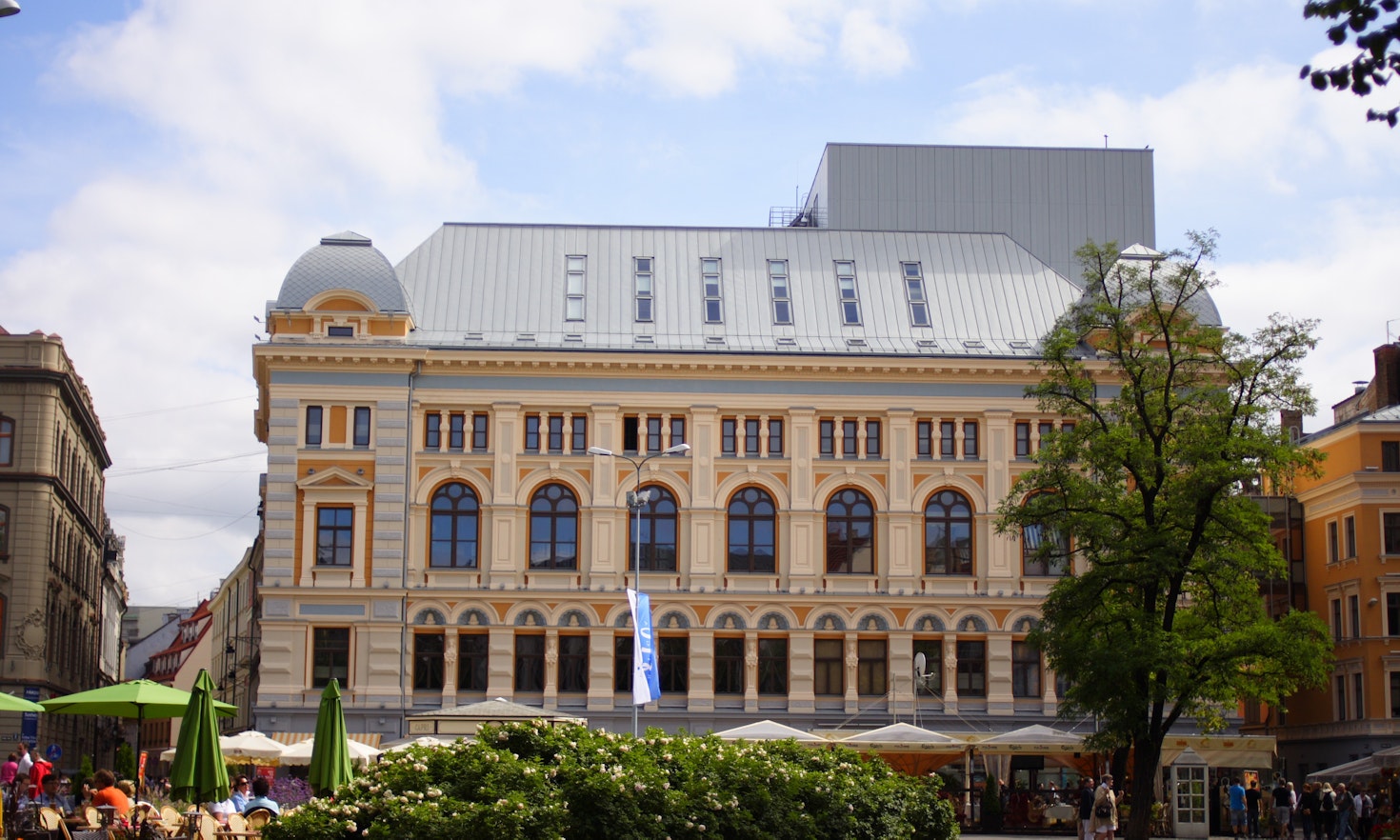
The decision by Latvia's Ministry of Culture to discontinue the use of Russian in the official communication of institutions under its authority immediately attracted considerable public attention. The immediate trigger was criticism of the publicly visible use of the Russian language by the Mikhail Chekhov Riga Russian Theatre. However, the Ministry's instruction extends well beyond a single theatre. It applies to the official communication of publicly funded cultural institutions, including websites, advertising, posters, social media and other public information channels. According to the Ministry, the purpose is to strengthen the constitutional role of Latvian as the state language and ensure that institutions financed from the public budget communicate with society in Latvian while contributing to a common information space under the current security conditions.
Unsurprisingly, much of the public discussion quickly focused on whether Latvia had introduced another restriction on the Russian language. Supporters described the measure as a logical continuation of policies strengthening the position of Latvian following Russia's full-scale invasion of Ukraine. Critics questioned whether the decision unnecessarily restricted communication with Russian-speaking audiences and further reduced the public presence of Russian. As in many previous language debates in Latvia, discussion rapidly became polarised.
Yet the controversy surrounding the Mikhail Chekhov Riga Russian Theatre risks obscuring a more interesting question. The Ministry repeatedly emphasised that its instruction does not concern artistic freedom or the language of performances. Russian-language productions remain possible. What changes is the language through which publicly funded cultural institutions communicate with society. The distinction may initially appear technical, but it raises broader questions about the role of language in public communication and about the expanding scope of language policy itself.
At first sight, advertising may seem an unusual object of language policy. Discussions concerning minority rights and language regulation usually focus on education, public administration, broadcasting or access to public services. Posters, websites and social media campaigns rarely occupy a central place in debates on minority protection. Nevertheless, they perform an important public function because they shape the relationship between institutions and society. Unlike schools or administrative procedures, public communication does not regulate how people speak. Instead, it determines how public institutions present themselves, whom they seek to reach and which audiences they recognise. For many people, a theatre's website or social media account constitutes the first and the only interaction with that institution. The language used in these spaces therefore communicates more than practical information about performances or opening hours. It also reflects how publicly funded institutions understand their role, who they identify as their audience and how they position themselves within the wider public sphere.
The current controversy should therefore not be viewed in a vacuum. Rather, it forms part of a broader development that has become increasingly visible in Latvia since 2022. Language questions are no longer confined to what would traditionally be regarded as language policy. Initial debates centred on education reforms, broadcasting and public administration. Over time, however, similar questions have appeared in policy fields where language had previously attracted considerably less attention if at all.
This trajectory has also been reflected in previous MIDAS discussions. In When Language Becomes Security, I analyzed how Russian increasingly came to be framed through the language of national security rather than minority protection. In another text When Taxation Speaks Language, I argued that fiscal policy could also shape linguistic equality by creating different economic conditions for publications in different languages. The current debate extends this pattern even further because this time the discussion concerns the language through which publicly funded cultural institutions communicate with the society and its specific segments.
The decision therefore raises questions that extend beyond the immediate controversy over Russian-language advertising. Why has public communication become an object of language policy? Why are websites, posters and promotional campaigns now discussed alongside education, broadcasting and official administration? The answer to these questions requires looking beyond the theatre itself and examining how Latvia's approach to language policy has continued to evolve under conditions of prolonged geopolitical insecurity.
The practical consequences of the Ministry's instruction illustrate why the current debate extends beyond the initial controversy surrounding the Mikhail Chekhov Riga Russian Theatre. While the instruction applies to all institutions under the Ministry's authority, its impact differs considerably depending on how those institutions have communicated with audiences in recent years.
According to the available accounts, representatives of the Daugavpils Theatre emphasized that the new regulations would not affect its activities. The situation at the Mikhail Chekhov Riga Russian Theatre is considerably different because its institutional identity has long been closely connected to Russian-language cultural production.
As mentioned above, the Ministry explicitly confirmed that performances in Russian may continue, the instruction affects many aspects of the theatre's interaction with audiences. As a result, the debate has therefore shifted away from artistic production itself. Neither the repertoire nor the language of performances is the primary object of regulation. Instead, attention has moved to the public communication surrounding cultural activities. Communication therefore becomes part of broader questions concerning the role of the state language, the accommodation of minority languages and the responsibilities of publicly funded institutions.
At the same time, the Ministry's decision also reflects a broader understanding of public communication. Rather than treating communication as a neutral administrative activity, the instruction suggests that it forms part of Latvia's wider information environment. In this perspective, the language used by state-funded institutions contributes not only to cultural policy but also to strengthening a common public space and societal resilience. This rationale has become increasingly visible across several areas of Latvian policy since 2022, where language is discussed not only as an issue of identity or minority protection but also as part of broader efforts to reshape the state's information space.
This does not mean that the current debate can be reduced to a conflict between security and minority rights. The reactions to the Ministry's decision demonstrate that a range of practical questions remain unresolved. How should publicly funded institutions communicate with diverse audiences? Should communication intended to attract visitors follow the same language principles as official administrative communication? Where should the boundary be drawn between artistic autonomy and institutional responsibility? The current controversy does not answer these questions. It does, however, show that they are becoming increasingly central to Latvia's evolving language policy.
Whether this development represents an appropriate balance between promoting the state language, strengthening societal resilience and accommodating Latvia's linguistic diversity remains open to debate. Different observers will inevitably reach different conclusions. What seems clear, however, is that future discussions are unlikely to focus only on whether Russian may be used in particular settings. They are likely to address the role of the language in the everyday communication of publicly funded institutions and the boundaries of the state language use. What remains clear is that these developments will increasingly shape language policy in Latvia in the years ahead.
Note: This article gives the views of the author(s) and does not represent the position of the European Association of Daily Newspapers in Minority and Regional Languages (MIDAS) or Eurac Research.

Hanna Vasilevich
Hanna Vasilevich, (Ph.D. in International Relations and European Studies, Metropolitan University Prague) is currently an incoming scholar at the Institute for Minority Rights of Eurac Research. Originally from Belarus, she was Senior Researcher at the International Centre for Ethnic and Linguistic Diversity Studies, Prague, Czechia, and taught at several Czech and German Universities. In 2012-2017, she worked at the European Centre for Minority Issues, responsible for the implementation of the ECMI Eastern Partnership Programme. She was a visiting research fellow at the Queen’s University Belfast and the Max Planck Institute for Social Anthropology. Since 2019, she has collaborated with the Max Planck Institute for Social Anthropology as a Member of the CUREDI project. She also provided her expertise within several projects commissioned, inter alia, by the OSCE High Commissioner on National Minorities and the Minority Rights Group Europe.
Discover
Making research visible.
Find the connected experts, projects, publications, and research areas behind this blog post.


This content is licensed under a Creative Commons Attribution 4.0 International license except for third-party materials or where otherwise noted.








 My cookie preferences