


Buying bilingualism: fake language certificates have put South Tyrol’s bi- and trilingualism system under pressure. How to move on?

South Tyrol’s bi- and trilingualism certificate system was designed to protect equality between German, Italian, and Ladin speakers in public offices and services. Now, fraud investigations have exposed flaws in the system and forced a wider debate about how language skills should be assessed in public service. To provide food for thought, a short series of MIDAS blog articles will look at how language skills of public employees are currently assessed in various multilingual territories. This opening article outlines the South Tyrolean legal framework, highlights its strengths and weaknesses, and asks how the system can protect minority language rights while keeping public services functioning.
South Tyrol’s second autonomy statute, a law with constitutional rank, enshrines the right of citizens to equally use German or Italian – and, in some cases, Ladin – in communication with public offices and services. This implies that public employees must be able to provide services in the language chosen by citizens (cf. enactment decree no. 574/1988). One of the key instruments for ensuring this right is the bilingualism (or, for Ladin speakers, trilingualism) examination. First held in 1977, following enactment decree no. 752/1976, the exam assesses whether potential candidates to public positions have adequate knowledge of both German and Italian. All candidates have to pass the examination in both languages; their individual language-group affiliation remains undisclosed. Remarkably, the system does not take for granted people’s skills in one or the other language, in contrast to the legal assumption often applied in nation states that all citizens can speak the state’s national language. Today, compared to other language exams, South Tyrol’s bilingualism exam stands out for its anonymous set-up, the randomised daily selection of exam items, and for testing the ability to move between German and Italian, rather than assessing them separately. The latter is particularly relevant for South Tyrol’s public sector, where staff often must move from one language to the other in interactions with citizens.
For many years, the bilingualism certificate could only be obtained through the official provincial exam. This made the system easy to control, but also rigid. After the 2000 Court of Justice of the EU “Angonese”, South Tyrol had to allow the recognition of equivalent language certificates. Since 2010, candidates can get the bilingualism certificate also by submitting an international language certificate in line with the Common European Framework of Reference for Languages (CEFR) and after passing a monolingual exam in the language not already certified.
A loophole in the system
The opening of the system to international certificates also created new risks, because it exponentially increased the range of documents applicants can submit to prove their linguistic qualification. In January 2025, the province’s department of official languages identified four cases of fake German language certificates submitted for recognition. As the investigations uncovered, applicants for permanent public-sector positions had paid € 4,000 for forged certificates sold on the black market. Immediately, the unduly issued bilingualism certificates were revoked, notice was given to the public prosecutor, and criminal investigations were launched. The individuals concerned were dismissed without delay (cf. provincial law on public employment). The cases emerged at a difficult moment for South Tyrol’s public sector: as a result of Italy’s long public recruitment freeze and comparatively unattractive entry salaries – particularly for young professionals with experience abroad – many departments are facing severe staff shortages, in particular in healthcare.
Shortly after the provincial office had intensified its checks on authenticity, it turned out that the cases had been only the very tip of the iceberg. In September 2025, the service for bi- and trilingualism revealed in a press release that it had identified a total of 25 fake certificates handed in for recognition – 23 concerned German and two Italian. Again, all cases were reported to the authorities. Yet, the authenticity checks are burdensome: in doubtful cases, the office has to contact the examination bodies in Italy and abroad (in particular, the certifier ‘telc’ in Germany). More and more fraud cases were debunked, making headlines and fuelling public debate about the obvious loophole in the system.


The whole issue carries a heavy weight. It puts the entire bilingualism system under a stress-test. Using fake certificates is an affront to everyone who works hard to pass the exam and may lead to the employment of individuals in public service who are unable to provide bilingual services. Ultimately, language rights run the risk of becoming in vain. Language-related rights, however, are transversal or “cross-cutting” rights, in the sense that they intersect with many other fundamental rights. If people cannot use their language in dealings with public offices, their access to other rights is also affected. Of course, the functioning of hospitals and other institutions has to be ensured. Still, fundamental language-related rights cannot be simply overruled. Conflicting rights require a balanced approach. Some suggest AI will solve language issues, anyways. AI may indeed support communication, especially in written form, but can it replace everyday human interaction on which public trust depends?
Institutional response
Under pressure to act, in April 2026, the provincial government set up a working group instructed to analyse the incidents, develop a stronger early-warning and verification system, in order to prevent abuse. Governor Arno Kompatscher emphasised that the principle of bilingualism would not be called into question. Instead, more effort should go into supporting people to acquire the necessary language skills. Meanwhile, some political representatives of Italian speakers questioned the upholding of language constraints as they were putting newcomers to the province – many of them Italian speakers – under too much pressure. Moreover, the bilingualism exam itself attracted criticism for being allegedly excessively difficult (N.B. In 2025, taking all language levels together, on average 49% of candidates passed the exam).
In the midst of the media debate, the judge of preliminary proceedings at the Provincial Court of Bolzano/Bozen accepted the public prosecutor’s request to archive the cases against the first four suspects on grounds of “particolare tenuità del fatto”. In other words, the offence, while unlawful – the accused did not deny that they had consciously presented fake documents – was considered too minor and isolated to justify criminal proceedings. For anyone familiar with South Tyrol’s autonomy system, such a reasoning raises difficult questions. Buying fake language certificates to obtain public jobs in violation of the constitutionally protected bilingualism principles is not worthy of criminal prosecution? If the ruling acquires force of precedent, it could serve as line of reasoning for opponents to claim that breaching the legal provisions on the use of a minority language is not real problem. Did the province intervene in the proceedings as offended party? This was a chance to defend the public interest of South Tyrol of maintaining a functioning bilingual public sector. Well, we only know that a few days later the investigations successfully identified the alleged dealer who had sold about 40 fake certificates.
A few weeks later, the Provincial Court of Auditors, however, ordered two of the doctors at Bolzano/Bozen Hospital, which had used forged language certificates, to repay damages to the provincial health authority. The two rulings n. 27 and n. 28 of May 2026 are based on the reasoning that the doctors had met the requirements for the employment relationship only “through the fraudulent submission of a forged document”. They have to repay €66,000 and €25,000, which are only 55% of the wrongly received salaries since they had still provided useful services. Crucially, the Court recognised the Province’s language skills requirements in public employment as a direct expression of the constitutional protection of linguistic minorities (art. 6 of the Italian Constitution) and, more importantly, as instrumental to guaranteeing the right to health (art. 32 of the Italian Constitution), because they ensure the correct communication between doctors and patients. Anyways, the defense lawyer declared the applicants’ intent to lodge appeals in both cases.
Moving beyond certificates - a way forward?
At this point, the challenge for South Tyrol is to prevent language certificates from becoming a mere bureaucratic barrier detached from the real communicative ability of people. In a multilingual territory with constitutionally protected language rights, which are anchored in international law (cf. the 1946 Gruber-De Gasperi agreement between Austria and Italy), an effective language skills assessment of public employees remains necessary. The question is not if, but how. Beyond fraud prevention and prosecution, South Tyrol could consider alternative methods of assessing language capacity of public job applicants.
One option would be to move towards verifying language skills as integral part of public recruitment competitions. Concretely, parts of the procedure could be held in two (or three) languages, depending on the post. Interviews and practical simulations could test whether candidates can actually work in the languages required. If candidates must demonstrate language skills during recruitment, fake certificates would become useless. Language capacity would become part of a candidate’s overall eligibility for a public position. Such a reform would require rewriting various legal provisions, including enactment decrees. It would, however, remain within the discretion left by the Autonomy Statute, which does not dictate a particular method of how the public administration must ensure the right to use both languages in public contexts.
Any reform must, at the same time, aim at facilitating the recruitment of new people. Public recruitment procedures are often slow and highly bureaucratic, leaving applicants in uncertainty about their employment for too long. Streamlining these procedures while integrating practical language assessment could help both public administration and citizens.
Ultimately, the scandal is tight to a deeper conundrum: South Tyrol is a bilingual, and in some areas trilingual, territory but it does not automatically produce bilingual people. More empathy between the language groups and readiness to speak the other language would certainly help, too. Nevertheless, the South Tyrol’s bilingualism model remains one of Europe’s most sophisticated systems for linking public employment to minority language rights. The current crisis only shows that a certificate cannot carry the full weight of bilingualism. The key question is how to assess linguistic capacity in a way that is fair, fraud-resistant and connected to real communication. Probably, the answer lies in legal reform. Therefore, let’s think out of the box and explore all viable options.
Note: This article gives the views of the author and does not represent the position of the European Association for Daily Newspapers in Minority and Regional Languages (MIDAS) or Eurac Research.
Call for blog series contributions
Would you like to contribute to this series? We welcome short blog articles explaining how language skills are assessed for public employees in multilingual regions. To propose a contribution, please contact the MIDAS Blog editorial team at info@midas-press.org.
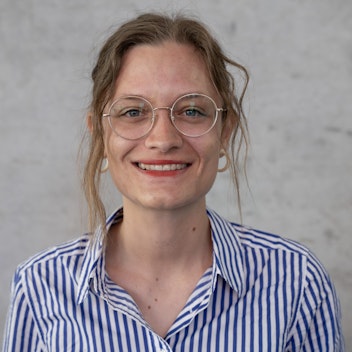
Anna Wolf
Anna Wolf is a legal researcher with a focus on language rights. She has recently joined the team of the Center for Autonomy Experience at Eurac Research. She follows with curiosity the continuous evolving of South Tyrol's autonomy, particularly in the area of language rights, from an international comparative lens. A further area of interest to her is the protection of Indigenous language rights, since she conducted doctoral research on the enshrinement of language protection provisions in Australian law, with Murdoch University, Perth. Throughout the last years, she also worked for the Office for Official Languages and Civic Rights (Autonomous Province of South Tyrol), contributed to various research projects on minority rights and comparative federalism (Eurac Research), conducted two traineeships at permanent representations to the Council of Europe, and worked as a journalist.
Discover
Making research visible.
Find the connected experts, projects, publications, and research areas behind this blog post.


This content is licensed under a Creative Commons Attribution 4.0 International license except for third-party materials or where otherwise noted.







 My cookie preferences