


Catalan, a vibrant language looking towards the future

I cannot deny that, despite all the difficulties faced by any society with a minority or minorised language, travelling to the Països Catalans is always a source of immense joy in terms of the health enjoyed by the Catalan language. With its ups and downs, its strengths and weaknesses, Catalan nonetheless maintains a presence in institutions, businesses and daily life which – although there is always room for improvement – is enviable in many respects and a model to follow for those of us who also have a minorised, rather than minority, language in our countries.
With a population of nearly 15 million inhabitants in the territories of Catalonia, Northern Catalonia, the Valencian Country and the Balearic Islands, Catalan has enormous reach and the added prestige of being spoken in three different European states: Andorra, where it is the official language, France and Spain. It has a total of nearly 10 million speakers. The situation, however, is far more favourable in Catalonia than in the other territories that make up the Països Catalans.


Catalan Language in Europe
Credit: By Martí8888 - Own work, CC BY-SA 4.0, https://commons.wikimedia.org/w/index.php?curid=55002590 | All rights reservedAccording to the most recent language use survey, with data for 2023 presented by the Catalan Government at the beginning of this year and updated in November, Catalan gained 267,600 speakers compared with 2018, in a context of population growth of almost 400,000 people. In other words, 66% of the new inhabitants of Catalonia know the language – two out of three. This is a significant figure considering the increasing globalisation we are experiencing and the rising migrant population from territories with different languages.
However, like any survey, the results can be interpreted in different ways. One perspective is the decline of Catalan as the main language of the population of Catalonia. According to the most recent data from 2023, only 33% of the population use Catalan as their main language, three points fewer than in 2018. This is the first time that Catalan has been the main language of less than a third of the total population. Two decades ago, in 2003, almost half of Catalans (46%) used their own language as their main language in daily life.
While almost all inhabitants of Catalonia understand Spanish perfectly (99.6%), the percentage of those who understand Catalan drops to 93.4%. Whereas 99.2% can speak Spanish, only 80.4% can speak Catalan, and although up to 94.5% of the Catalan population can write in Spanish, only 65.6% can do so in Catalan.
It is also striking how the exclusive or primary use of Catalan has declined considerably in all areas: at home, from 40.6% to 31.6%; among friends, from 39% to 29.5%; at school with classmates, from 43.3% to 36.4%; in local shops, from 47.3% to 36.6%. And in a world where new technologies advance at a frenetic pace and instant messaging apps are the main means of communication, especially for younger people, only one in four people (24.4%) write their messages in Catalan or use Catalan more frequently than Spanish.
A "linguistic emergency"?
Plataforma per la Llengua, an organisation that defends the linguistic rights of the Catalan-speaking population and promotes various actions and initiatives to preserve and promote the language, warns of a “linguistic emergency”. There is no single factor that explains this decline; rather, it is multifactorial. One obvious factor is globalisation and the growth of the migrant population, especially in Barcelona and its metropolitan area – one of the world’s major cities – which is attracting increasing numbers of people who speak different languages.
The metropolitan area of Barcelona, now the region of Catalonia with the largest population and at the same time the lowest percentage of people born in Catalonia, is also where Catalan is spoken the least, falling below the national average in terms of knowledge of the language and in the percentage of the population that has Catalan as their only first language (22.3%). And while it is true that Catalan is more visible in Barcelona’s streets, signs, shops and supermarkets than, for example, Galician in Vigo, A Coruña or Santiago de Compostela, there is also a gradual increase in the presence of Spanish in Barcelona. This contrasts sharply with areas such as Terres de l’Ebre (57.7% Catalan as first language), the Comarques Centrals (48%) or Alt Pirineu (51.2%).
However, this is not, and should not be, a reason to justify a gradual decline in the knowledge and use of Catalan, since institutions have the power to act to reverse this situation. School is a fundamental environment for promoting the knowledge and use of a language, especially when we see that it is declining in homes due to a notable decrease in intergenerational transmission. During my recent stay in Barcelona as part of the MIDAS Training programme at the editorial office of VilaWeb, the leading digital newspaper in Catalan, the High Court of Justice of Catalonia (TSJC) partially upheld an appeal by the pro-Spanish organisation Asamblea por una Escuela Bilingüe (AEB) and rejected the definition of Catalan as the only language of cohesion in schools, as the Catalan Government had previously indicated to educational centres. Earlier, in September, the same court annulled part of the decree that protected the use of Catalan in schools.
It is in this context that we should speak of “minorised” rather than “minority” languages, because once again the state apparatus is hindering the development of a threatened language that is becoming less present on the streets and needs a clear boost, especially among younger people, as they are the future of any language. In the case of the Spanish state, we see how – with their differences and varying degrees of implementation and presence – Catalan, Basque and Galician continue to suffer from the progressive imposition of Spanish, which for decades, and even centuries, has undermined the languages of the Països Catalans, Euskal Herria and Galiza.
My stay in Barcelona also coincided with the General Assembly of the European Language Equality Network (ELEN), where members of organisations representing 51 languages from 25 countries discussed the future of these languages and the actions that can and must be taken to preserve and promote them. They agreed with the diagnosis of Plataforma per la Llengua and warned of the “emergency” situation facing Catalan, whose presence in Northern Catalonia, the Valencian Community and the Balearic Islands is weaker than in Catalonia. In the latter two territories, the rise to power of the political right has already led to significant setbacks since 2023.
The best thing will always be for new parents to pass on the language to their children, as they will grow up with it and understand it as something innate.
Davyth Hicks, ELEN’s Secretary-General
For ELEN’s Secretary-General, Davyth Hicks, the cornerstone of revitalisation is restoring intergenerational transmission: “The best thing will always be for new parents to pass on the language to their children, as they will grow up with it and understand it as something innate. We cannot force people to do this, but we can facilitate the context. How can we get Galician spoken in the school playground? Can you go to the Town Hall and speak Galician? And if not, what is stopping you? This is where linguistic rights, laws and the work of ELEN come into play.”
Hicks, one of the few Cornish speakers left in Cornwall today, where efforts are under way to revive a language that currently has barely a thousand speakers, believes that it is also essential for the European Union to accept Galician, Basque and Catalan as official languages – especially since Catalan is spoken by more people than several languages already recognised by EU institutions, such as Danish, Finnish, Croatian, Slovenian, Maltese and Irish Gaelic.
Focused on the future
By providing Catalan with the necessary spaces, increasing its presence and giving it the prestige it deserves, we will be able to reach new speakers. We must look to the future, think about young people and offer them role models and spaces in which they can live fully in a minority language. A good example is FC Barcelona, followed by millions of young people and probably the most influential entity in Catalonia. Its defence of the Catalan language and identity is commendable and undeniably brings many young people closer to the language. We recently saw two good examples in the Barça women’s team, with players Irene Paredes, from the Basque Country, and Kika Nazareth, from Portugal, giving interviews in Catalan.
Another noteworthy area is music, where young people can also find many role models. Music in Catalan is undoubtedly experiencing a boom – not everything is negative, far from it. The group Oques Grasses has just made history by filling the Estadi Olímpic Lluís Companys in Barcelona four times over for their farewell concerts, which were originally planned as just one but expanded to four due to demand.
The technological revolution of the internet and social media has also helped promote minorised languages. Although English and Spanish are dominant on these platforms, the visibility they offer to creators working in minorised languages – many of whom are role models for young people – is far from negligible. And we cannot miss this opportunity.
“It opens up many opportunities, but it is also true that today there is a digital divide between languages, and ours [such as Galician, Catalan and Cornish], as well as some medium-sized European languages such as Greek and Swedish, are lagging behind,” warns Davyth Hicks.
VilaWeb has been a pioneer in the digital environment for three decades, and its success has undoubtedly come from its ability to adapt to changing times and respond quickly to the digital revolutions that have shaken the media landscape.
For small languages like ours, the first thing we have to do is seize opportunities and be very quick to do so.
Vicent Partal, newspaper's editor of VilaWeb
“We were founded in 1995, and today we are the oldest active digital newspaper in Europe. What does this mean? It means that we have lived in a world without Google, social media, mobile phones or even a permanent internet connection. And so we learned that being the first is always a good thing. For small languages like ours, the first thing we have to do is seize opportunities and be very quick to do so. I think we always knew how to do that at VilaWeb,” says the newspaper’s editor, Vicent Partal, who is firmly convinced that language is not a handicap – quite the opposite. “We have always argued that the best newspaper in the world can be produced in any language: it could be Nós Diario, in Galician; it could be Berria, in Basque…”
Now they are tackling the latest major technological leap: artificial intelligence. “AI is a tool, and as such it is dangerous and fantastic at the same time. It allows us to eliminate superfluous steps, promote creativity, give journalists more time for their work and save on mechanical tasks. Especially for minority languages, it is essential to be here in order to compete with any other media outlet in the world. Our way of life has changed completely in five years. We may like it or not, but we cannot stop it. Are there any risks? Yes, and we must monitor them. We need mechanisms and a code of ethics,” Partal points out.
Note: This article gives the views of the author and does not represent the position of the European Association for Daily Newspapers in Minority and Regional Languages (MIDAS) or Eurac Research.
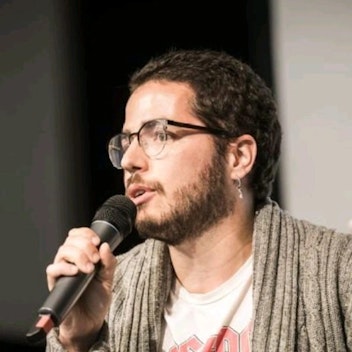
Yuri Carrazoni Mier
Yuri Carrazoni Mier is deputy editor of Nós Diario. It is the only newspaper in Galicia published entirely in the Galician language.
Discover
Making research visible.
Find the connected experts, projects, publications, and research areas behind this blog post.


This content is licensed under a Creative Commons Attribution 4.0 International license except for third-party materials or where otherwise noted.
This blog is supported by the European Association of Daily Newspapers in Minority and Regional Languages (MIDAS). MIDAS was founded in 2001 to provide assistance to minority language newspapers and nowadays has members all over Europe. MIDAS serves as a platform for exchange, uniting minority language newspapers to present a collective voice to the European institutions.








 My cookie preferences