


Dangerous nostalgia
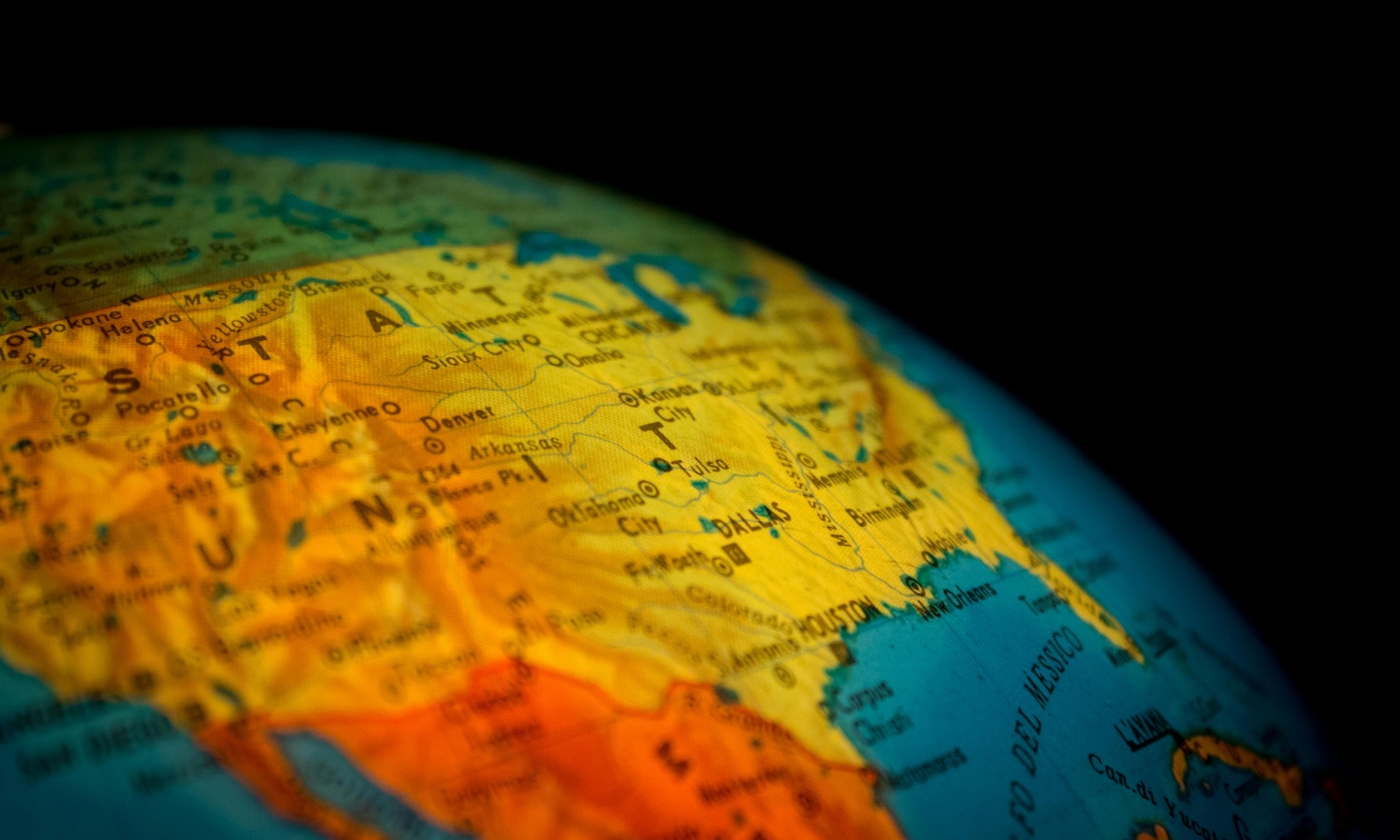
Since his return to power in January 2025, the American president Trump has not stopped creating chaos and perilous scenarios all over the world, offending seemingly close allies and allying with pariah politicians. Some of his wrecking-ball actions had been flagged in his re-election campaign; others came as an unwelcome surprise to the global community. One such surprise was his renewed claim that Greenland was needed for US security. When he had mentioned this issue before, during his first presidency in 2019, many smirked and dismissed his offer to buy the island as a poor joke. Nobody was smiling in 2026. Indeed, it had become obvious that Greenland represented the proverbial tip of the iceberg in the shift that had occurred in global politics since the early 2020s.
This shift not only touched upon politics in the US, but could be detected globally, spearheaded by the three superpowers Russia, China and, finally, the US. The new drive – one is hard put to call it an ideology – draws its strength from the past; it is a dangerous nostalgia, a yearning for an apparently glorious national past, defined differently by the three ageing heads of state who hold the reins of power in their respective nations. It is difficult to pinpoint where and when this nostalgia actually originated; the fact is, it did not come out of nothing overnight. A closer look at the three protagonist states reveals that nostalgia is not only defined differently, but has its roots in different historical eras, even though its effects remain the same for those pillars of stability that guaranteed relative peace for the past 80 years: the existing global order, the rule of law and the era of multilateral co-operation, all of which are close to collapse.
In 2015, my then employer, the largest Irish university – University College Dublin – sent me to China to recruit more postgraduate students for UCD’s master’s programmes. As part of my trip, I was to lecture at Beijing’s PKU and Minzu universities. The professor I was to liaise with scheduled my lectures into a lecture and seminar series titled “Integration and disintegration of the European Union”. I was somewhat surprised by the inclusion of the word “disintegration” in the title – up until then I was convinced that, despite certain setbacks, the path of the EU was towards more integration, not less. What really surprised me during the visit to Beijing, however, were the conversations with fellow academics – and in particular Wei Pan, professor for international comparative politics – who outlined to me the philosophy of modern China coined by Xi Jinping, who had come to lead the People’s Republic in 2011: China was growing economically in order to gain more political clout globally, in order to overcome, as Wei Pan put it, 200 years of China’s humiliation by the global west, its colonialism and its economic dominance. Instead, China aimed to reconnect with its glorious past in the Middle Ages and the early modern period prior to the “long-nosed white men” appearing on its shores. He outlined that China’s politicians were not thinking in years, but rather in decades and even half-centuries in order to achieve their ambitious goals. The people of China knew they were part of a bigger project and bought into the contract their rulers offered them: improved living standards in return for abstention from politics, which would be conducted by the established political class.
A decade after my visit, there is no doubt that this attitude has been working for China, and the rest of the world looks astonished at China scoring in every global crisis. China has become a global powerhouse for innovation and production.
Nostalgia in the Russian context is very closely aligned with the country’s dictatorial leader Vladimir Putin, who has called the demise of the Soviet Union the greatest tragedy of the 20th century. Since his accession to power, he has done everything to reverse the process. All his military interventions in Russia’s neighbourhood – be it Chechnya or the Crimean peninsula – as well as his strong economic ties with the west have been utilised to serve this one goal: make Russia great again. Combined with the well-known anecdote that Putin spent most of the Covid period in the Kremlin catacombs studying maps of old Tsarist Russia and its origins, he turned his nostalgic yearning into action in February 2022 and attacked Ukraine. Given the current geopolitical set-up and the disarray of the west, Putin might yet be seen as successful in regaining the old Rus, the heart of Russia located in today’s Ukraine.
In both cases of China and Russia, we can identify a striving towards the restoration of past glories of the respective nation states. The case of the United States, which is heading in the same direction, is somewhat more puzzling. The US is in the process of joining Russia and China in the suppression of ethnic minorities – just note the most recent developments surrounding ICE in various American cities ruled by Democrats and last last week’s People’s Congress decision to strive for ethnic unity. The treatment of minorities may serve as an indicator of liberal attitudes in any state, and the very fact that the United States, which have been at the forefront of civil liberties for much of the latter part of the 20th century, are now adopting a similarly repressive stance is as worrying as it is confusing. The US cannot, unlike China and Russia, be described as a victim of history by any stretch of the imagination.
We just need to remember that the United States maintained a dominant global position in the 20th century – ever since 1917, when the US joined and helped decide the outcome of the first world war, it was obvious that the US was a global economic and military superpower. After successfully engaging in the second world war, the US even became a cultural superpower, a role that was blown out of proportion after the demise of the Soviet empire in the early 1990s. One might argue that the US has never been more powerful than around the turn of the century. So how can nostalgia be ascribed as a driving force in current US politics? What is there to be made great AGAIN, as the MAGA movement kept shouting so relentlessly?
It would appear that Trump and his movement are trying to recreate a past when the US was growing, both in size and political weight, thereby disguising the fact that the challenges for the US are today greater than the global domination of the past that they achieved. These challenges are of a global ecological nature; they affect all states of the world and every global citizen. It requires enormous strength to stand up to the challenges of climate change, pollution, global migration and the fact that economies cannot grow forever as the size of the world is finite. It would need a leading global force to spearhead the ecological transformation of the world. By electing Trump again, the US has decided to embark on an “ostrich policy” by sticking its head in the sand and letting the future wash over it. It has given in to a retro look at the world. It is embarking on an America First policy that puts geographical expansion, chauvinistic nationalism and a wasteful use of finite global resources first. It therefore delays the inevitable recognition that there is no future in the past, only a delayed reaction to global challenges when it becomes obvious that the US has missed many opportunities – political and economic – which will diminish its significance in the long run.
In the meantime, the world keeps reeling from the erratic policy changes and the megalomania of an American president and his cronies, who strangle the innovative economic capabilities of the United States and who alienate long-term friends. The Greenland issue, which, by the way, is far from over, highlights this blindfolded policy clearly. Greenland is not Alaska, deals are not policies, and interventions in Venezuela and possibly soon Cuba have a significance far beyond Grenada in 1983.
Nostalgia is a dangerous weapon in the hands of reckless politicians.
Note: This article gives the views of the author and does not represent the position of the European Association for Daily Newspapers in Minority and Regional Languages (MIDAS) or Eurac Research.
Georg Grote
Georg Grote is Senior Researcher in Eurac Research’s Institute for Minority Rights. His research areas comprise Nationalism and Regionalism in Europe, the Transformation of collective Identities and the national and regional histories of Ireland and South Tyrol respectively.
Discover
Making research visible.
Find the connected experts, projects, publications, and research areas behind this blog post.


This content is licensed under a Creative Commons Attribution 4.0 International license except for third-party materials or where otherwise noted.








 My cookie preferences