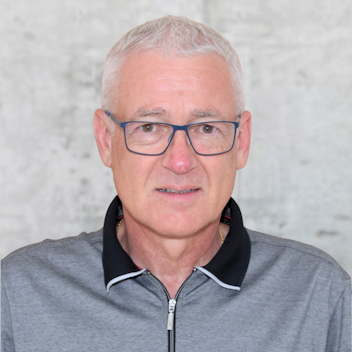
Daniel Alfreider: the Minority SafePack still matters
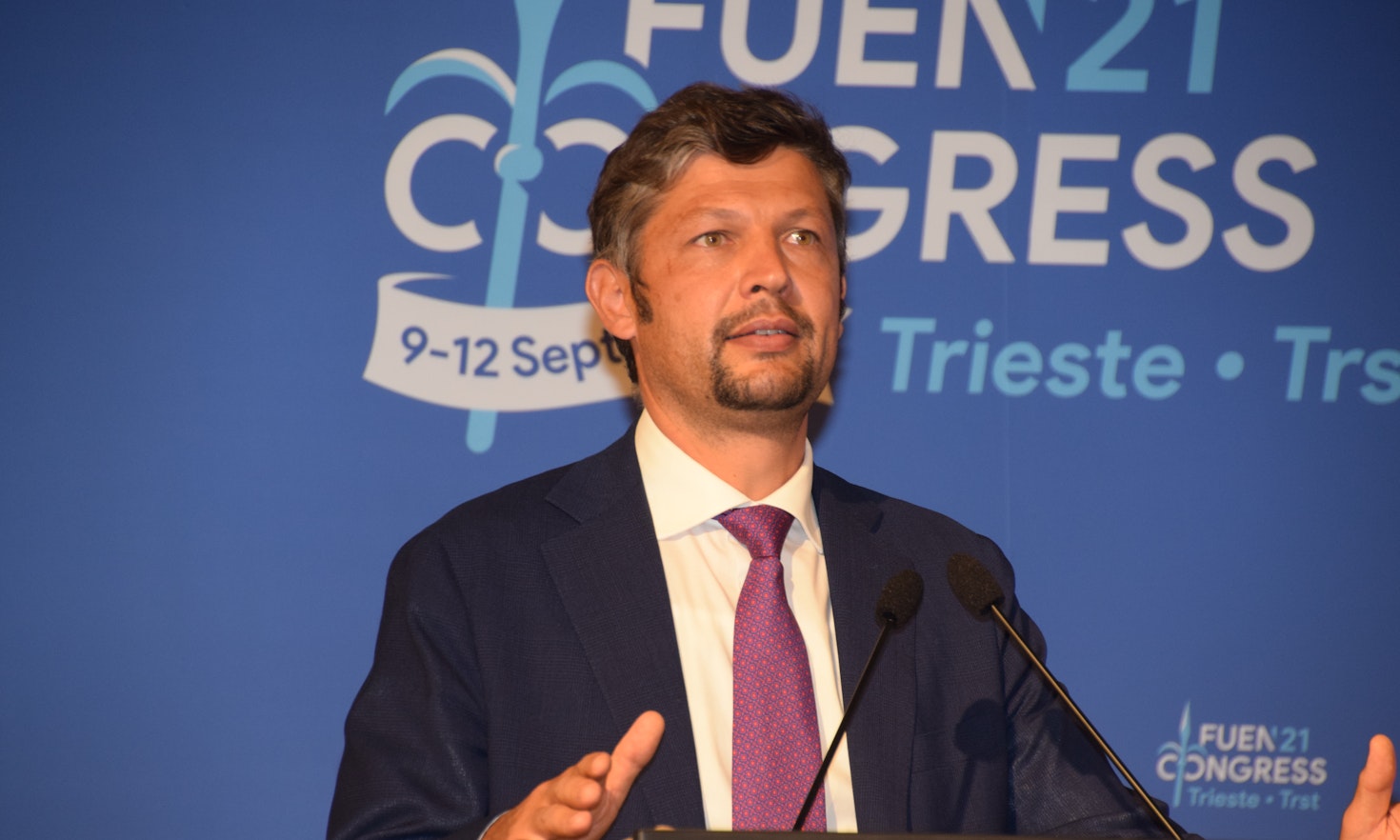
Interview with outgoing FUEN Vice-President Daniel Alfreider from South Tyrol – For him, the Minority SafePack is not dead
A new Presidium will be elected at the next FUEN Congress, which will take place in Bozen/Bolzano from 23 to 25 October. Like President Loránt Vincze, Daniel Alfreider's third and final term of office, as stipulated in the statutes, will then come to an end. Reason enough for an interview looking back and ahead.
Do you feel wistful at the thought of leaving?
Alfreider: As a member of the Chamber of Deputies in the Parliament in Rome, I was always very committed to minority issues. When I joined the FUEN family as Vice-President in 2016, I still knew little about this family. I do feel a sense of melancholy, because FUEN is a great organisation that is an integral part of Europe and for which we should continue to do everything we can.
You have certainly experienced a lot at FUEN. What were the most important events?
Alfreider: Certainly the consolidation of our concerns into the so-called Minority SafePack Initiative. I think the Minority SafePack was the first really big international project in which everyone worked towards the overall goal of minority protection. Thanks to the 1.2 million signatures for the initiative, we also gained a certain visibility and a certain voice.
FUEN failed in its final appeal to the EU Court of Justice regarding the MSPI: the EU Commission is therefore not required to deal with the content. So what remains of the initiative?
For me, this project is not dead. The issues it addresses remain relevant, because they are universal issues, such as the EU Commission directly funding cultural projects for minorities without having to go through the individual Member States. You can't just abandon such projects because there's a stone in the way. We will remove that stone. I am sure that at some point it will be possible to push through one or two points from the Minority SafePack, for example the issue of geo-blocking.
FUEN Vice-President Daniel Alfreider
According to the FUEN statutes, this is Lorant Vinczes' last term as president. A year ago, he himself, but also you, expressed the opinion that he should remain for a fourth term in the interests of continuity. So will he run again?
Alfreider: He would only be able to stand as a candidate if there were no other candidates. But there are candidates. And so the question no longer arises. I would like to emphasise at this point that it was thanks to Vincze that it was possible to achieve a certain degree of professionalisation and stability in FUEN, also in financial terms. FUEN has also gained stability because of targeted efforts to obtain institutional funding. Several regions in Europe are now effective supporters, such as Schleswig-Holstein.
Quite a few people in FUEN view Hungary's influence on the association with concern, especially since President Vincze recently defended Hungarian policy against criticism. Do you share this concern?
Alfreider: That's why I said earlier that it's very important to me that this European organisation has standing throughout Europe. And that there are many sponsors. There's no point in criticising Hungary for providing a lot of funding and thus having influence. We can also be glad that Germany is also funding us. For me, the most important thing is that we have several sources of income. I would like to see Austria invest a little more, for example, given that there are Carinthian Slovenes and Burgenland Croats there. If everyone gave a little, then we would not be directly dependent on one or the other. If every country gave a few tens of thousands of euros for such an important project, they wouldn't even notice.
What negative events do you remember from your time at FUEN?
Alfreider: The negative events were the decision by the EU Commission and then the ruling by the European Court of Justice on the Minority SafePack. I think that was the darkest moment in those years.
And the best?
Alfreider: That also concerns the Minority SafePack. One of the best moments was when we received the results of the signature collection in Italy: we had managed to break the 80,000 barrier, meaning we had reached the necessary number of signatures in Italy, 50,000 of which were in South Tyrol alone. That is quite an achievement.
Two candidates for the presidency are already known: Gösta Toft and Jens A. Christiansen from the German-Danish border region. Are there any others?
Alfreider: Olivia Schubert from the German minority in Hungary is also running.
About the Interviewed
The 44-year-old civil engineer began his political career in 2010 as a local councillor and representative in his home municipality of Corvara in South Tyrol. In 2012, he was elected deputy chairman of the South Tyrolean People's Party. In 2013, he became the first Ladin to be elected to the Italian Chamber of Deputies. He decided not to stand for re-election in 2018 in order to run for the South Tyrolean Provincial Council in the same year. After his election, he was appointed to the Provincial Government and named Ladin Deputy Governor. Alfreider has been FUEN Vice-President since 2016.
FUEN
The Federal Union of European Nationalities (FUEN) was founded in Versailles in 1949. It is the largest umbrella organisation of autochthonous national minorities, nationalities and language communities in Europe. It currently has more than 100 member organisations from 38 European countries. Since 2016, FUEN has been led by Loránt Vincze, a Hungarian from Transylvania (Romania). The Presidium also includes six Vice-Presidents and, in accordance with the statutes, the President of the Youth of European Nationalities. In 2023, FUEN had a budget of €1.25 million, of which €165,500 came from institutional funding (e.g. from the Trentino-South Tyrol region, the province of South Tyrol and the German federal state of Schleswig-Holstein). 1,180,000 euros came from project funding, of which 450,000 euros came from Hungary and 730,000 euros from Germany.

Hatto Schmidt
Hatto Schmidt was born and raised in Baden-Württemberg, Germany. He studied history and political science in Freiburg and Tübingen, and then spent 33 years working as a journalist for the daily newspaper Dolomiten, which is published in South Tyrol. He has dealt with questions and problems of national minorities for many years.
Discover
Making research visible.
Find the connected experts, projects, publications, and research areas behind this blog post.
This content is licensed under a Creative Commons Attribution 4.0 International license except for third-party materials or where otherwise noted.