Finland-Swedes in everyday life – Part 3: Young people
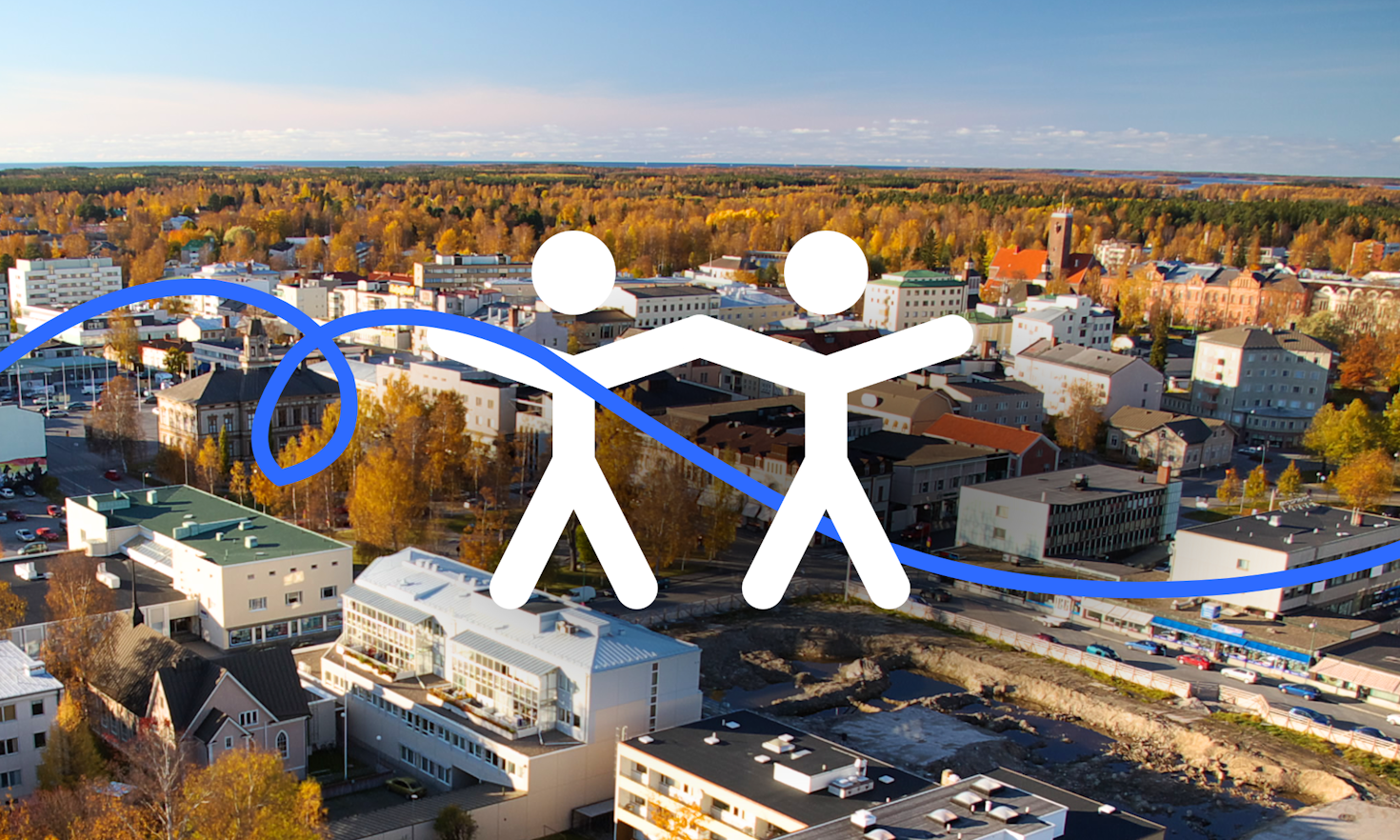
This article is part of a three-part series produced within the MIDAS Training Programme. Ina Grønvig, a journalist at Flensborg Avis, visited the MIDAS member newspaper Österbottens Tidning in October 2025 to explore everyday life among Finland-Swedes in the Jakobstad region of Finland. The series focuses on family life, education and young people.
A minority in Finland: “You can get by just fine in Swedish here”
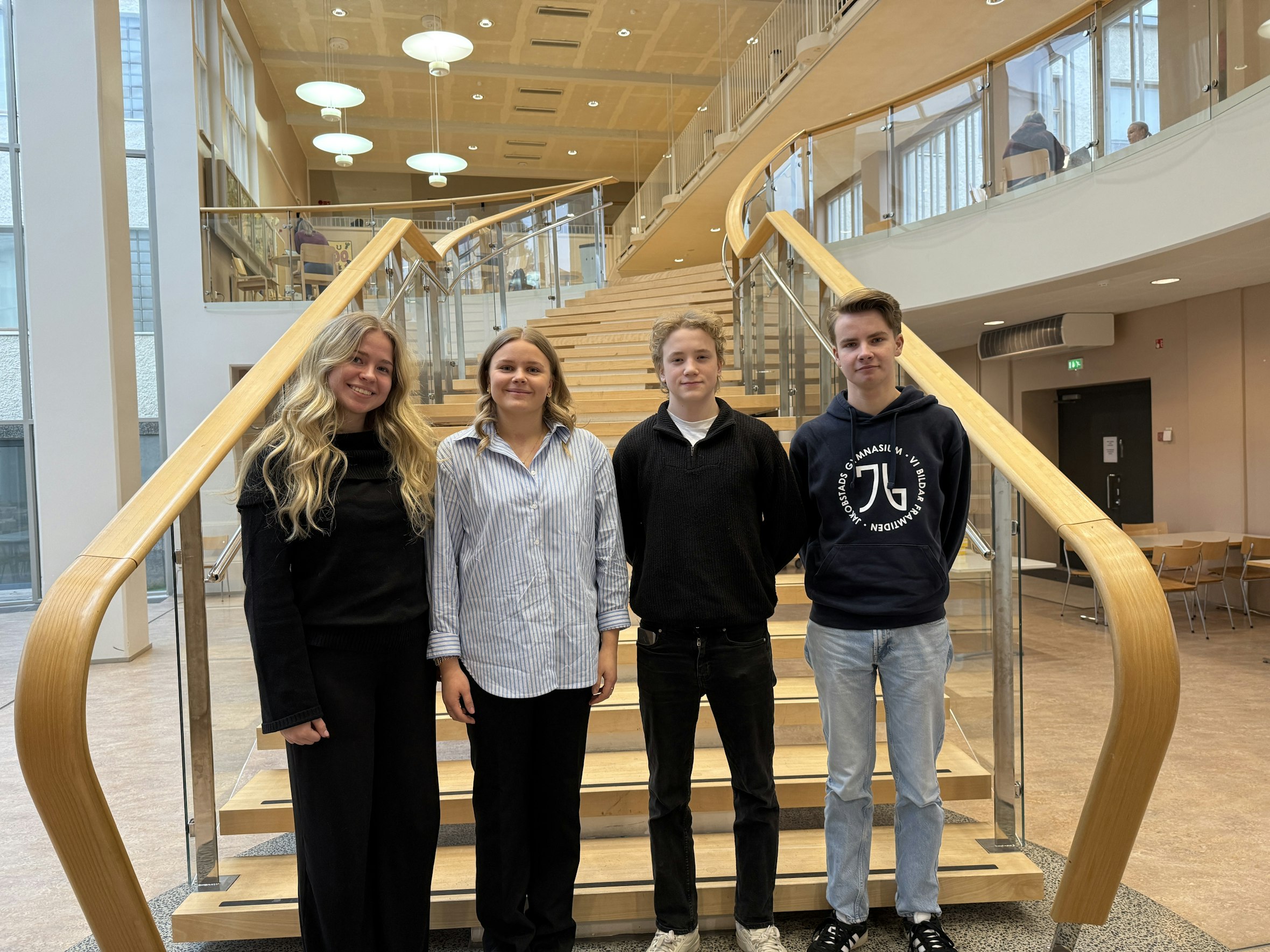
Paula Smeds, Lowa Brännbacka, Edvard Asplund and Alvin Englund are Finland-Swedes. They feel a close connection to Sweden, even though people in Sweden would struggle to understand their Swedish dialects.
Credit: Ina Grønvig | All rights reservedAlthough they live in Finland, four Finland-Swedish students say they do not need particularly strong Finnish skills in their everyday lives. In Jakobstad, the minority is very much in the majority.
At Jakobstad Upper Secondary School, Lowa Brännbacka has just received her first printed book – a French textbook. As an 18-year-old in her final year, she explains that almost all school materials are normally digital.
“I live 20 kilometres outside Jakobstad, so I spend about 40 minutes a day commuting to school,” says Paula Smeds, also 18.
Jakobstad Upper Secondary School is a Swedish-language school, serving a community where Swedish dominates daily life.
Neither Finnish nor Swedish
Finland-Swedes are a minority nationally, but in the Österbotten region, where Jakobstad is located, they form the majority. The difference is tangible. In shops, customers are greeted in Swedish, and even a local bar quiz is conducted entirely in the language.
In many ways, Finland-Swedes have created a small society of their own within Finland.
“You do not feel like you belong to the Finns. We get a lot of culture from Sweden,” Brännbacka says.
At the same time, she does not feel Swedish either. Much like members of the Danish minority who value the term “South Schleswigian” for capturing an in-between identity, the label “Finland-Swede” carries similar meaning for these young people.
“We belong to neither one nor the other,” says 17-year-old Alvin Englund.

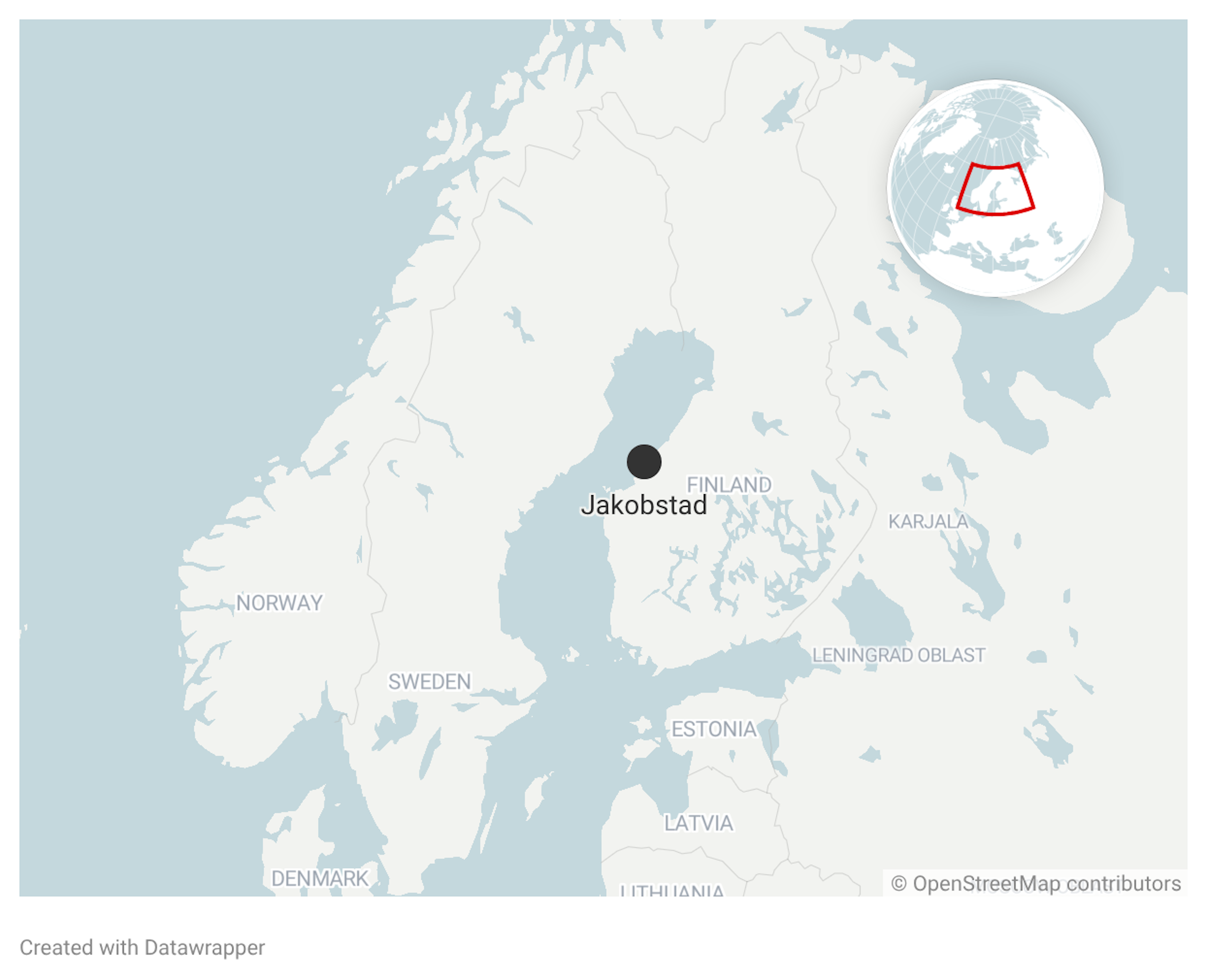
Jakobstad is situated in the region Österbotten, in western Finland
A difficult language
Englund grew up bilingual, with a Finnish-speaking mother and a Swedish-speaking father, and speaks both languages fluently. His schooling, however, has always been in Swedish.
For students such as Brännbacka, Smeds and Edvard Asplund, who did not grow up bilingual, Finnish can be challenging – largely because Swedish is so widely used in the area.
“You can get by very well in Swedish here,” Englund says.
Brännbacka and Smeds both say they are not particularly confident in Finnish, despite making an effort. “Finns understand what you are trying to say,” Smeds says.
They prefer Swedish
Asplund speaks Finnish unusually well for a Finland-Swede, thanks to the primary school he attended. He went to a school for Finland-Swedes where classes were taught in Finnish, helping pupils become more comfortable with the language. A school with the opposite focus also exists. Even so, Asplund prefers to speak Swedish. The same is true for Englund, despite his bilingual background.
Not standard Swedish, they emphasise, but Swedish spoken with a local dialect. “There are many different dialects in a small area, and quite strong ones – dialects that Swedes in Sweden do not really understand,” Englund says.
Four years in upper secondary school
Because of limited Finnish skills, many Finland-Swedes choose to study in Sweden after finishing upper secondary school, Smeds explains. Like the others, she is in her third year, but unlike them she will not graduate this summer. She has opted to complete her studies over four years, an option open to all students, allowing her to focus on additional subjects.
“It feels a bit strange that I am continuing while the others graduate. But I also have friends who have chosen four years, and younger friends as well,” she says.
Want to stay connected
Despite their limited confidence in Finnish, neither Smeds nor Brännbacka plan to study in Sweden after finishing school. Doing so, they believe, could limit future opportunities in Finland.
“If we move to Sweden, we will not be exposed to Finnish. Then it will not be easy to come back and get a job,” Brännbacka says. They do want to return and build their lives in Finland.
“Finland is a safe and good country. It is a place you want to live in in the future, so it is an advantage to know Finnish,” Smeds says.
Do not mix much
Jakobstad Upper Secondary School shares a building with a Finnish-language school. Asked whether they have Finnish-speaking friends, the answers vary: “not that many”, “a few”, or “some through work”.
“We do not really have contact with those who speak Finnish,” Brännbacka says, although she herself has Finnish-speaking friends through her job.
Language plays a role. Although both Finnish and Swedish are official languages, and both are taught in schools, everyday interaction across language groups remains limited. “When you are in Sweden, it feels strange that everyone understands the language. Here, we are used to people outside Jakobstad speaking Finnish,” Brännbacka says.
Linguistically related
At times, Brännbacka and Smeds switch to English when speaking with Finnish speakers, but this is not always an ideal solution. “Maybe it is just a prejudice, but my impression is that Finland-Swedes learn more languages,” Smeds says. She also has a theory as to why that might be. “Finns may think that Finland is a good country, and then they just want to stay here,” she suggests. She adds that linguistic distance also matters. “German, for example, is close to Swedish. That makes it easier to understand. It is more closely related than, say, German and Finnish are,” Smeds says.
Note: This article gives the views of the author and does not represent the position of the European Association for Daily Newspapers in Minority and Regional Languages (MIDAS) or Eurac Research.

Ina Grønvig
Ina Grønvig is responsible for the weekly supplement KomMit at Flensborg Avis, published every Saturday. The supplement focuses on families with young children and aims to support new members of the Danish minority in Germany – often parents – in learning Danish and becoming familiar with minority culture. KomMit also features the Zejt-ung pages, which are for and about children within the minority community.
Discover
Making research visible.
Find the connected experts, projects, publications, and research areas behind this blog post.
This content is licensed under a Creative Commons Attribution 4.0 International license except for third-party materials or where otherwise noted.

This blog is supported by the European Association of Daily Newspapers in Minority and Regional Languages (MIDAS). MIDAS was founded in 2001 to provide assistance to minority language newspapers and nowadays has members all over Europe. MIDAS serves as a platform for exchange, uniting minority language newspapers to present a collective voice to the European institutions.