


From Alsace to Corsica: is France rethinking territorial diversity?
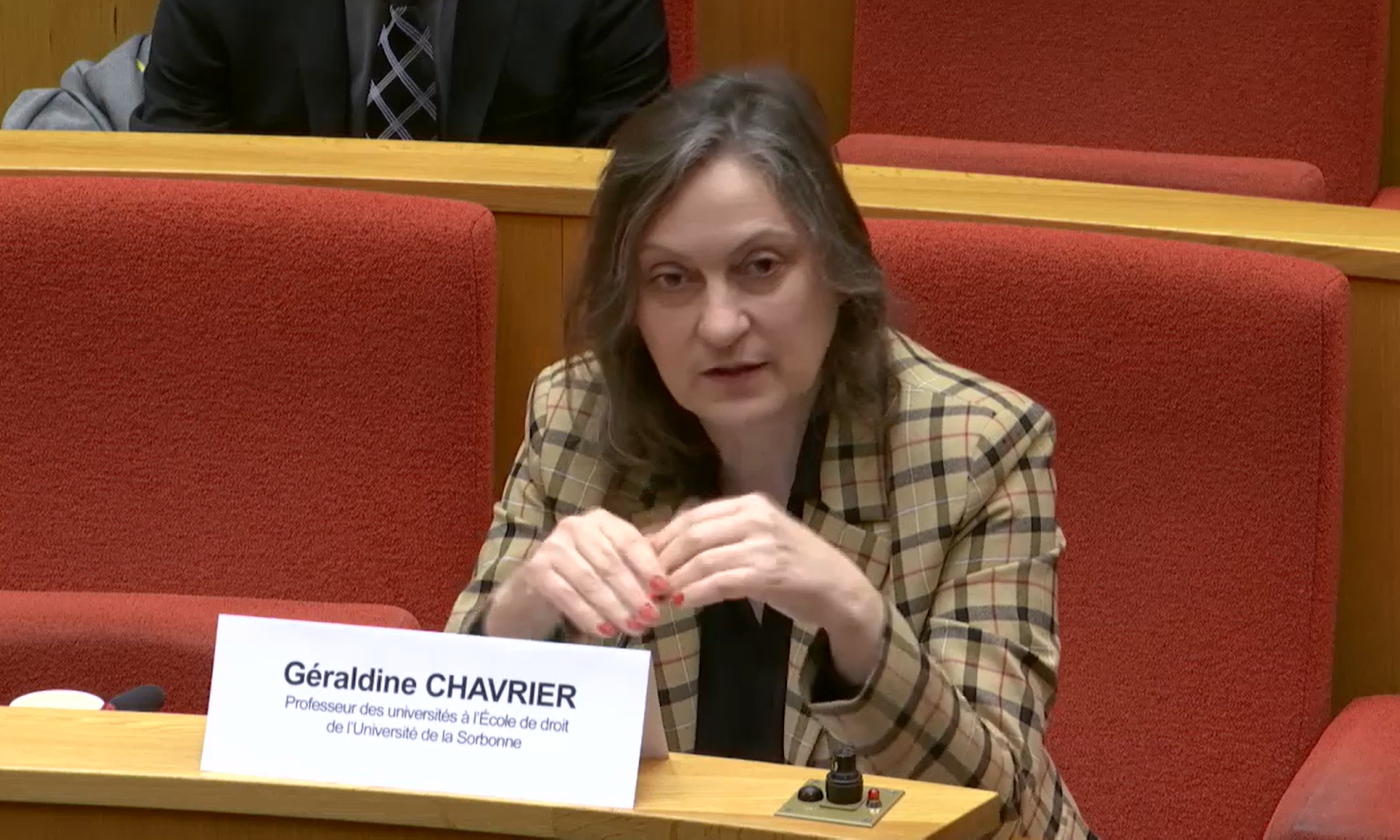
In France, two institutional debates have recently brought territorial differentiation and regional identity-based claims back to the fore. On 8 April, the National Assembly adopted a bill seeking to detach Alsace from the Grand Est region. The text, now before the Senate, would create a collectivity with special status. Some weeks later, on 23 June, the National Assembly also adopted at first reading the constitutional bill for an autonomous Corsica within the Republic. Given France's notoriously hostile approach towards the idea of autonomy and regional languages, these developments deserve close attention. What do they reveal about the French understanding of state unity? And: Is France undergoing a paradigm shift? To understand what is at stake, Géraldine Chavrier - a professor of public law at Sorbonne Law School (Paris 1), who specialises in local government law and contributed to the bills concerning Alsace and Corsica - offers her insight. You can watch the full video interview here.
Anna Wolf: Could you briefly explain what the territorial reform regarding Alsace is about?
Prof. Géraldine Chavrier: Alsace is not as audacious a case as it may seem. The bill concerning Alsace is based on article 72 of the Constitution, which allows for the creation of collectivities with special status. The idea is that Alsace would exercise both departmental and regional powers. It would no longer simply be a department or a region: it would become a collectivity with special status. For such a purpose, an ordinary law is enough. This type of procedure was used previously, e.g. for the city of Paris, where the municipality and department were merged. We are therefore dealing with an institutional rationalisation reform rather than a claim to autonomy. Of course, there is a link with Alsatian identity, history and language. The aim is to restore the borders of the former Alsace region, which existed from 1956 to 2015, before the merger of French regions and the creation of Grand Est region. But at this stage there is no claim to a right to autonomy and no request for special powers comparable to those of an Italian region or a Spanish autonomous community.
What powers would Alsace exercise in practice?
Chavrier: Alsace would not fundamentally change the nature of its powers. It would take over the powers of the Grand Est region within its territory, e.g. economic development, business internationalisation, vocational training, and upper secondary schools. The existing European Collectivity of Alsace, created by the 2019 law from the two departments of Bas-Rhin and Haut-Rhin, already manages departmental powers, such as lower secondary schools, for example. Also, the new entity would not be granted any additional powers to promote bilingualism. Alsace already has specific powers concerning the German language, both in its standard form and its dialectal variants. It can contribute to the promotion of teaching and organise a strategy together with local authorities and the education authority. The change would be that the new entity would also be in charge of regional matters - within the territory of Alsace.
You contributed to the reflection around the Alsatian project. What was your role?
Chavrier: For Alsace, the initiative came from the European Collectivity of Alsace. Its president, Frédéric Bierry, wanted to pursue a long-standing objective: to make Alsace a single collectivity, while recovering its historical borders. He asked me to think about a solution that would not be perceived as an alarming identity-based claim by those attached to a highly centralised conception of the state. The idea I proposed was to place the Alsatian project within a national solution: allowing former regions to recover their borders, but only by merging the departmental and regional levels. This made it possible to respond to a territorial demand while pursuing a public-interest objective: simplification. That broader logic was ultimately set aside, largely because of concerns among existing regions. France, wary of differentiation, ultimately preferred to create a specific Alsatian case rather than accept a nation-wide simplification reform.
For Corsica, instead, I was heard in Parliament. Here, the issue is indeed autonomy, including the recognition of a historical, cultural and linguistic community and the possibility of enhanced normative power.
At what point does territorial differentiation require constitutional revision?
Chavrier: The boundary is complex, because France invokes principles such as the unity of the state and equality without always defining them precisely. At a minimum, the unity of the state implies the unity of sovereignty, and therefore of the law. Once a territorial authority is given legislative power, we leave the field of simple differentiation and enter the field of autonomy. That is when constitutional revision becomes necessary.
In France, differentiation means that different situations may be treated differently, but only to the extent required by that difference. For example, a region facing particular transport issues may have a specific form of organisation. A department may exercise certain different powers if it is in an objectively different situation. Autonomy, by contrast, implies enhanced normative power, potentially at legislative level. That is what changes the scale of the issue.
Why, in the Alsatian case, is this described as simplifying France’s “territorial millefeuille”?
Chavrier: France has a very large number of municipalities – around 35,000. It also has intermunicipal bodies, departments and regions. The debate on territorial simplification therefore returns regularly. Successive governments have wanted to reduce institutional complexity. Since it is difficult to touch the municipal level, which remains the level of proximity democracy, attention often turns to departments and regions.
So, the objective of the Alsatian representatives is twofold: to respond to the Alsatian wish for its own institutional framework, while fitting into a French logic of good public management and simplification.


The “Alsatian wish”: an institutional framework reflecting the region’s cultural and historical identity.
Credit: unsplash | Armands Brands | All rights reservedCan we speak of a paradigm shift in France?
Chavrier: Not really. The French remain very tense about the unity of the state and equality. For many people, equality means that everyone must be treated identically. Yet France is already full of differentiation. There are ordinary municipalities, new municipalities, metropolitan authorities, very different forms of intermunicipal cooperation (e.g. “intercommunalité à statut particulier de Aix-Marseille-Provence”), collectivities with special status such as Paris, the European Collectivity of Alsace, Corsica, as well as overseas collectivities such as French Polynesia and New Caledonia. Some of them have very extensive normative powers. Differentiation therefore already exists, but France often refuses to look it in the face.
Regarding Alsace, I would not speak of a paradigm shift. But because it is Alsace, with its history, language and identity, the reform immediately becomes sensitive. If an ordinary region had made this request, it would probably have caused less anxiety. The case of Alsace actually reveals the level of French anxiety about differentiation. That is precisely why this case must be followed. If Alsace does not manage to obtain this relatively moderate status, it will show how blocked France remains in its conception of territorial unity.
With Corsica, however, it is different. Recognising a historical, cultural and linguistic community would be philosophically new for France.
As regards the next steps for the legal drafts on Alsace and Corsica, what do you expect to happen?
Chavrier: For Alsace, we first have to wait for the in-depth examination requested by the government. It is very likely that the idea is to gain time. The inspection mission was initially expected to continue until November, although there are discussions about bringing it back earlier. Also, in the Senate the text will necessarily be amended, since financial aspects and concrete arrangements have not been sufficiently provided for. Nevertheless, the European Collectivity of Alsace has already carried out important preparatory work on the financial consequences and on mechanisms allowing a smooth transition from the Grand Est region to an Alsatian collectivity.
For Corsica, the situation is different because this is a constitutional bill. The text has passed an important stage in the National Assembly, but it still has to go through the Senate. And the Senate is not always as supportive when it comes to special statuses or autonomy.
Politically, how likely is support for the Alsatian bill?
Chavrier: It is very difficult to say. In the National Assembly, the text was adopted, but in the Senate, the situation is more uncertain. The Senate increasingly accepts differentiation. But adopting this text is not simple. Some groups that today support the Corsican process will not necessarily support Alsace. The fear is always the same: if something is given to Alsace, will it then have to be given to Brittany, the Basque Country or other territories?
Can we expect the far right to support this process of differentiation?
Chavrier: It is very complicated, because the French far right traditionally dislikes the regional level. The great surprise was that it supported the bill on Alsace. But again: the idea was not simply Alsace’s exit from Grand Est. The idea was to create a single Alsatian collectivity – not against the other region. But for good management.
For Corsica, I do not think the autonomy project will be supported by the far right.
Do you think that Corsican autonomy, at the end of this process, will be comparable to that of South Tyrol today?
Chavrier: No. South Tyrol benefits from a particular form of recognition, including within an international framework. Corsica would remain a French territorial collectivity. There is also the language question. In South Tyrol, German and Italian are co-official. In France, moving towards co-official status for the Corsican language remains extremely difficult.
In France, we never move beyond the framework of state unity. Some people have an extremely rigid, almost anxious, vision of that unity. Hence, the Corsican project remains very significant. It would lead to the recognition of a historical, cultural and linguistic community and to the granting of enhanced normative power. Even if it is tightly framed by an organic law, this would go beyond the usual limits of French decentralisation.
What advice would you give to other regions or territories that want more powers?
Chavrier: My first piece of advice would be to use the tools that already exist. The law allows regions to submit requests for differentiation to the state. But collectivities do not use them strongly. If several regions submit solid requests, the state will not be able to ignore them indefinitely.
My second piece of advice would be to support the idea of a general constitutional framework for differentiation. This does not mean asking for autonomy for everyone, or turning France into a federal state. It means recognising that some territories have cultural, linguistic, historical, geographical or economic characteristics that justify adapted institutional responses.
Today, France too often responds under pressure – for example in the cases of Corsica, New Caledonia, and Mayotte – but lacks an overall vision. A differentiation framework designed for everyone would, on the contrary, help preserve the unity of the state by recognising the real differences that exist within its territory. In my view, trying to defend unity by asking everyone to silence their differences is the best way to weaken the unitary state. Everyone must be able to feel at home in France.
Note: This article gives the views of the author(s) and does not represent the position of the European Association of Daily Newspapers in Minority and Regional Languages (MIDAS) or Eurac Research.

Anna Wolf
Anna Wolf is a legal researcher with a focus on language rights. She has recently joined the team of the Center for Autonomy Experience at Eurac Research. She follows with curiosity the continuous evolving of South Tyrol's autonomy, particularly in the area of language rights, from an international comparative lens. A further area of interest to her is the protection of Indigenous language rights, since she conducted doctoral research on the enshrinement of language protection provisions in Australian law, with Murdoch University, Perth. Throughout the last years, she also worked for the Office for Official Languages and Civic Rights (Autonomous Province of South Tyrol), contributed to various research projects on minority rights and comparative federalism (Eurac Research), conducted two traineeships at permanent representations to the Council of Europe, and worked as a journalist.
Discover
Making research visible.
Find the connected experts, projects, publications, and research areas behind this blog post.


This content is licensed under a Creative Commons Attribution 4.0 International license except for third-party materials or where otherwise noted.








 My cookie preferences