


Greenland – the colonial scars
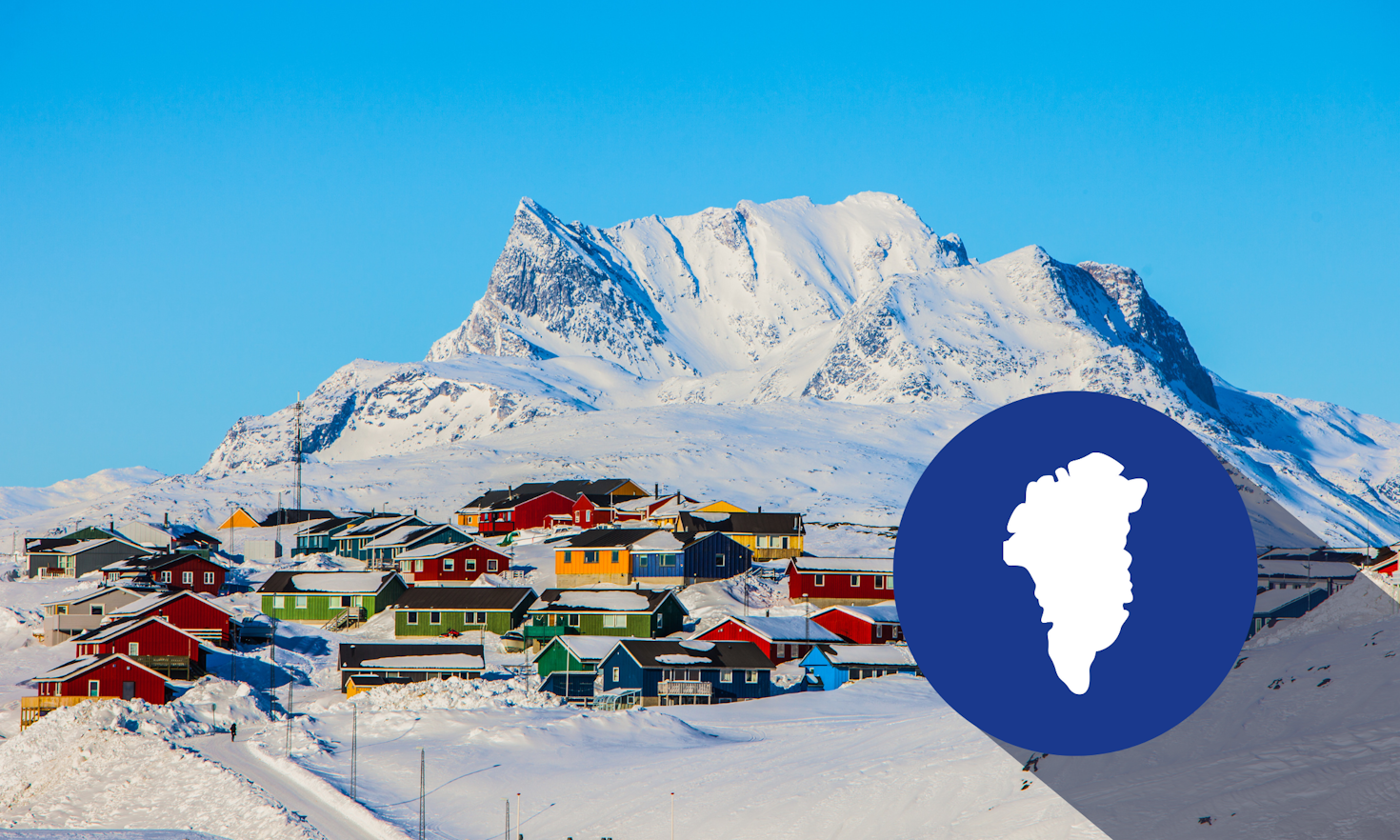
Greenland has been in the centre of global interest ever since the current American president mooted again that he was going to annex the island as the United States apparently needed it – a purely colonial statement echoing national chauvinist notions from periods considered well confined to history.
Greenland’s colonial experience, however, is a much longer one; it is tragic and bears all the hallmarks of the way colonial powers treated minorities and indigenous populations: enforced measures and a degradation of the native Inuit culture dominated the past to such a degree that its scars can still be seen today: children were forcibly removed from their parents and given to Danish foster families, parental competency tests resulted in the forced separation of families, and young women were sterilised without their consent. None of these measures happened in some distant past, but describe colonial practices that lasted well into the 1970s. And even in September 2025, the British Guardian reported that a young Inuit mother had been “separated from her daughter one hour after she was born after a ‘parenting competence’ test long criticized as racist” – the long shadow of colonial practices…
Greenland had become a Danish colony in 1721 and remained so until 1953 when it was turned into a province of the Kingdom of Denmark. In 1979, Greenland was granted home rule status, and in 2009 it became a self-governing entity. During its reign, Denmark pursued a policy of restructuring the native Inuit society by suppressing the Inuit semi-nomadic lifestyle and making Danish the only language of tuition in schools. It was only after 1979 that Kalaallisut, the language of the Inuit, was admitted into Greenland’s classrooms. Some positive aspects of Danish rule over Greenland are occasionally pointed towards, such as the introduction of a school system and further education for the native population. These aspects mirror the overall image of a “benevolent colonial power” people in Denmark retain of this period. However, Denmark pursued a policy of cultural assimilation, and of - if we take the so-called “coil campaign” into account – possible annihilation or genocide of the native Inuit population.
During this so-called coil campaign in the 1960s and 1970s Danish doctors “inserted approximately 4,500 coils or intra-uterine devices into Greenlandic women and girls without their parents’ consent”. It was revealed that some victims of this forced sterilisation were as young as 12 years of age. This extraordinary measure of growth control was introduced as a response to the significant rise in population numbers the island had witnessed in the 1950s and 1960s resulting from improved living standards and increased life expectancy. “The population doubled in size in three decades, increasing from 24,867 to roughly 50,106 in 1980. The number of newborns peaked in 1966 at 1,781 – an increase of almost 80% in 15 years. This in turn increased the cost for the Danish state to provide housing, schools, and other services. It appears that what is now referred to as the ‘coil campaign’ was a solution to this ‘problem’”.
It has been discussed ever since this information surfaced in 2022, whether this campaign qualifies as genocide – a call for the legal profession to make – but what is certain is that this measure clearly violated the free will of the Greenlandic native population and was therefore unacceptable. All the more so as Denmark had passed a law in 1970 allowing “doctors in Greenland to ‘guide’ girls from the age of 15 about birth control without parental consent. Some women also had intra-uterine devices inserted without their knowledge, for example in connection with post-delivery care, or in connection with abortions. Clearly, this shows lack of consent to the procedure in some cases and should be considered an instance of imposing forced birth control.”
The campaign smacked of colonial coercion of past centuries in other parts of the world, namely those instances of forced sterilisation in Germany in the 1930s, in Canada in the same period and in the United States targeting Native American women in the 1960s and 1970s. Yet, even more delicately, it also located Denmark within the unwanted company of contemporary oppressive states, such as China, which has used such methods against the Uyghurs, and allegedly, against other Turkic Muslim populations.
Evidence of the Danish campaign only came to light in May 2022, and created an uproar in Greenland and in Denmark where many citizens, expatriate Greenlanders as well as native Danes, expressed disgust and disapproval. Internationally, it created significant attention and negative publicity. The revelations prompted the Danish prime minister Mette Frederiksen to issue an apology in August 2025, “describing it as systemic discrimination against women and girls by the Danish healthcare system, Frederiksen said that because they were Greenlandic they were subjected to both physical and psychological harm.” More recently the government announced that, from April 2026, survivors of this medical campaign are entitled to claim compensation, however, the coil campaign left an indelible mark on the legacy of the Danish reign over Greenland.
This Danish colonial conduct towards the native population of Greenland partially explains why, in the debate around Greenland triggered by the US president since 2019, a sizeable number of people among its population did not reject outright Trump’s plans to annex the island into the United States of America. Then again, the Greenlanders’ experience with US policies were not all too positive in the past, either: When the US founded and enlarged its Pituffik space base, numerous members of the Inuit community were forcefully removed and resettled in Uummannaq and Qaanaq, while their former home was turned into the runway of the US base.
This was one example that proved to the Greenlanders that US Americans have a completely, that is, utilitarian and exploitative approach to the ecosystem of Arctic nature and its resources and that they also do not correlate to the Inuit way of life within the confines of natural laws. Furthermore, Inuit are not blind to the way indigenous populations and minority groups have been and are being treated in the United States and many have qualms that they may not be treated any differently if they became part of the US.
Donald Trump’s brutal rhetoric during the most recent attempt to swallow Greenland for his chauvinist ‘America first’ policy has driven many Greenlanders, who weighed up the chances of a future within the United States, swiftly into the camp of those who utterly reject a US annexation. There is a widespread sentiment that Greenland has only recently got rid of one colonizer and does not now need another one to achieve lofty ideals of wealth and higher living standards. While Danish colonialisation has left grave scars on the Inuit population, Greenlanders have nevertheless concluded that Denmark and Greenland need to stand together within a European context to stave off the aggressive colonizer from beyond the Atlantic.
Note: This article gives the views of the author(s) and does not represent the position of the European Association of Daily Newspapers in Minority and Regional Languages (MIDAS) or Eurac Research.

Georg Grote
Georg Grote is Senior Researcher in Eurac Research’s Institute for Minority Rights. His research areas comprise Nationalism and Regionalism in Europe, the Transformation of collective Identities and the national and regional histories of Ireland and South Tyrol respectively.
Discover
Making research visible.
Find the connected experts, projects, publications, and research areas behind this blog post.


This content is licensed under a Creative Commons Attribution 4.0 International license except for third-party materials or where otherwise noted.








 My cookie preferences