


Greenland’s role in the Nordic region
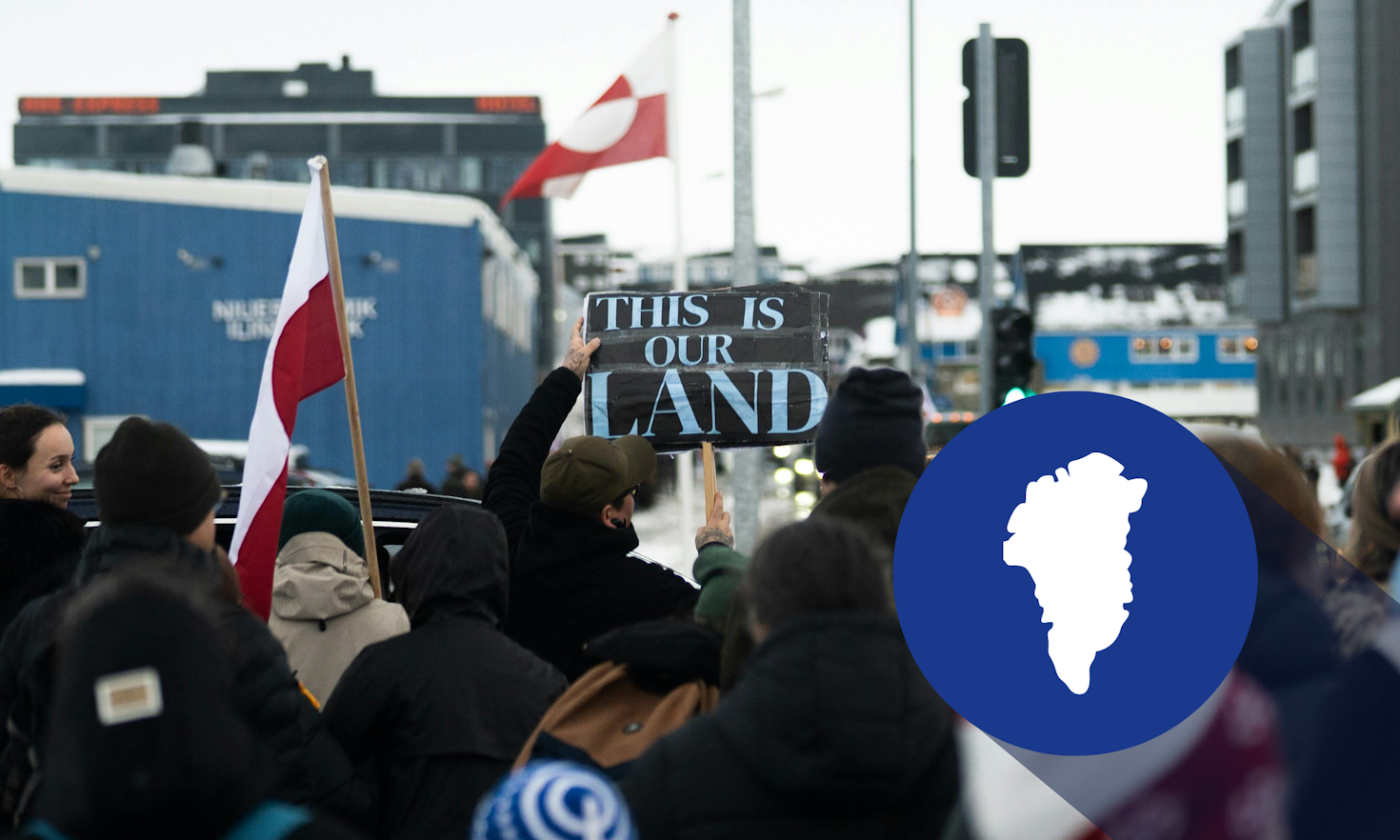
Multilateral cooperation is currently under considerable pressure. Foreign policy actions are increasingly shaped by geopolitics and short-term national interests. This is particularly evident in the claims of the United States of America on Greenland, which have repeatedly been justified, among other things, with security policy arguments. In doing so, it is often overlooked that Greenland has been embedded for decades in a wide range of multilateral cooperation and alliance structures — security-wise through NATO, legally and politically through its relations with the European Union (EU), and regionally through the pan-Arctic and Northern European institutional frameworks.
Greenland participates actively in the Arctic Council and the Inuit Circumpolar Council (ICC). Nuuk maintains a distinct voice within the Kingdom of Denmark’s delegation to the Arctic Council, particularly in the Sustainable Development Working Group (SDWG). Here, Greenlandic representatives advocate for environmental standards that balance protection with the economic necessity of local resource management. This is further complemented by Greenland’s leadership within the ICC, which represents approximately 180,000 Inuit across Alaska, Canada, Greenland, and Chukotka. As a Permanent Participant in the Arctic Council, the ICC ensures that indigenous knowledge—often sidelined in traditional state-to-state diplomacy—is a foundational element of Arctic governance. For Greenland, the ICC serves as a vital tool for "Inuit diplomacy," allowing Nuuk to address trans-border issues such as hunting rights and climate justice that bypass national borders.
The Northern European region aims to become the most integrated and sustainable region in the world by 2030. The Nordic cooperation operates through two distinct yet interconnected pillars: the Nordic Council, which serves as the inter-parliamentary forum for political debate, and the Nordic Council of Ministers, the inter-governmental body responsible for executive decisions and formal policy implementation. While the Council of Ministers provides the framework for binding governmental agreements, it is the Nordic Council that acts as the primary driver for regional initiatives and democratic oversight.
Quiet multilateralism: the Nordic Council as a countermodel to unilateral power politics
The Nordic Council is the world’s oldest regional cross-border inter-parliamentary cooperation established in 1952. It consists of 87 members from the parliaments of Denmark, Finland, Iceland, Norway, and Sweden, along with the autonomous territories of the Faroe Islands and Greenland (both part of Denmark), and the Åland Islands (part of Finland). A defining feature of the Nordic cooperation is its voluntary nature; all members of the Nordic Council retain their full national sovereignty while maintaining equal voting power within the organization.
The Council’s work is managed by the Presidium, which changes leadership annually and acts as the highest decision-making body between sessions. It is responsible for the Council’s political direction, budget, and relations with international organizations like the EU and UN. The strength of this leadership lies in its ability to combine shared Nordic identity with the practical interests of each country. This balanced approach drives the political engine, which consists of four standing committees — Growth, Sustainability, Knowledge, and Welfare — and five party groups that mirror the region’s ideological spectrum. These groups are essential for building consensus across national borders. Each committee manages a specific portfolio: Growth handles labour and trade barriers, Sustainability oversees the environment, Knowledge focuses on education, and Welfare addresses social security. As noted in scholarly research on the "Nordic formula", these committees function through sectorial networks that prioritize collective "policy learning" and benchmarking over rigid legal integration. This model of "differentiated integration" allows the Council to remain flexible, as cooperation never goes further than the national interests of each member permit, avoiding the friction often seen in more rigid supranational organizations. The Council lacks legislative power; instead, it issues Recommendations to ministers. These act as "soft-law" mechanisms; though not legally binding, they carry significant political weight. Once adopted, national governments must report their progress to the Nordic Secretariat in Copenhagen. This oversight ensures initiatives are integrated into national laws. Furthermore, the Council serves as a platform for Arctic cooperation, coordinating responses to global challenges and ensuring the Nordic-Baltic area remains a stable model of multilateral governance.
Greenland in the Nordic Council: participation without statehood
Despite not being an independent state, Greenland is represented in the Council by two members elected from its parliament (Inatsisartut). In the governance structure, Greenlandic representatives operate independently of the Danish delegation, often leading thematic initiatives within the Nordic Arctic Programme. In 2024, Greenland boycotted the Nordic Council’s annual session in Reykjavík — not out of isolationism, but as a deliberate stand against exclusion. The Swedish presidency had omitted Greenland and the Faroe Islands from key ministerial meetings on foreign, security, and defence policy. Then-Premier Múte B. Egede condemned the move as “a lack of equality in Nordic cooperation,” withdrawing Greenland’s participation in protest. The boycott triggered a formal recommendation to revise the Helsinki Treaty.
Greenland plays a decisive role in cooperation fields such as fisheries management, indigenous rights, and climate adaptation, where it often chairs specialized working groups that influence regional environmental standards. This involvement is a prime example of the Nordic "informal governance" model, where sectorial networks allow autonomous territories to influence international policy on equal footing with sovereign states. Greenland’s expanding role is part of a long-term modernization process aimed at increasing the political relevance of Nordic institutions. While the Council has historically excluded hard security and defence from its formal agenda, these recent shifts show an aspiration to act as a more unified political arena in response to global challenges.The geopolitical shifts of 2026 have moved Greenland from a participant to a strategic pivot. The revision process of the Helsinki Treaty, initiated in March 2026, aims to elevate Greenland, as well as the Faroe Islands and the Åland Islands, to equal parties. This would grant Nuuk a stronger voice in matters of Arctic security and the extraction of critical raw materials, securing its influence over resources that are vital for Europe’s decoupling from external monopolies. This evolution reflects the Council's broader shift toward recognizing autonomous territories as full partners in maintaining national sovereignty and protecting the region from external pressures. This strategic upgrade effectively addresses the long-standing deficit in Nordic integration, moving beyond technical coordination toward a unified geopolitical stance.
The strategic importance of Greenland has made it a focal point of global geopolitics, particularly concerning the interests of the United States. U.S. interest is historically documented, with formal purchase offers. However, the rhetoric escalated significantly in 2019 and again during the 2024–2026 period. For the U.S., Greenland represents a dual asset: a critical "unsinkable aircraft carrier" for Arctic defence (centred around Pituffik Space Base) and a treasure trove of critical raw materials (rare-earth elements, lithium, and cobalt). As climate change accelerates the melting of the ice sheet, access to these resources becomes a matter of national security, especially as the West seeks to decouple its supply chains from Chinese dominance.
In response to these external pressures, the Nordic Council has reinforced its commitment to Greenland as a “crucial and inseparable part“ of the Nordic family. On 8 January 2026, the Presidency of the Nordic Council issued a formal statement reiterating the "inalienable right" of the people of Greenland to decide their own future, calling it an inviolable principle of international law. While the Council acknowledges strong security and economic ties with the United States as NATO allies, it emphasizes that such cooperation must strictly respect national sovereignty and territorial integrity. This institutional protection of Greenland's autonomy is consistent with the broader Nordic model of “differentiated integration“.
Emerging trends and future developments
As mentioned above, Nordic cooperation is designed to promote integration only where common interests exist, while respecting different speeds and extents of involvement for its various members. To give this diplomatic stance practical weight, the Council is increasingly focusing on “Nordic Comprehensive Security“. This strategy aims to keep the Arctic a zone of "high cooperation and low tension" by ensuring that critical infrastructure—such as telecommunications and transport—remains under Nordic control. A key example of this policy is the prioritization of Danish and Nordic funding for Greenlandic infrastructure, such as the major airport expansions in Nuuk and Ilulissat, specifically to maintain economic sovereignty. A primary focus of the Nordic cooperation is the digitalization of cross-border life through the Nordic-Baltic eID (NOBID) project. This initiative aims to create a common digital ID, allowing citizens from Nordic and Baltic countries to access public services, healthcare, and banking seamlessly across borders, effectively creating a "digital Schengen area."
In light of global instability, the Council has also shifted its focus toward defence and civil preparedness. This includes the establishment of common strategic warehouses for essential commodities such as grain, medical supplies, and energy resources. Following the Russian invasion of Ukraine and the subsequent accession of all Nordic countries to NATO, security cooperation has moved to the forefront of the Council’s agenda. The current strategy emphasizes “Nordic Resilience“, which involves securing critical undersea infrastructure, coordinating cyber-defence, and ensuring that the Nordic-Baltic region can act as a unified, self-reliant bloc in times of crisis.
Note: This article gives the views of the author and does not represent the position of the European Association for Daily Newspapers in Minority and Regional Languages (MIDAS) or Eurac Research.

Eduard Bohdálek
Eduard is a trainee at the Institute for Minority Rights at Eurac Research. He is currently pursuing a bachelor's degree in applied geography at the Technical University of Liberec, where he is in his second year of studies. His academic interests lie at the intersection of spatial analysis, regional development, and the cross-border cooperation in Central Europe.
Discover
Making research visible.
Find the connected experts, projects, publications, and research areas behind this blog post.


This content is licensed under a Creative Commons Attribution 4.0 International license except for third-party materials or where otherwise noted.







 My cookie preferences