Iaco Rigo: ‘We have overcome the obstacles of globalisation’
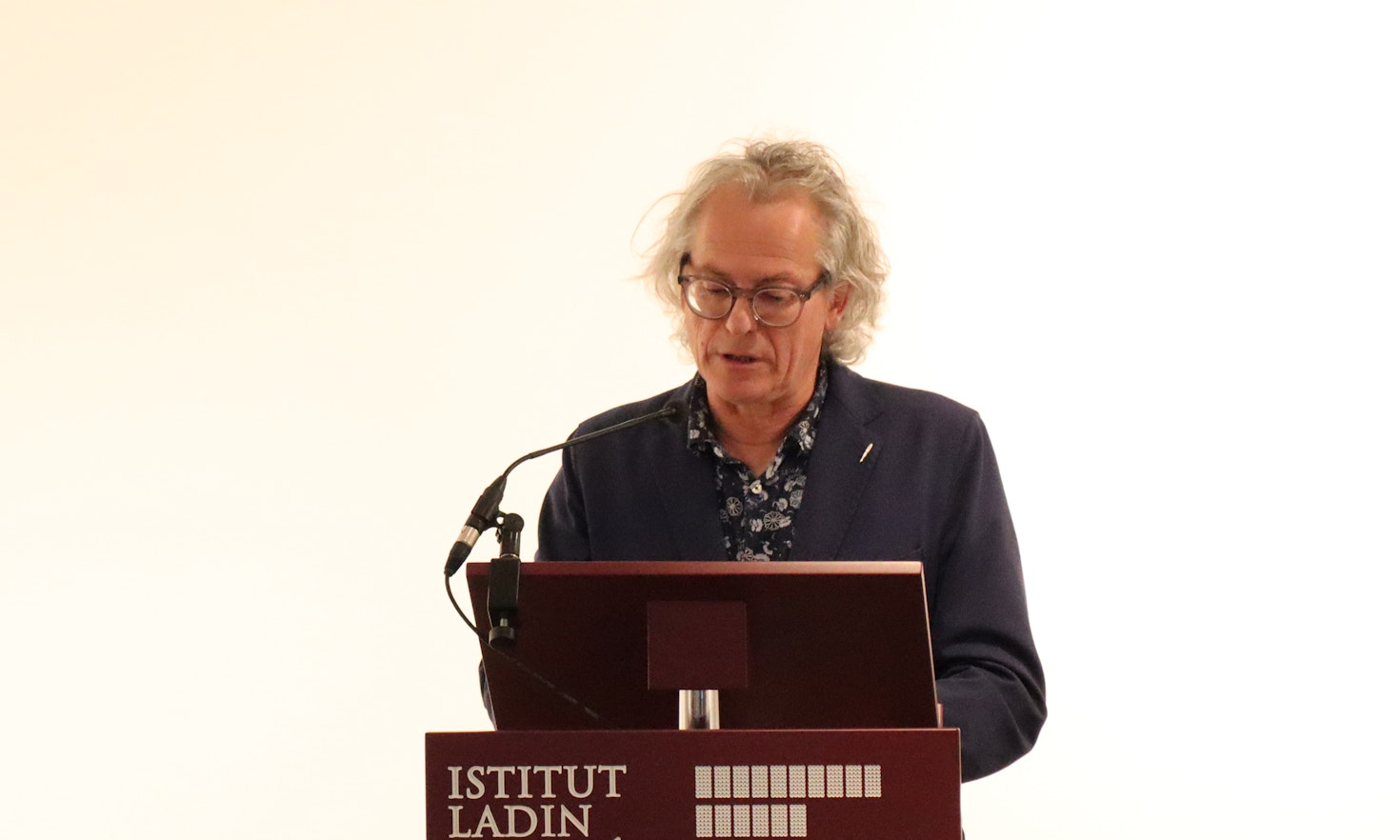
La Usc di Ladins, the Ladin weekly newspaper published in northern Italy, has become the newest member of MIDAS, the European Association of Daily Newspapers in Minority and Regional Languages. Editor-in-chief Iaco Rigo discusses the role of the newspaper in sustaining Ladin, the challenges facing minority-language journalism, and the opportunities offered by joining the association.
Urtzi Urkizu Adrián: How did you react when you learned that La Usc di Ladins had been accepted as a member of MIDAS?
Iaco Rigo: We were delighted. It is a pleasure to become part of a family that shares our values and objectives. Working alongside others who are committed to local journalism creates new opportunities for greater visibility and for exchanging ideas and experiences.
Urkizu Adrián: Do you already work with journalists from long-standing MIDAS member publications?
Rigo: Yes. We have an excellent relationship with Dolomiten, the German-language daily newspaper published in Bulsan/Bozen/Bolzano, South Tyrol. We are also very familiar with the Romansh media landscape in Switzerland. Romansh belongs to the same Rhaeto-Romance language family as Ladin, so we have always felt close to one another.
Urkizu Adrián: MIDAS has welcomed another language through your membership – Ladin. What kind of language is it?
Rigo: Ladin is a Romance language. It belongs to the Rhaeto-Romance family, alongside Romansh and Friulian.
It is a culturally and linguistically homogeneous area, but unfortunately it is divided between three provinces and two Italian regions.
Iaco Rigo
Urkizu Adrián: Where is Ladin spoken?
Rigo: Ladin is spoken in the central Dolomites: in Val Badia, Gherdëina, Fascia, Fodom and Anpezo. It is a culturally and linguistically homogeneous area, but unfortunately it is divided between three provinces and two Italian regions.
Urkizu Adrián: Your newspaper sells around 4,000 copies each week. Given the size of the Ladin-speaking community, that is a remarkable figure, isn’t it?
Rigo: La Usc di Ladins means ‘The Voice of the Ladins’. We publish a print edition every week, while the most important news is updated daily on our website and across our social media channels.
Urkizu Adrián: How many readers do you reach?
Rigo: The print edition has a potential readership of around 15,000 people. Our online news stories attract about 1,100 readers.
Urkizu Adrián: How visible is Ladin on radio and television?
Rigo: There is a daily television news bulletin in Ladin, and the Italian public broadcaster RAI also produces radio programmes in the language. Unfortunately, the main television bulletin lasts only four and a half minutes, although there is a second edition of around ten minutes. In addition, there are cultural and economic programmes on both radio and television. Altogether, around 300 minutes of Ladin-language broadcasting are aired every week.
It is equally important that Ladin speakers have access to news about their own communities as well as international events. Having this information available in Ladin is essential for discussion in public life and within families.
Iaco Rigo
Urkizu Adrián: How important has La Usc di Ladins been to the survival of Ladin in recent years?
Rigo: Our work has been crucial. We have succeeded in overcoming many of the challenges brought about by globalisation. One encouraging sign is that many people now write their Facebook posts in their mother tongue – Ladin. That is a very positive development. It is equally important that Ladin speakers have access to news about their own communities as well as international events. Having this information available in Ladin is essential for discussion in public life and within families. It also helps preserve specialist vocabulary in the language.
Urkizu Adrián: Your newspaper receives public funding. What does the current funding situation look like?
Rigo: Fortunately, we have three main sources of public funding. Every year we receive €230,000 from the Italian government, €60,000 from the Autonomous Province of Bulsan/Bozen/Bolzano and a further €50,000 from the Autonomous Province of Trent/Trento.
Urkizu Adrián: How do you see the future of La Usc di Ladins?
Rigo: We are living through a period of transition, both socially and between generations. We hope that middle-aged readers and families will continue to renew their subscriptions to our weekly edition. I also hope that people will remain interested in reading local news from our valleys. We are the only publication dedicated to reporting local events across the Ladin valleys, and that gives us every reason to believe in the importance of our role in the years ahead.
Urkizu Adrián: How do you think MIDAS will support your work in the future?
Rigo: I certainly hope it will. The value of joining MIDAS will depend on how actively we participate in the association, exchange news with other members and make use of the opportunities created by multilingual cooperation and translation.
Urkizu Adrián: Can you sum up your journalistic philosophy in a single sentence in Ladin?
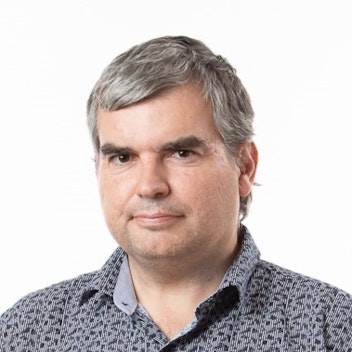
Rigo: Olache al é la usc, él la notizia. It means: ‘Where there is a voice, there is news.’
Note: This article gives the views of the author(s) and does not represent the position of the European Association of Daily Newspapers in Minority and Regional Languages (MIDAS) or Eurac Research.

Urtzi Urkizu Adrián
Urtzi Urkizu Adrián is a journalist with a degree in journalism. He co-founded the magazine Orratx! and was news director at Oarso Telebista in 1998. He worked at Euskaldunon Egunkaria until its closure in 2003 and has been with Berria since its founding. Urkizu has directed two documentaries, No excuse (about the Mikelazulo cultural association) and Euskaldunon Goya (about the film producer Luis Goya), and authored two books: Beta (2007) and Kezka bat gutxiago (2012). From 2012 to 2020, he was a coordinator and scriptwriter for the TV show Zurriolako butaka. He co-directed the podcast 25. Fotograma in 2021 and has covered cinema for Berria for 14 years at the Donostia/San Sebastián Film Festival. He also hosts the podcast Kroketak and published the book Txoria hodei artean. ETB lehen eta gero about the past and future of Euskal Telebista in 2024. In 2025, he won the MIDAS Prize for Journalism in Minority Protection and Cultural Diversity in Europe.
Discover
Making research visible.
Find the connected experts, projects, publications, and research areas behind this blog post.
This content is licensed under a Creative Commons Attribution 4.0 International license except for third-party materials or where otherwise noted.