“It all began with the fear of closure”: Bojan Brezigar on the founding of MIDAS
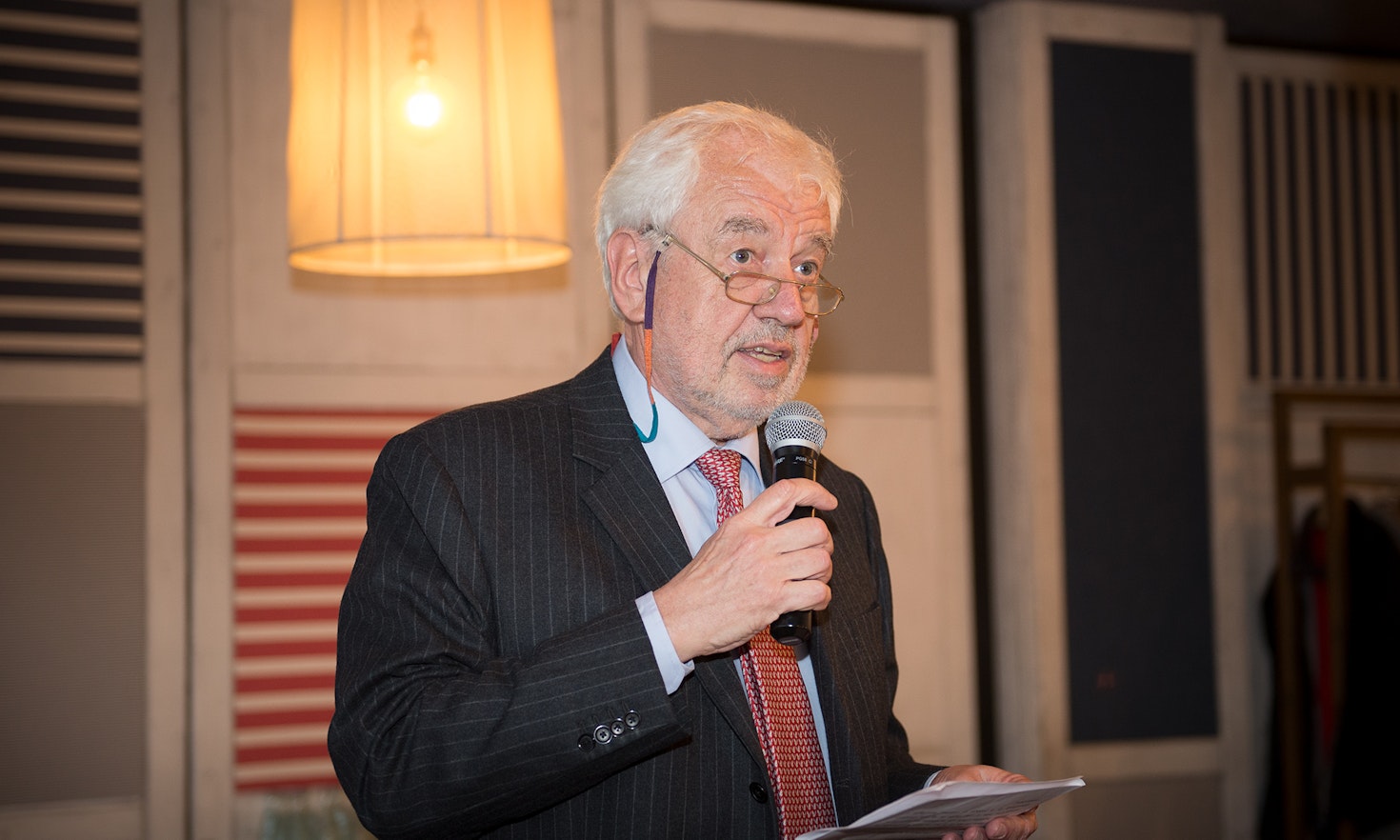
This year, three long-standing and distinguished figures stepped down from the MIDAS Governing Board: Bojan Brezigar, Toni Ebner and Edit Slezák. All three played a key role in shaping MIDAS since its foundation in 2001. Hatto Schmidt interviewed each of them.
About Bojan Brezigar
Even as a schoolboy, the future editor-in-chief wrote for the Slovenian daily Primorski dnevnik, published in his home town of Trst/Trieste. Brezigar was the paper’s Rome correspondent and editor-in-chief from 1992 until his retirement. He has held numerous political posts, including local councillor and mayor of Devin-Nabrežina/Duino-Aurisina, member of the Provincial Council of Trst/Trieste and to the Regional Council of Furlanija-Julijska Krajina/Friuli-Venezia Giulia. Brezigar is a founding member of the Slovenian Research Institute Slori in Trst/Trieste and of the Italian minority organization Comfemili, for which he was a long-standing representative in the European Bureau for Lesser-Used Languages (EBLUL).
MIDAS (Hatto Schmidt): You were there when the idea of founding the European Association of Daily Newspapers in Minority and Regional Languages (MIDAS) was born. How did that happen?
Bojan Brezigar: The idea stems from a very simple but very serious political issue. In the second half of the 1990s, the European Commission started a controversy about subsidies by saying that private companies should not receive any subsidies from the public sector, neither from the state nor from the regions or municipalities.
MIDAS: What would that have meant for minority dailies?
Brezigar: I was editor-in-chief and managing director of Primorski dnevnik at the time, and we were in great financial difficulty. We were very dependent on a law of the Italian Republic, which granted a certain contribution to minority newspapers. We were threatened with closure, there was simply no other funding. In view of the Commission’s plan, we were very worried about our future. In this situation, we wanted to know what other newspapers were doing.
MIDAS: Other minority newspapers?
Brezigar: Yes. We found 30 minority newspapers in Europe. One situation was quite unique: Serbia had banned newspapers in Albanian, and Kosovo was still part of Serbia, so there were three Albanian newspapers published in Switzerland. Among all these newspapers, there were two numerically large groups. One was in Spain: the Catalans and the Basques. The Catalans used to have five or six dailies, now there are fewer. And then in Finland there were five or six Swedish newspapers. In 1998 we wanted to organize a conference in Trst/Trieste with these minority newspapers to discuss the problem of public funding. Thanks to the European Commission we were able to find the money for it.
MIDAS: How was this achieved?
Brezigar: I was President of the European Bureau for Lesser-Used Languages (EBLUL) at the time and I went to the European Commission. There was an official there who later became Director General, a certain Domenico Leonarduzzi. His father was from Friuli in Italy and had immigrated to Belgium after the Second World War to work as a miner in the coal mines of Charleroi. This was the result of a very unpleasant but useful policy, as there was a shortage of coal in Italy after the war. So a barter agreement was made with Belgium: labour for coal. In Charleroi, the family lived in a shack with tin walls and no heating, with children! Leonarduzzi had health problems, he had poliomyelitis as a teenager and his mobility was limited. He was placed in a children’s home where a priest recognized his intelligence. The priest allowed him to study, he gained two degrees and made a career for himself. He showed great interest in his father’s home region. That’s how we became friends. I told him about our problem and he introduced me to a colleague who raised the funds. That meeting was the birth of MIDAS.
MIDAS: Who attended the conference?
Brezigar: There were representatives of all the newspapers I mentioned, but also minority newspapers from Germany, Denmark and the Canton of the Grisons, and a Hungarian newspaper from Slovakia. Over lunch, the publisher of Primorski dnevnik, Michl and Toni Ebner and I thought it might be useful to set up an association to represent all these minority newspapers in their dealings with the EU Commission and to prevent the blocking of public funds. So the idea was born in Trst/Trieste. The following year, the Dolomiten organized the next conference, where it was decided to set up MIDAS.
Fourteen minority daily newspapers made an informal commitment to join MIDAS at the constitutional assembly in Palma. The decision was made to set up the organisation. Bojan Brezigar was present at this meeting (eighth from the left).
Credit: MIDAS | All rights reservedMIDAS: Did South Tyrol play a role in this?
Brezigar: The Province of South Tyrol allowed the project to continue with its financial support. The following year, the inaugural meeting was held in Palma, organized by the Catalan newspaper that existed in Palma at the time. South Tyrol has been very supportive in every way, and Eurac Research has been very helpful. We quickly agreed that MIDAS should be based in Balsan/Bozen/Bolzano. Michl and Toni Ebner had asked me to take over the presidency, but I told them that it would be better if the presidency, at least for the first term, was taken over by someone from the region from which we receive funding, in order to secure the future of the association. The Region of Furlanija-Julijska Krajina/Friuli-Venezia Giulia had no intention of supporting us financially.
A daily newspaper in a minority language is not a business, it is a constant sacrifice for everyone and only brings costs.
Bojan Brezigar
MIDAS: So the problem of public sector funding had been solved?
Brezigar: Not immediately. We intervened repeatedly with the European Commission, went to Brussels for talks, and the Commission decided to exempt minority newspapers from the restrictions on public funding. So we were successful, but it wasn’t easy. I remember more than one trip to Brussels and more than one meeting with Commission officials whom we had to convince of our case: a daily newspaper in a minority language is not a business, it is a constant sacrifice for everyone and only brings costs. All minorities, with the possible exception of the Catalans, are small communities, so they all had problems with the cost of printing and distribution, and no newspaper was able to cover these costs on its own – without public contributions.
We travelled all over Europe to explain the idea of togetherness in Europe and the importance of newspapers for this European idea.
Bojan Brezigar
MIDAS: What were the biggest challenges MIDAS had to overcome?
Brezigar: There have been some very difficult moments. Just think of the arrest of Martxelo Otamendi by the Guardia Civil and the closure of the printing plant of Euskaldunon Egunkaria, the Basque newspaper, in Andoain. We immediately activated all our contacts. I managed to organize a formal protest by the Italian Chamber of Journalists. It was the first political closure of a newspaper in Europe since the Second World War. We travelled all over Europe to explain the idea of togetherness in Europe and the importance of newspapers for this European idea. Then Toni Ebner came up with the idea of the Otto von Habsburg Prize. At that time Habsburg was still an important politician, even though he was no longer a member of the European Parliament. But Bernd Posselt, who had been Otto von Habsburg’s most important assistant, was now sitting there. We were very lucky then.
MIDAS: To what extent?
Brezigar: In the parliamentary working group, which is now called the Intergroup for Traditional Minorities, National Communities and Languages, you could focus on language issues. We were able to achieve a lot and move things forward, including through resolutions in the European Parliament. But the first one was a special case. It was tabled by the Italian socialist Gaetano Arfé. But in fact – I discovered this by chance – it was a document drawn up by John Hume. This Catholic Northern Ireland politician had been awarded the Nobel Peace Prize in 1998, together with the Protestant David Trimble, for the Northern Ireland peace agreement. We organized an event with EBLUL at the European Parliament. We invited a lot of MEPs. John Hume came. He gave me a piece of paper and said: ‘Look, this is the first European Parliament resolution on national minorities’. I looked at it and said to him: ‘Excuse me, but this is the Arfé resolution’. And he replied: ‘Sure. But that was the way it was then: if a Northern Irishman had presented such a document, it would not have been adopted’. So Hume gave it to Arfé and he carried on with great success. What modesty on the part of this great personality!
MIDAS: How has MIDAS evolved over time?
Brezigar: We have seen new newspapers emerge, but unfortunately there have also been closures. Above all, there have been major problems with distribution. For example, after the fall of communism, four Hungarian and one German newspaper were established in Romania, in remote areas. Every day, countless kilometres are covered before the paper reaches the reader’s doorstep. Unfortunately, we have also seen the closure of many Swedish newspapers in Finland. The costs were too high. Then came the internet and newspapers had to adapt. Some have changed completely, such as Der Nordschleswiger, which has done an excellent job. In 2016/17 MIDAS lost two newspapers in Catalan.
MIDAS: How did this come about?
Brezigar: MIDAS held the General Assembly in Barcelona, with contributions from the Catalan government, which was pushing for independence at the time. Two newspapers didn’t want to attend because they said we write in Catalan but we’re not for independence. That’s why they left. These processes are quite normal, quite logical, but traumatic for such a small organization. But MIDAS has consolidated, let’s hope it can continue its work.
The MIDAS journey: A European history

Together with many others, Bojan Brezigar, Toni Ebner and Edit Slezák have played a decisive role in shaping MIDAS since its foundation in 2001. As a token of gratitude and in anticipation of the association's 25th anniversary in 2026, MIDAS has published the booklet "The MIDAS journey: A European history". Through brief texts and images, it offers a retrospective look at the association's history. The above interview is featured in the booklet.

Hatto Schmidt
Hatto Schmidt was born and raised in Baden-Württemberg, Germany. He studied history and political science in Freiburg and Tübingen, and then spent 33 years working as a journalist for the daily newspaper Dolomiten, which is published in South Tyrol. He has dealt with questions and problems of national minorities for many years.
Discover
Making research visible.
Find the connected experts, projects, publications, and research areas behind this blog post.
This content is licensed under a Creative Commons Attribution 4.0 International license except for third-party materials or where otherwise noted.

This blog is supported by the European Association of Daily Newspapers in Minority and Regional Languages (MIDAS). MIDAS was founded in 2001 to provide assistance to minority language newspapers and nowadays has members all over Europe. MIDAS serves as a platform for exchange, uniting minority language newspapers to present a collective voice to the European institutions.