Living without recognition: Macedonians in Greece and their struggle
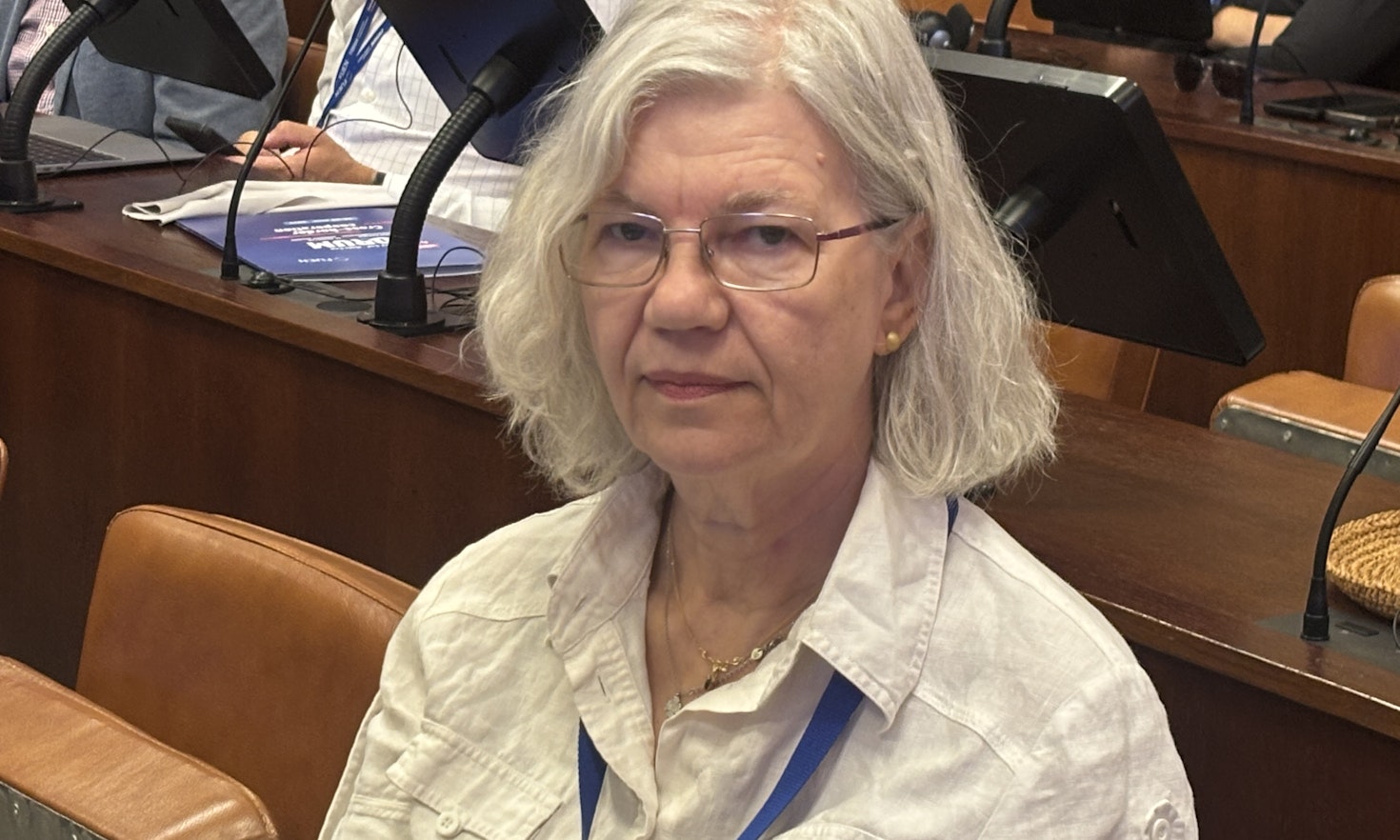
At the end of June, the Federal Union of European Nationalities (FUEN) held its annual congress in Novi Sad. Among the participants was Eugenia Natsolidou, representative of the organisation Krste Misirkov, which speaks for the Macedonian minority in Greece. While Greece officially denies the existence of this minority and refuses to recognise the Macedonian language, the community continues to fight for its rights – often under difficult circumstances. In this interview, Natsolidou describes the challenges faced by Macedonians in Greece and the lack of support they receive, not only from Athens but also from North Macedonia itself.
Bojan Brezigar: Could you please introduce yourself first?
Eugenia Natsolidou: I represent the Macedonian minority in Greece and I am a member of the non-profit organisation Krste Misirkov, which is part of FUEN. We are also a member of NPLD, based in Brussels, which brings together nations without representation in public institutions.
What is the situation of the Macedonian minority in Greece today?
There is no situation, because Greece officially denies our existence, claiming that there are no minorities in Greece other than the Muslim minority recognised under the Treaty of Lausanne, and only in Western Thrace. Even there, the Muslim minority is not recognised in Athens or Thessaloniki, nor on the islands of Kos and Rhodes, where they actually exist. In reality this is a Turkish minority, but Greece consistently refers only to Muslims.
In which areas do Macedonians live?
Macedonians live in all three regions that Greece calls Eastern, Central and Western Macedonia. The largest number of those willing to declare themselves live in Central and Western Macedonia.
How many are there, approximately?
According to some institutions, there are around 150,000, which is actually not very many, considering how large the region is. But Greece does not allow this to be verified during the national census, held every ten years. Citizens cannot declare that they belong to any ethnic or linguistic minority.
When I visited the region some years ago, I noticed that the Greek authorities do not recognise the Macedonian language at all.
Exactly. Greece insists that our language is merely a dialect of Bulgarian. But if they say it is Bulgarian, they should at least recognise such a minority. Greece has never recognised any Slavic language since 1923, when the League of Nations forced Greece to sign a protocol obliging it to protect all minorities in the new territories acquired after the First World War. That protocol exists – it was ratified in 1923 – but more than a century later Greece still refuses to implement it, despite our repeated calls for the government to do so.
The NGO Krste Misirkov is the only body that represents Macedonians internationally.
Eugenia Natsolidou
If I understand correctly, the Macedonians in Greece have no schools and no recognised organisations. Do you have any organisations at all?
Our NGO is the only body that represents Macedonians internationally, and it is registered as a non-profit company. This is the only organisation that the state cannot shut down. Macedonians in Greece have founded a number of organisations, some of which were initially recognised. But after protests from some groups, the authorities dissolved them all.
I recall there was also a Macedonian political party, Rainbow.
Yes, the state could not dissolve that party because the constitution forbids it. But the party is not very active.
Does it take part in elections?
No, not in local elections, which is a great pity.
Is it not allowed to, or does it choose not to?
It chooses not to.
What is the point of a political party if it does not run in elections?
I really don’t know. The Turkish minority has a political party that runs in European elections, where Rainbow also runs, though unsuccessfully. But the Turkish party also elects representatives at local level in Thrace. Knowing they would not get enough votes otherwise, some of their candidates stand on the lists of Greek parties.
Could Macedonians not do the same?
Some Macedonians have been elected at local level in this way, but they never declare themselves as Macedonians. They act as Greeks and do not demand any rights for our community.
Thessaloniki is the capital city of Central Macedonia.
Credit: Unsplash | All rights reservedWhat is your relationship with the Republic of North Macedonia?
We have no regular relations. I think North Macedonia does not maintain special relations with minorities, not with us in Greece, nor with the Macedonian minority in Bulgaria. They care somewhat for their minority in Albania, but not for those in Greece or Bulgaria. Under international law they would be entitled to support us, especially in terms of language and culture, but they do not. Our only support comes from the diaspora – Macedonians of Greek origin living abroad in Canada, Australia and elsewhere. Not from the government in Skopje.
Greece strongly supports its minorities abroad, even communities in southern Italy that speak an archaic form of Greek. Yet within Greece it refuses to recognise any minority.
Eugenia Natsolidou
Recently Greece blocked Albania’s accession to the EU, claiming Albania did not protect the Greek minority. Isn’t it strange that Greece looks after its minorities abroad but ignores minorities at home?
Of course. Greece strongly supports its minorities abroad, even communities in southern Italy that speak an archaic form of Greek. Yet within Greece it refuses to recognise any minority. It even challenged the name of North Macedonia for decades, insisting on its sole right to the name ‘Macedonia’. Sadly, the international community has gone along with such positions instead of defending the Macedonian minority in Greece and the descendants of those expelled during the civil war 75 years ago. We are talking about thousands of people and about 30,000 children who were taken by the communist party to what is now North Macedonia. Greece has never allowed them to return, stripped them of citizenship and confiscated their property.
Can those people return to Greece now, at least as tourists?
It depends on the name in their passport. Many are turned away at the border with various excuses. Because of this, most people no longer try.
When Syriza won the elections some years ago, it promised a lot to minorities. Then nothing happened. Now it is making promises again…
I wouldn’t know. They make promises, but always unofficially. Look, the policies of Greek parties towards minorities – from the far left to the far right – are always the same. Identical. For them it is a national issue.
So for them the Macedonian language does not exist?
No.
When I visited cultural associations of the Macedonian minority in Greece, they were very small. I noticed there were no written captions on the photographs on the walls. When I asked why, they told me they were not allowed to write anything in Macedonian, because the authorities claim the language does not exist.
That is exactly the case. For them our language does not exist. Even some left-wing parties, such as Yanis Varoufakis’ party, are not far from that position. Some included minority rights in their programmes, but removed these clauses after the elections. Macedonians voted for Varoufakis once, but never again.
Our strategy for the future is to keep fighting against injustice. We are not only fighting for minority rights, we are fighting against discrimination.
Eugenia Natsolidou
What is your strategy for the future?
Our strategy is to keep fighting against injustice. We are not only fighting for minority rights, we are fighting against discrimination. Every initiative we want to launch is prohibited by the authorities. We are left with no choice but to go to court. But this never helps, because judges always acquit the state. They politely tell us we have misunderstood, and the courts accept this argument.
That sounds unbelievable…
Yes, unbelievable. I am now preparing a new case. I stood as a candidate on the list of the Turkish party DEP – with no real chance of election, but as a symbolic gesture. On television, while critics attacked the Turkish party, my face was on screen the whole time. Viewers saw my photo as if I were some kind of agent of the Turkish government. Now I have to bring another lawsuit.
The Turkish minority has brought cases to the European Court of Human Rights and won, but Greece does not implement those rulings. Have you considered going to the court?
No, because those rulings do not provide compensation to the victims, and Greece ignores them anyway. This has been going on for years. The problem is that there are no penalties. If I committed a crime, I would be punished – prison or a fine. With ECHR rulings there are no penalties, no enforcement, and Greece simply disregards them. There is no court that can punish Greece for such violations.
How do you see the future?
I am an optimist, I always see the glass half full. I believe that external pressure is needed. With the right information about what is happening in Greece, and by countering Greek propaganda, we could at least achieve some of our rights.

Bojan Brezigar
Bojan Brezigar is a Slovenian journalist and political scientist from Trieste, Italy. He is the former editor-in-chief of Primorski dnevnik, the daily newspaper of the Slovenian minority in Italy, which was established in 1945. For nearly 50 years, Brezigar has been deeply involved in matters concerning minority groups. He is a founding member of the Slovene Research Institute in Trieste and served as president of the European Bureau for Lesser Used Languages from 1994 to 2003. Since his retirement in 2008, Brezigar has continued his work by publishing a weekly page every Sunday in Primorski dnevnik, focusing on minority issues.
Discover
Making research visible.
Find the connected experts, projects, publications, and research areas behind this blog post.
This content is licensed under a Creative Commons Attribution 4.0 International license except for third-party materials or where otherwise noted.
This blog is supported by the European Association of Daily Newspapers in Minority and Regional Languages (MIDAS). MIDAS was founded in 2001 to provide assistance to minority language newspapers and nowadays has members all over Europe. MIDAS serves as a platform for exchange, uniting minority language newspapers to present a collective voice to the European institutions.