Milan Rakovac: ‘Fascists block progress’
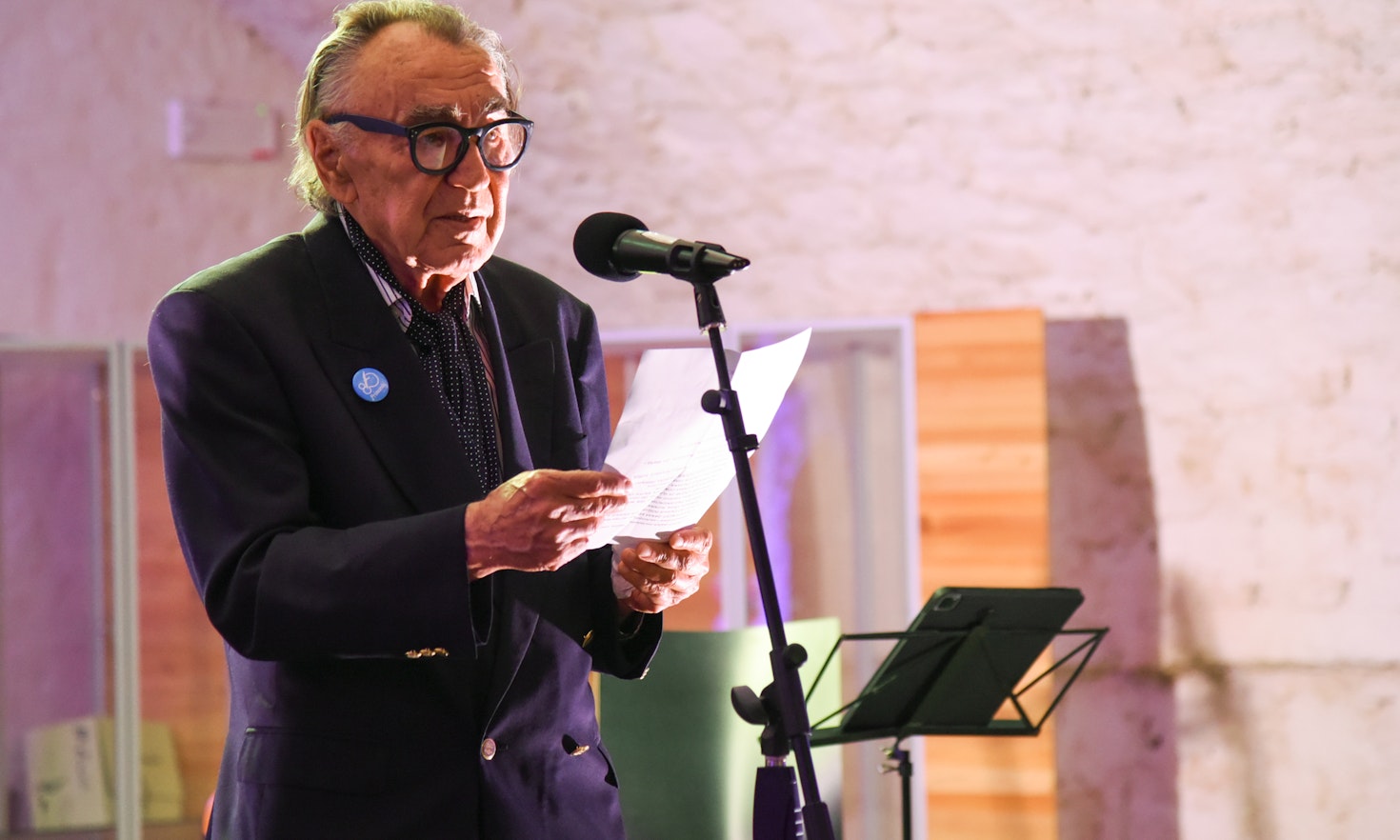
Croatian writer and journalist Milan Rakovac received the 2025 Otto von Habsburg Prize for Journalism, awarded annually by MIDAS. Rakovac (born in Rakovci, Croatia, in 1939) has had a long career in journalism, literature and broadcasting. The interview took place the morning after the award ceremony, at a hotel in Nova Gorica, Slovenia. He invited Urtzi Urkizu Adrián to the terrace, lit a cigarette and signalled he was ready to talk. The interview originally appeared in the Basque daily newspaper Berria.
Urtzi Urkizu Adrián: When receiving the Otto von Habsburg Prize, you remembered the journalists in Palestine killed by Israel. Do you believe this is an issue that should be spoken about loudly and clearly?
Milan Rakovac: It’s important to raise our voices, of course, especially when Israel is executing journalists and innocent civilians. That’s a barbaric way to conduct war. Going back in history, my grandfather was taken to the Flossenbürg concentration camp [Germany] during World War II, and my father was killed during that same war. I was only five years old and became the heir of the family. Of course, I was just a child, but somehow that child was forced to grow up fast, to be a man.
What does receiving the Prize mean to you? How are you feeling?
I feel well. First of all, I want to say that I feel like one of you. Let me tell you something: I still vividly remember what Spanish fascism did. ETA was formed before the death of the dictator Francisco Franco, and for me, it felt as if we were in the same liberation struggle. To put it in perspective, my father was a member of the Communist Party and had ties with Italian anti-fascists. We faced Spanish, Italian and German fascists. In that context, I have always felt like a member of a minoritised people – just like you.
Milan Rakovac and Urtzi Urkizu Adrián, winner of the 2025 MIDAS Prize for Journalism, at the awards ceremony
Credit: Carlo Sclauzero | All rights reservedAs a child, you moved to Pola/Pula (Istria, Croatia). Later, as a teenager, you moved to Zagreb. What do you remember of those times?
We moved to Zagreb when I was 13. I was an Eastern boy in the capital of Croatia, and I never felt particularly tame. I came from the working class, and it was the children of workers who saved me.
You began writing at a young age, and later developed your own hybrid language combining Croatian, Italian and Slovenian. How did that come about?
I started writing poetry when I was around 10 years old. I was terrible at football. I went to music school and played the violin. Then I began experimenting with writing. I read a lot. After a few years, I knew what I wanted to be: a writer. I think reading Herman Melville, Joseph Cornell and Jack London made me one. I also got it into my head that to be a real writer, I had to become a sailor – like them. So I enrolled in a military academy and became an officer in the Yugoslav Navy. Later I began writing novels.
And other figures also influenced you later on.
Yes, of course – Charles Bukowski, Norman Mailer and John Dos Passos.
Who are the greatest journalists in your view?
I might mention [Sergei] Eisenstein, but there are others too. I’ve had many influences.
You’ve produced many documentaries for television.
At Croatian television, I was often considered a troublemaker. I made documentaries about fascism and anti-fascism. When I started doing this kind of work, everyone in TV was taken aback. You see, I’d ask the crew to start filming people’s shoes, then slowly move the camera upwards until it reached the top of the scene. ‘What are you doing?’ they asked. It was something new at the time. Over the course of my life, I’ve made around 200 documentaries on a wide range of topics.
This is the era of post-literature and post-journalism. No one cares anymore about the five classic questions journalism is supposed to answer: who, what, where, when and why. We’ve lost that.
Milan Rakovac
This is the era of post-literature and post-journalism. No one cares anymore about the five classic questions journalism is supposed to answer: who, what, where, when and why. We’ve lost that.
We are living in an age of vanity. Art should be a free space. What we’re seeing now feels like a wild river overflowing its banks. This is the era of post-literature and post-journalism. No one cares anymore about the five classic questions journalism is supposed to answer: who, what, where, when and why. We’ve lost that. Journalism has sunk into vanity. It’s all post-this and post-that. Everything is superficial.
Will artificial intelligence replace the work of journalists?
I believe it will. Not yet, but soon. I’m convinced AI will turn human intelligence into a mere ornament.
Do you think media in minoritised languages have a future?
Minority languages and dialects are the only way for humanity to preserve itself. I hope they will endure. But the risks are real – everything is becoming more and more trivial and post-political. Fascists will keep throwing up barriers, because fascists block progress. Still, I hold on to some hope that humanity will move forward. [At the awards ceremony, Igor Devetak, editor-in-chief of Primorski dnevnik, gave the laudatory speech, highlighting Rakovac’s lifelong commitment to anti-fascism.]
What advice would you give to young people starting out in journalism? What does it take to become a good journalist?
First and foremost, you must love the craft. Then you need formal education, and you should learn languages. The more languages you know, the better. And those five journalistic questions I mentioned – they should be engraved on a bronze plaque, or made into a sculpture, like the Ten Commandments. A journalist must undoubtedly have curiosity and love.

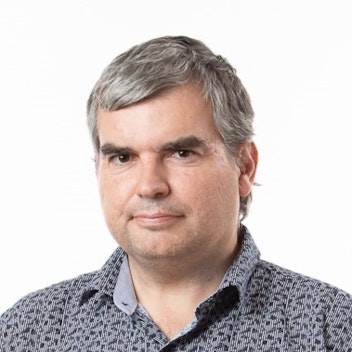
Urtzi Urkizu Adrián
Urtzi Urkizu Adrián is a journalist with a degree in journalism. He co-founded the magazine Orratx! and was news director at Oarso Telebista in 1998. He worked at Euskaldunon Egunkaria until its closure in 2003 and has been with Berria since its founding. Urkizu has directed two documentaries, No excuse (about the Mikelazulo cultural association) and Euskaldunon Goya (about the film producer Luis Goya), and authored two books: Beta (2007) and Kezka bat gutxiago (2012). From 2012 to 2020, he was a coordinator and scriptwriter for the TV show Zurriolako butaka. He co-directed the podcast 25. Fotograma in 2021 and has covered cinema for Berria for 14 years at the Donostia/San Sebastián Film Festival. He also hosts the podcast Kroketak and published the book Txoria hodei artean. ETB lehen eta gero about the past and future of Euskal Telebista in 2024. In 2025, he won the MIDAS Prize for Journalism in Minority Protection and Cultural Diversity in Europe.
Discover
Making research visible.
Find the connected experts, projects, publications, and research areas behind this blog post.
This content is licensed under a Creative Commons Attribution 4.0 International license except for third-party materials or where otherwise noted.

This blog is supported by the European Association of Daily Newspapers in Minority and Regional Languages (MIDAS). MIDAS was founded in 2001 to provide assistance to minority language newspapers and nowadays has members all over Europe. MIDAS serves as a platform for exchange, uniting minority language newspapers to present a collective voice to the European institutions.