


Olivia Schubert: The first woman to lead FUEN
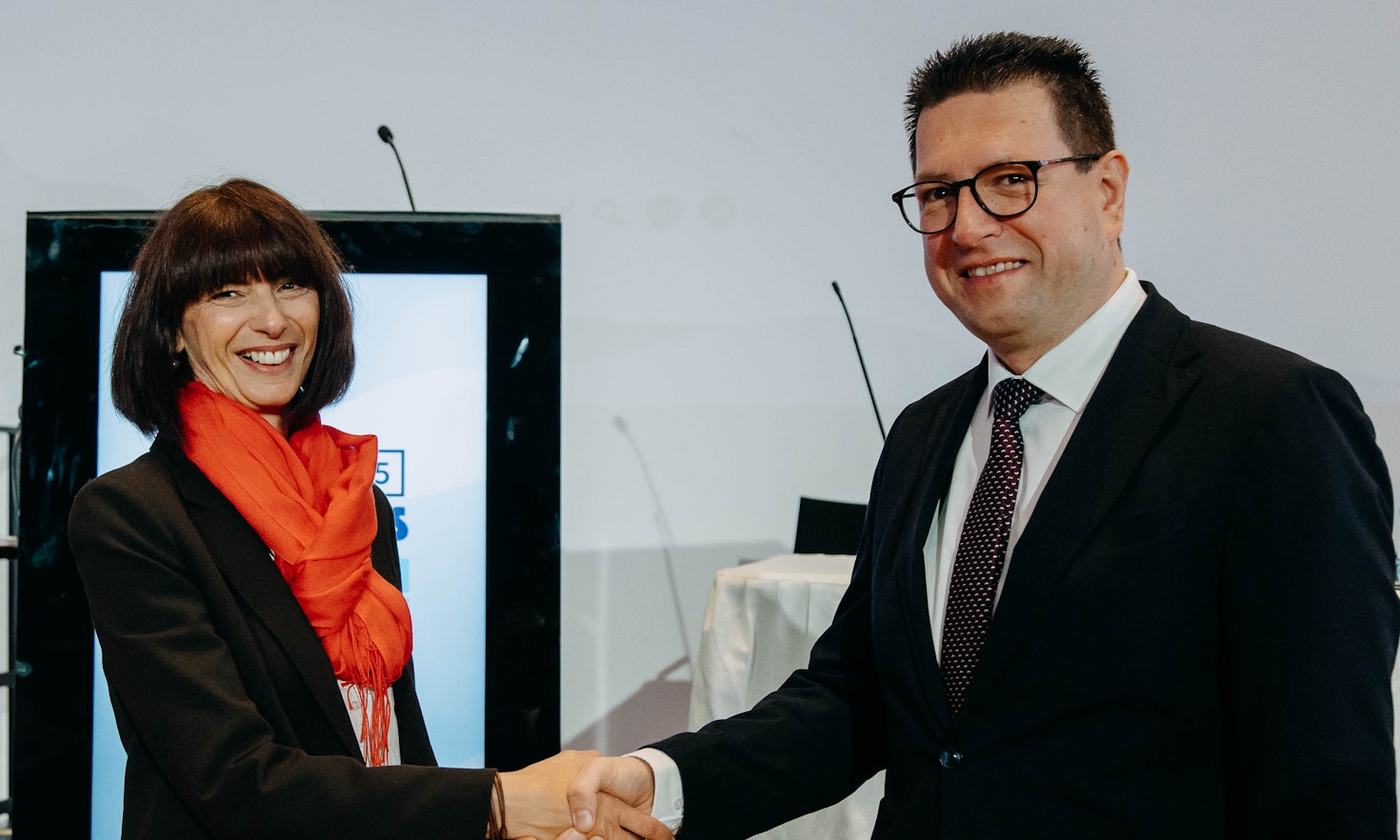
Olivia Schubert, who belongs to Hungary’s German minority, has made history by becoming the first woman to lead the Federal Union of European Nationalities (FUEN). She was elected at the FUEN Congress in South Tyrol in October. In this interview, she outlines her vision for renewal, which includes empowering young people and women, and helping Europe's minorities to navigate new social and political challenges.
Hatto Schmidt: You are the first woman to head FUEN. It was about time, wasn't it?
Olivia Schubert: I must admit, I didn't think about that at all when I ran for office. For me, it was important that experience and skills count. Of course, I feel a little pressure to prove myself as a woman. It's not for nothing that I also head our ‘Women in Minorities’ project at FUEN, which I enjoy immensely. There I meet women from all kinds of minorities who could serve as role models for how to combine family, minority and professional work. But now I feel first and foremost like a president, regardless of whether I am a woman.
The proportion of women and young people in FUEN is rather low. What would need to happen for that to change? Is it even possible to get young people excited about this work?
I'm sure it is. We're already doing this on a small scale with the German minority in Hungary. About half of their general assembly now consists of people under the age of 40. They are really active and have their own ideas. But we also give them the space and the means to develop. I would like to see something like this in FUEN too, in cooperation with the youth organisation YEN, of course. It would also be important for us to present a united front, to involve young people much more often, so that people can see that it is not age that determines whether you can contribute to achieving the goals here.
What are your ideas for your work at FUEN, what do you want to change?
In terms of content, it is about pursuing the goals set out in the Minority SafePack, step by step. We also need to think about the new challenges we face. By that I mean digitalisation and artificial intelligence, but also the decline in the number of minorities, urbanisation and so on. Next year, I would like to draw up an action plan for the most important issues. Financially, the aim is to further stabilise FUEN, which has been a recurring theme for many years.
How do you intend to achieve this?
We are constantly striving to find new sponsors and to expand our contacts with existing ones so that funding can potentially be increased. And I would be very happy if we could finally attract EU funding. It is high time that we also received support for our work from EU funds. That would also be important for the staff. The FUEN office has a great team that does a lot of work, but because funding has only been decided on a year-by-year basis so far, they are always a little uncertain. I would like to give them more certainty that they will be seen as long-term employees with us.
Funding from the EU and other countries would, of course, also alleviate concerns that the two major donors, Germany and Hungary, have too much influence. This concern has been expressed frequently, particularly with regard to Hungary. How do you intend to deal with this?
I think it's a difficult situation for any organisation when there are only one or two major sponsors. However, in the current economic climate, it is difficult to approach some countries and ask for more support. What we can do is convince them why minority work is important and why supporting minorities is worthwhile for them and can also have a positive effect. If we achieve that, I hope that we will eventually be able to talk about finances. But of course, we have to convince our partners with our work and show them that we will deliver if they support us.
Across Europe, right-wing extremists and movements that propagate a return to the nation state and oppose diversity are gaining ground. Are you concerned that this could have an impact on minorities?
Minorities – and we learn this from our own history – are usually the losers in conflicts or extreme situations. My own family experienced this, as did many others who were expropriated and expelled and portrayed as scapegoats for something they could not help. There are many similar stories among other minorities: we were displaced, we were pushed into the background, we were forbidden to use our language, attempts were made to tear us apart. Such experiences leave their mark. We can only hope that we will find security in democratic and constitutional conditions so that we can exercise our rights.


Olivia Schubert
Olivia Schubert (51) comes from Bohl/Bóly, a small town located 30 kilometres southeast of Fünfkirchen/Pécs in southern Hungary. She studied political science, German language and literature, and history. Schubert worked in the Office for National and Ethnic Minorities and in the Prime Minister's Office in Budapest, then as managing director of the National Self-Government of Hungarian Germans and later as head of the Department for Education and Scientific Cooperation at Audi Hungaria GmbH. She is deputy chair of the National Self-Government of Hungarian Germans.
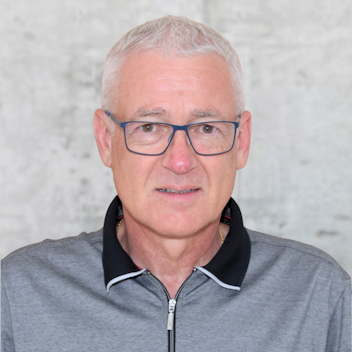
Hatto Schmidt
Hatto Schmidt was born and raised in Baden-Württemberg, Germany. He studied history and political science in Freiburg and Tübingen, and then spent 33 years working as a journalist for the daily newspaper Dolomiten, which is published in South Tyrol. He has dealt with questions and problems of national minorities for many years.
Discover
Making research visible.
Find the connected experts, projects, publications, and research areas behind this blog post.


This content is licensed under a Creative Commons Attribution 4.0 International license except for third-party materials or where otherwise noted.









 My cookie preferences