


Reserved posts for bilingual candidates in higher Carabinieri ranks: Italy’s Council of State reinforces South Tyrol’s language regime
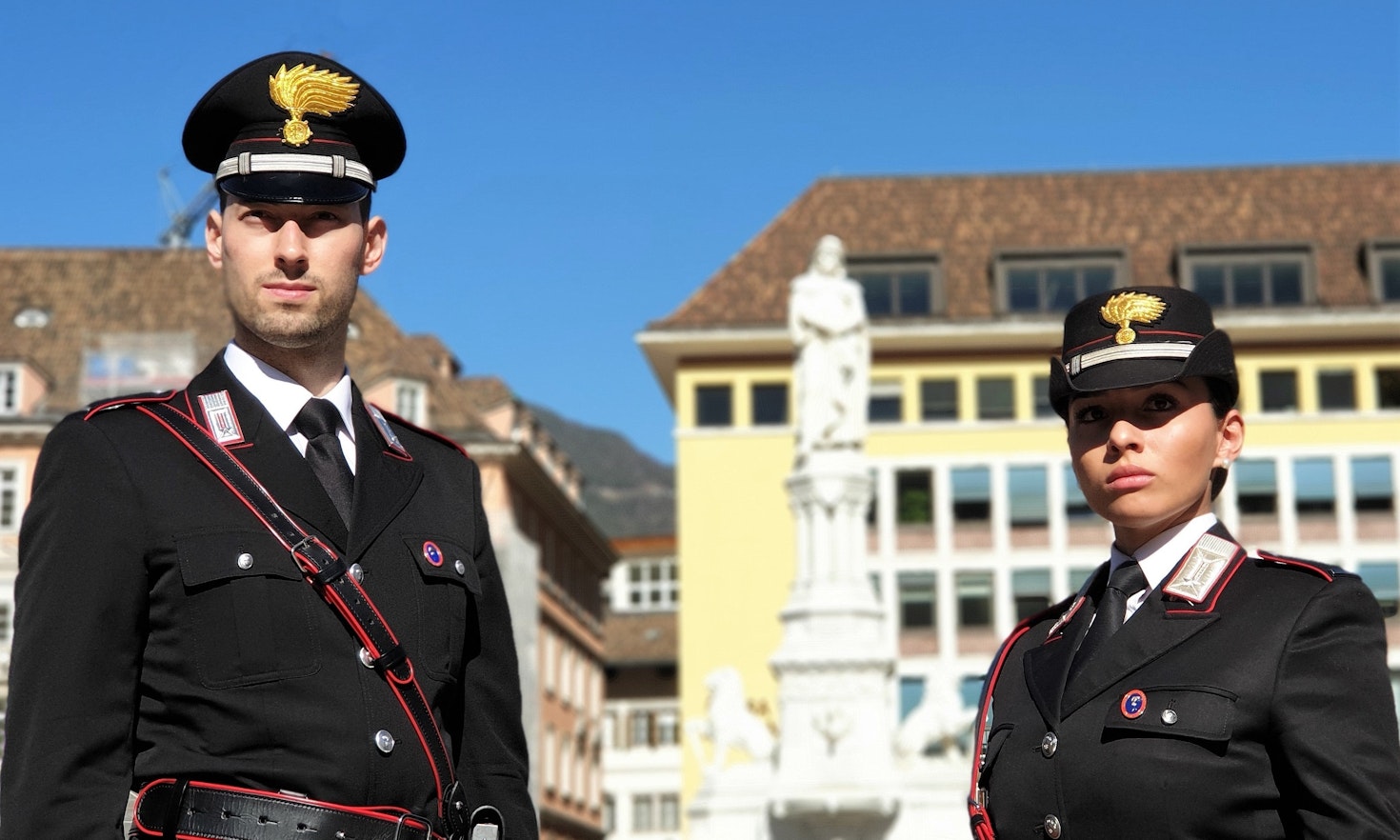
On 29 January 2026, Italy’s Council of State, the country’s highest administrative court, handed down a judgment that reinforces the principle of bilingualism for public officials in South Tyrol. In its final judgment no. 896/2026, the court held that promotion procedures within the Carabinieri, Italy’s military police force exercising general police powers, must comply with the province’s bilingualism rules for public services. More specifically, it found that bilingual candidates are entitled to reserved posts even in internal competitions for higher ranks, including that of colonel (“colonnello”).
Usually, public security in Italy is controlled by the central state and largely falls outside South Tyrol’s autonomy. However, the Council of State has already previously confirmed that South Tyrol’s language requirements do apply also there, to a certain degree, namely in recruitment procedures in the police forces (cf. judgement no. 8802/2022). The innovative aspect of judgement no. 896/2026 is that it examines whether also internal promotion procedures for Carabinieri must take into account the bilingual skills of applicants.
To understand why the case matters, some background is necessary. South Tyrol, on Italy’s border with Austria, enjoys a special autonomy arrangement based on the idea that members of its different linguistic groups should enjoy equal rights and opportunities. With a population made up of roughly 69% of German speakers, 27% of Italian speakers and 4% of Ladin speakers, the province’s political and legal system is grounded in minority protection mechanisms, power-sharing and consociational democracy. Much attention usually goes to the so-called ethnic quota system, under which many public sector posts in South Tyrol are allocated according to the numerical strength of the three recognised linguistic groups. That mechanism was introduced to ensure fair representation and to rebuild trust after decades of inequality and forced Italianisation under Fascism. The legal foundation of the system lies in the 1946 Paris Agreement, signed between Italy and Austria and also known as the Gruber-De Gasperi-Agreement, which provided for the “parification of the German and Italian languages in public offices” and “equality of rights as regards the entering upon public offices, with a view to reaching a more appropriate proportion of employment between the two ethnical groups.” The use of quotas was chosen as measure of affirmative action. Hence, up until today, one can become a public servant in South Tyrol only if their recruitment is in line with the ethnic quota system, considering his personal language group affiliation (to understand in detail please read our recently published Policy Brief). But it is important to point out that the authorities responsible for public security, i.e. police and defense, are exempt from the ethnic quota system; mostly, they can recruit people according to their national procedures. As mentioned, police services and defense remain the prerogative of the State. Italy’s national police bodies operate in South Tyrol through their provincial branches.
Language requirements still matter for police – to some extent
However, alongside the ethnic quotas, South Tyrol’s autonomy toolbox contains another mechanism. Let’s recall that according to the Autonomy Statute (Autonomiestatut / statuto d’autonomia) of 1972 and enactment decree no. 574/1988, citizens have the right to communicate with the public administration – including police officers – in their native language, whether German or Italian. Since individuals are granted this subjective right to choose between the two languages, police officers too must be able to understand and speak both languages. In practice, this seems difficult to live up to, because applicants for police positions in South Tyrol can come from all of Italy and often do not speak German.
Reserved posts in Carabinieri promotion procedures?
For this reason, whenever new Carabinieri staff are hired, a certain number of posts are set aside for bilingual candidates (find here an example from 2016). Enactment decree no. 752/1976 provides that, in recruitment procedures for public sectors not covered by the ethnic quota system, applicants holding a bilingualism certificate are entitled to a limited number of reserved posts. But what about internal procedures open to already serving officers to attain higher ranks within the Carabinieri structure?
This is where the recent Council of State judgment comes in. The judicial question was whether this “reserved-posts” rule applies only to the recruitment of new police staff, or whether it also extends to Carabinieri promotion procedures. The dispute began in 2023, when a long-serving Carabinieri officer applied for promotion to the rank of colonel (“colonnello”). When the results of the internal competition were published, he discovered that he was not among the candidates selected for the 40 vacant colonel posts. As he held the certificate of bilingualism, he thought that this was not right, arguing that some positions should have been reserved for bilingual candidates. The administrative Court in Bozen/Bolzano, however, rejected his claim. The court drew a distinction between civilian and military personnel, holding that the “reserved-posts” rule applied only to the former. It also reasoned that while the applicable legislation contained specific provisions for reserved posts in the recruitment of new Carabinieri personnel, it did not expressly provide for the same rule in internal promotion procedures. On that basis, the officer’s application was dismissed.


Bilingual public servants: a cornerstone of the autonomy system
On appeal, the Autonomous Province of Bozen/Bolzano joined the proceedings at the applicant’s request to defend the provincial rules on bilingualism. It endorsed the appellant’s position and argued that both the contested measures and the first-instance judgment undermined the constitutionally guaranteed protection of the German-speaking minority in South Tyrol. It also maintained that the right to use one’s mother tongue in the public security sector had become increasingly compromised in recent years.
Remarkably, the Consiglio di Stato took a radically different approach from the lower court. At the centre of the judgment is a broad understanding of the rule of bilingualism as a structural principle of South Tyrol’s autonomy. The court described adequate knowledge of both Italian and German by public servants, as required for the proper functioning of the service, as a cornerstone (“principio cardine”) of the autonomy system. With other words, the court held that South Tyrol’s language rights regime itself, in particular the overarching principle of bilingualism in public administration, requires reserved posts for bilingual candidates in public selection procedures that are not covered by the ethnic quota system. Crucially, this applies not only to ordinary recruitment, but also, in an attenuated form, to public security personnel in general, whether civilian or military, including procedures to attain higher functional ranks. The Council of State’s clarified that not every single officer of Italy’s police forces is required to be bilingual. Rather, a sufficient number of staff across the State Police, the Carabinieri, the Guardia di Finanza and the Penitentiary Police must be able to work in both official languages – Italian and German – so that services can be guaranteed at every level. The rule applies to all competition procedures for police personnel to be deployed in South Tyrol – except those concerning posts whose functions extend beyond the provincial level. Thus, the appellant succeeded, and the selection procedure was declared unlawful. Concretely, among the 40 positions, at least one should have been set aside for a bilingual candidate.
There are two main takeaways from this judgement. First, to keep in mind the following distinction: On the one hand, there is the ethnic quota system, which allocates many public posts in proportion to the size of the recognised linguistic groups. On the other, there is the “reserved-posts” rule, which applies in sectors outside that system and is designed to ensure bilingual service delivery. Secondly, the ruling extends existing case law on bilingual requirements in the police sector beyond recruitment and into promotion procedures. That is the judgment’s clearest doctrinal innovation. Altogether, the judgement offers unusually explicit backing from a highest court for the centrality of bilingualism within South Tyrol’s autonomy framework. The message by the Consiglio di Stato is that citizens’ right to use German and Italian on an equal footing must have institutional consequences, even in a field as sensitive as public security and up until higher ranks.
Minority language rights can overrule other sensitive public interests
The practical impact of the ruling should nevertheless not be overstated. At present, in South Tyrol, essentially the post of provincial commander of Carabinieri requires holding the rank of a colonel. On the regional level, in Trentino-Alto-Adige/Südtirol indicatively from 7-8 colonels are in charge. Officers which attain the rank of colonel but cover functions requiring only lower grades still receive higher salaries. Even so, the ruling is a clear victory not only for the officer concerned, but it contributes to upholding the very special language rights framework governing public employment in South Tyrol. The ruling comes at a time when staffing shortages continue to exacerbate tensions between the conflicting goals of maintaining the language requirements for public employees while at the same time ensuring the functioning of public services. A reason more to read the judgement no. 896/2026 as a reminder that minority language rights remain deeply entrenched in the Italian legal system, to the point that, at times, they can overrule other sensitive public interests. More broadly, the judgement strengthens the case of language rights in the public sphere of multilingual territories. Perhaps, it may inspire language rights defenders, even beyond the provincial level, to initiate future legal battles in support of a genuinely multilingual public administration.
Note: This article gives the views of the author(s) and does not represent the position of the European Association of Daily Newspapers in Minority and Regional Languages (MIDAS) or Eurac Research.

Anna Wolf
Anna Wolf is a legal researcher with a focus on language rights. She has recently joined the team of the Center for Autonomy Experience at Eurac Research. She follows with curiosity the continuous evolving of South Tyrol's autonomy, particularly in the area of language rights, from an international comparative lens. A further area of interest to her is the protection of Indigenous language rights, since she conducted doctoral research on the enshrinement of language protection provisions in Australian law, with Murdoch University, Perth. Throughout the last years, she also worked for the Office for Official Languages and Civic Rights (Autonomous Province of South Tyrol), contributed to various research projects on minority rights and comparative federalism (Eurac Research), conducted two traineeships at permanent representations to the Council of Europe, and worked as a journalist.
Discover
Making research visible.
Find the connected experts, projects, publications, and research areas behind this blog post.


This content is licensed under a Creative Commons Attribution 4.0 International license except for third-party materials or where otherwise noted.

This blog is supported by the European Association of Daily Newspapers in Minority and Regional Languages (MIDAS). MIDAS was founded in 2001 to provide assistance to minority language newspapers and nowadays has members all over Europe. MIDAS serves as a platform for exchange, uniting minority language newspapers to present a collective voice to the European institutions.








 My cookie preferences