‘Ride the horse’: Martxelo Otamendi on leading MIDAS into the future
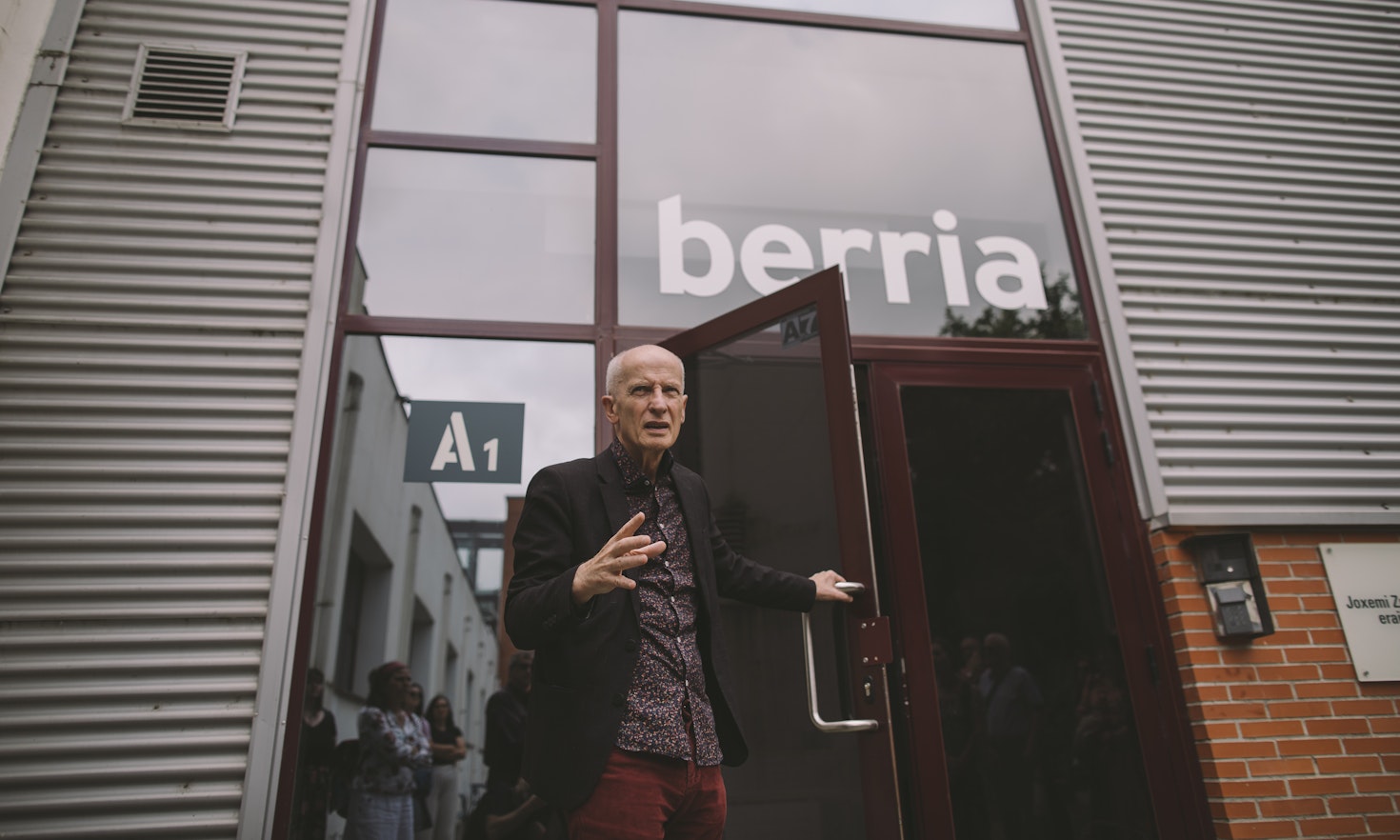
Martxelo Otamendi was elected as the new President of MIDAS at the 2025 General Assembly. In this interview, Martxelo Otamendi discusses the current situation and future of minority language journalism and MIDAS.
MIDAS: You are becoming MIDAS President at a difficult time for serious journalism in general, and for minority language daily newspapers in particular. What challenges do you foresee for journalism?
Martxelo Otamendi: We are living through the biggest crisis in journalism for many, many years. I think even the profession itself is being called into question. For two centuries, it was a job for journalists. We worked with news and sold it to our buyers and subscribers – to our readers. It was a very exclusive club: there were the media, there were journalists, and there were the buyers. That has changed dramatically. Now, many people work in media. Some are journalists; others do something that looks like journalism but isn’t. Many now work online, across various platforms. Who among them is truly a journalist? Can anyone be a journalist now, or is the profession still an exclusive club? We are left questioning our role and our profession.
MIDAS: Journalism is also facing an economic crisis.
Otamendi: The past two centuries have been highly profitable for large media companies. They made a lot of money. These were powerful organisations, in some cases with hundreds of journalists. I’m referring to the major newspapers – large entities with considerable influence on social and political life, and often pursuing strong political or economic interests. Now, even historic institutions such as The New York Times, The Washington Post, and others are facing enormous challenges.
MIDAS: So it is likely to be even harder for media published in smaller languages?
Otamendi: Sometimes I think smaller structures may survive better than large ones. It’s extremely difficult to manage a large organisation with hundreds of employees and journalists spread across the globe. It may, in fact, be harder for them to face this crisis than for us.
Martxelo Otamendi handed over his role as editor-in-chief to Amagoia Mujika Tolaretxipi in 2023.
Credit: Ekaitz Zilarmendi | All rights reservedAbout Martxelo Otamendi
Martxelo Otamendi was editor-in-chief of the Basque-language daily Berria from its founding in 2003 until 2024. Before that, he had led its predecessor, Euskaldunon Egunkaria, since 1993. In 2003, it was shut down by the Spanish judiciary on charges of supporting the Basque terrorist organisation ETA. Otamendi was arrested along with nine other editors and publishing staff. During their imprisonment – which lasted over a year – they were tortured. Hundreds of thousands took to the streets of Donostia/San Sebastián to protest these actions in what was supposed to be a constitutional state. The scandal reverberated across Europe. In 2010, all the defendants were fully acquitted and the closure of the newspaper was deemed unfounded. In 2012, the European Court of Human Rights found Spain guilty of failing to investigate the allegations of torture.
MIDAS: New technologies are also posing challenges to journalism.
Otamendi: For many years, there were no major changes: events happened, journalists reported, and people bought those stories. First, we had typewriters, then electric machines, then computers, and now dedicated editorial systems. But today, a new era is dawning: artificial intelligence may prove to be one of the greatest challenges we’ve ever faced. It will become increasingly difficult for people to tell the difference between truth and manipulated information.
MIDAS: Minority language daily newspapers tend to be small. Can they rise to this challenge?
Otamendi: We are used to working in crisis because we are small. We know how to cope, and we must do everything possible to continue publishing media in a minority language. Many MIDAS members are accustomed to working under very tough and resource-poor conditions.
Handover: At the 2025 General Assembly, Martxelo Otamendi succeeded Edit Slezák as President of MIDAS.
Credit: Carlo Sclauzero | All rights reservedFor the first time in history, we cannot foresee where this new kind of technology is leading us.
Martxelo Otamendi
MIDAS: Should artificial intelligence be seen as a threat – or could it also be useful?
Otamendi: It can be both. Many of the tools we use every day serve dual purposes. But we need to learn how to use AI in our day-to-day work. At its core, our work must remain the same: we need to research, interview, write articles and commentaries. The truth is, we don’t know how life will be ten or twenty years from now. For the first time in history, we cannot foresee where this new kind of technology is leading us. In the past, journalists wrote with a pen, then a typewriter, then a computer. But the writing was always done by us – not by machines.
MIDAS: That definitely seems to be changing now.
Otamendi: Today, much of the news is generated by computers – not by human beings, not by journalists. The hardest part for me is that we cannot even imagine how we’ll be working in the future. Will journalists still be needed in 20 years? Or will machines have taken over entirely? That is the future we must confront. And it won’t just affect us – it will happen in medicine, in the automotive industry, aviation, and even literature. Books will be written by AI. New technologies offer enormous opportunities, but I don’t yet know how we can harness them positively instead of seeing them as a threat to our work, our communities and our languages.
MIDAS: What can MIDAS do to support its members in this situation?
Otamendi: We need to work together and help each other, as we always have. There has always been someone in MIDAS who is quicker to adapt than the others. We must share knowledge, continuously exchange experiences, and seek out experts beyond MIDAS who can advise us on how to prepare for the future – or even just help us imagine what it might look like. Small media outlets must respond to technological change and new trends, and although it won’t be easy, we need to closely observe what others are doing. If someone has a good idea, we must be able to share it quickly. Because – I’ll say it again – this is the first time in our profession and in other sectors that we cannot see how we will be working in 10 or 20 years. Technological development will be exponential; it will move incredibly fast.
We are newspapers of linguistic communities. Our readers support the language – that’s the most important factor for them.
Martxelo Otamendi
MIDAS: One of the biggest problems in today’s media landscape is that print readership is declining. Readers are ageing, and young people neither buy print newspapers nor want to pay for online content. How can serious journalism fund itself – both to cover costs and to invest?
Otamendi: We are newspapers of linguistic communities. Our readers support the language – that’s the most important factor for them. We need to be very close to our community. Readers must feel we are offering them a service, and that the situation of their language would become much more precarious if media in that language were to disappear. The key to the future – as it has always been – is to be close to the community: to our readers, sponsors, and advertisers. We need to convince public authorities that it will be very difficult to preserve a language without schools, without media, and without speakers. Language is central to the relationship we have with our communities. That’s why we must remain close to them – and they, in turn, must feel proud of our work. That’s crucial.
MIDAS: There are huge differences in the size of these communities. How important are these differences?
Otamendi: German is a major language. If the media were to disappear in South Tyrol, it wouldn’t pose a major threat to the German language globally. But it would be a big problem for the German-speaking community in South Tyrol. For small languages like Basque, Galician, or Catalan, it would be a serious problem not only for the community but for the language itself.
When the horse comes, you have to ride it. You can’t say, ‘No, I don’t like horses.’
Martxelo Otamendi
MIDAS: Following Der Nordschleswiger, which moved online in February 2021, two other MIDAS member newspapers in Romania – both Hungarian-language – did the same at the start of this year. How do you view this development?
Otamendi: We cannot stop the course of history. The future is coming. We already have electric cars – and there will be many more of them in the years ahead. We must evolve, move forward, and keep pace with change. When the horse comes, you have to ride it. You can’t say, ‘No, I don’t like horses.’ This is about the future! So when the horse arrives, you must get on and ride it. We must do what we’ve always done – but always with the support of the community. It’s about the community – that’s everything. The community will save us, and we will save the community. If they stand behind us, they will support us financially and value our work. Nothing has been easy – and nothing will be easy in the future.
MIDAS: Should MIDAS help pave the way for online-only newspapers that no longer appear in print?
Otamendi: Yes. Initially, MIDAS didn’t allow online-only newspapers. You had to be in print to become a member. But the future is online. When journalists in Galicia launched Nós Diario as a print newspaper, I told them: ‘You’re mad! You’ll be the last newspaper in the world to be founded in print – no one is doing that anymore!’ We must adapt to new realities. Today it’s about online. But what will the next ten years bring? What kind of members will MIDAS have a decade from now? I don’t know. But MIDAS will still exist. For the first time, we don’t know what will happen in ten years. For 200 years, change was gradual, predictable. Now, everything is moving at a rapid pace. The most important thing is to stay open to change – to get on the horse and ride it.

Hatto Schmidt
Hatto Schmidt was born and raised in Baden-Württemberg, Germany. He studied history and political science in Freiburg and Tübingen, and then spent 33 years working as a journalist for the daily newspaper Dolomiten, which is published in South Tyrol. He has dealt with questions and problems of national minorities for many years.
Discover
Making research visible.
Find the connected experts, projects, publications, and research areas behind this blog post.
This content is licensed under a Creative Commons Attribution 4.0 International license except for third-party materials or where otherwise noted.

This blog is supported by the European Association of Daily Newspapers in Minority and Regional Languages (MIDAS). MIDAS was founded in 2001 to provide assistance to minority language newspapers and nowadays has members all over Europe. MIDAS serves as a platform for exchange, uniting minority language newspapers to present a collective voice to the European institutions.