“The more content we consume in Basque, the more Basque-speaking we become”
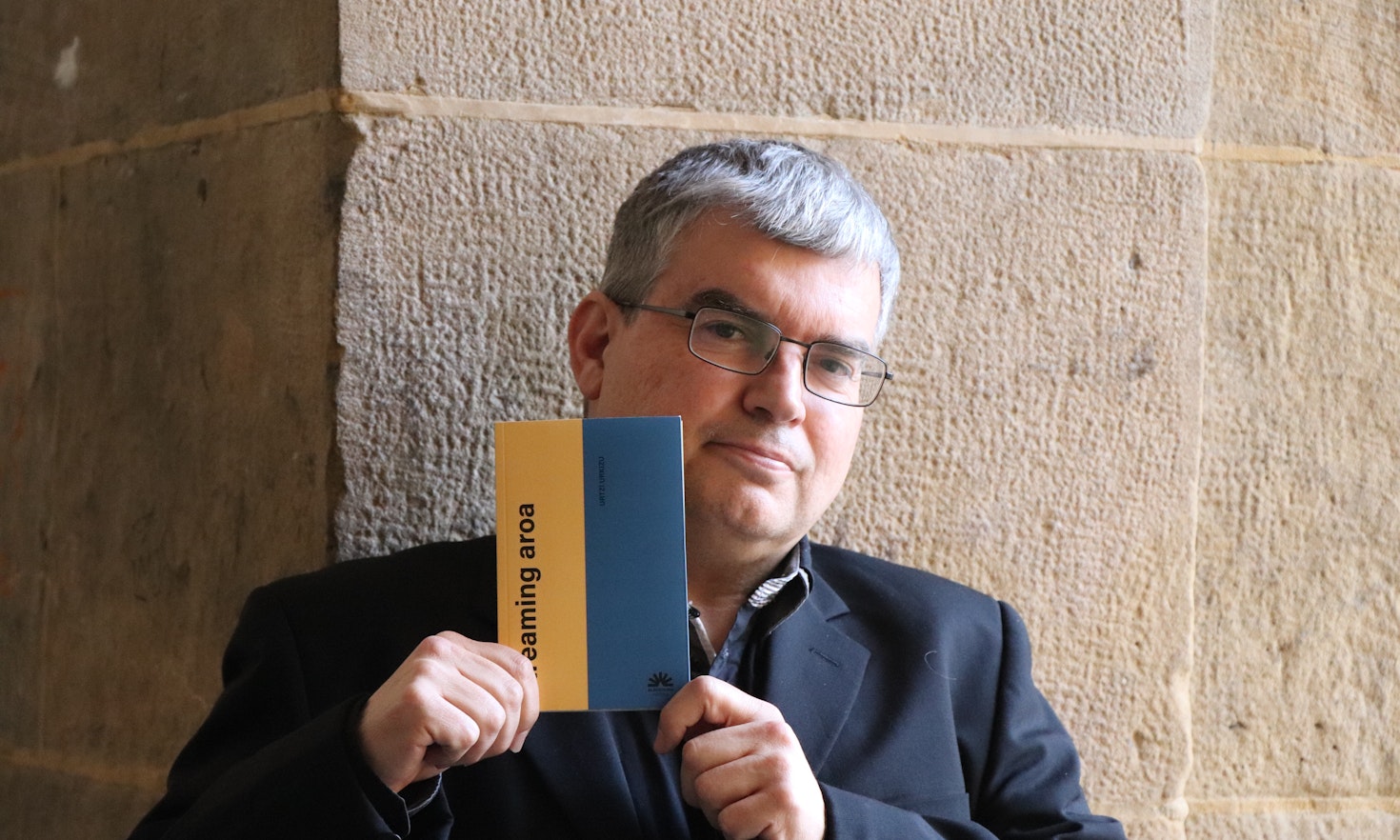
Urtzi Urkizu Adrián (Lezo, Gipuzkoa, 1975) has long specialised in analysing the audiovisual sector. He does so on a daily basis for the Basque-language newspaper Berria. Now, a decade after Netflix expanded globally, he has paused to reflect on the impact of streaming platforms in his new book Streaming aroa (The streaming era). “Netflix knows a great deal about us,” he warns.
Mikel Elkoroberezibar Beloki: After reading the book, one conclusion is clear: the main objective of streaming platforms is profit.
Urtzi Urkizu Adrián: Yes – especially the platforms that have come from the United States. Publicly created platforms, in principle, ought to have other goals.
Elkoroberezibar Beloki: They create a need for constant consumption.
Urkizu Adrián: Joseba Gabilondo says we are prisoners of Netflix. It’s a metaphor. Viewers think they have freedom of choice, but unless they are careful, the algorithm designed by the platform will constantly offer them what it thinks they want, strongly conditioning them – and they stay there without considering anything else.
Elkoroberezibar Beloki: That famous algorithm …
Urkizu Adrián: Things have changed enormously. When Netflix produced its first original series, House of Cards, it already had an algorithmic system in place. Using the data it collected, it concluded that what was needed was a series telling a particular type of story, with certain actors. There was a well-defined potential audience for House of Cards. All that had been analysed in advance. In my view, that clashes with what creation and art ought to be.
We feed the system with our behaviour, and it processes that data to shape what we see next.
Urtzi Urkizu Adrián
Elkoroberezibar Beloki: And consumers become, in your words, “food and excrement” for the algorithm.
Urkizu Adrián: It may sound crude, but in a sense we both feed the algorithm and become part of its output. Users consume content on the platform, and the platform makes very effective use of that data. Netflix knows a great deal about us, and it uses that information to offer personalised content. We feed the system with our behaviour, and it processes that data to shape what we see next.
Elkoroberezibar Beloki: The book is titled Streaming aroa – but could it just as well have been "The Netflix era"?
Urkizu Adrián: For months I had this title in mind: Netflix and the others. Garazi Goia wrote that Netflix has won that war. I asked her why. The answer: because it has achieved profitability. And it continues to grow.
Elkoroberezibar Beloki: Where does Basque fit into the world of streaming platforms?
Urkizu Adrián: Basque has a small presence – and on some platforms none at all. When Spain’s Audiovisual Law was about to be approved in 2022, Netflix and Amazon Prime Video began dubbing and subtitling some works into Basque each year. Then there are the platforms run by EITB, the Basque public broadcaster. On YouTube, there is a large amount of content in Basque. Longer videos are increasingly common, and podcasts have also gained enormous momentum. In future, that could be significant – not only because it is free, but because many young people consume content there. It is clear that we need to reach younger audiences. To disseminate Basque-language content, YouTube may be more powerful than other platforms.
The more content we consume in Basque, the more Basque-speaking we become.
Urtzi Urkizu Adrián
Elkoroberezibar Beloki: If Basque is to be normalised, it must be present on screens.
Urkizu Adrián: Of course. How many hours a day do we spend in front of screens? A great deal – looking at our phones, and also at television. The more content we consume in Basque, the more Basque-speaking we become.
Elkoroberezibar Beloki: In that respect, are public institutions doing enough?
Urkizu Adrián: We can see some steps. The Basque government’s audiovisual budget has increased considerably over the past two or three years, and that is gradually becoming noticeable. But much more will probably be needed, because the situation is very difficult. The data are worrying: among young people, only 1% of the content watched on streaming platforms is in Basque; on television, the figure is 7%. Basque needs stronger promotion on social media, and strategies are required so that audiovisual production in Basque has greater reach. Some grassroots movements have voiced complaints publicly: very few films are released in cinemas dubbed into Basque, and the same is true on platforms. The Generalitat of Catalonia, for example, promotes Catalan-language films in cinemas and on streaming platforms through its own social media and digital channels. Here, much of that promotional work is done by grassroots initiatives – the Zer Non Ikusi catalogue, Pantailak Euskaraz, and others. Things do exist, but people need to know where they are and what they are. We need to work so that people get used to watching content in Basque. For many years the opposite has happened: over the past 15 years, all foreign fiction broadcast by ETB on conventional television has been dubbed into Spanish. If all of that had been in Basque, people would now be far more accustomed to choosing Basque when selecting content.
In the book, you write: “Don’t settle for the first piece of content the platform’s algorithm offers you.”
Some people say – and there are studies on this – that couples can spend hours scrolling through catalogues without ending up watching anything. That’s not what I’m suggesting. I’m saying that before you switch on the television, look in advance at what Gaizka Izagirre and Sara Azurza have recommended, or what Bego del Teso has written about. If you find something of interest, go straight to that in the evening.
In other words, read Berria before turning on the television.

Well … There is a great deal of information available about audiovisual content nowadays. Everyone has to find what suits them. There is plenty to watch – but you have to look a little harder.
Note: This article gives the views of the author and does not represent the position of the European Association for Daily Newspapers in Minority and Regional Languages (MIDAS) or Eurac Research.

Mikel Elkoroberezibar Beloki
Mikel Elkoroberezibar Beloki is a journalist at Berria.
Discover
Making research visible.
Find the connected experts, projects, publications, and research areas behind this blog post.
This content is licensed under a Creative Commons Attribution 4.0 International license except for third-party materials or where otherwise noted.