
The raid at the Peršmanhof memorial: what it means for Austria’s Slovene minority
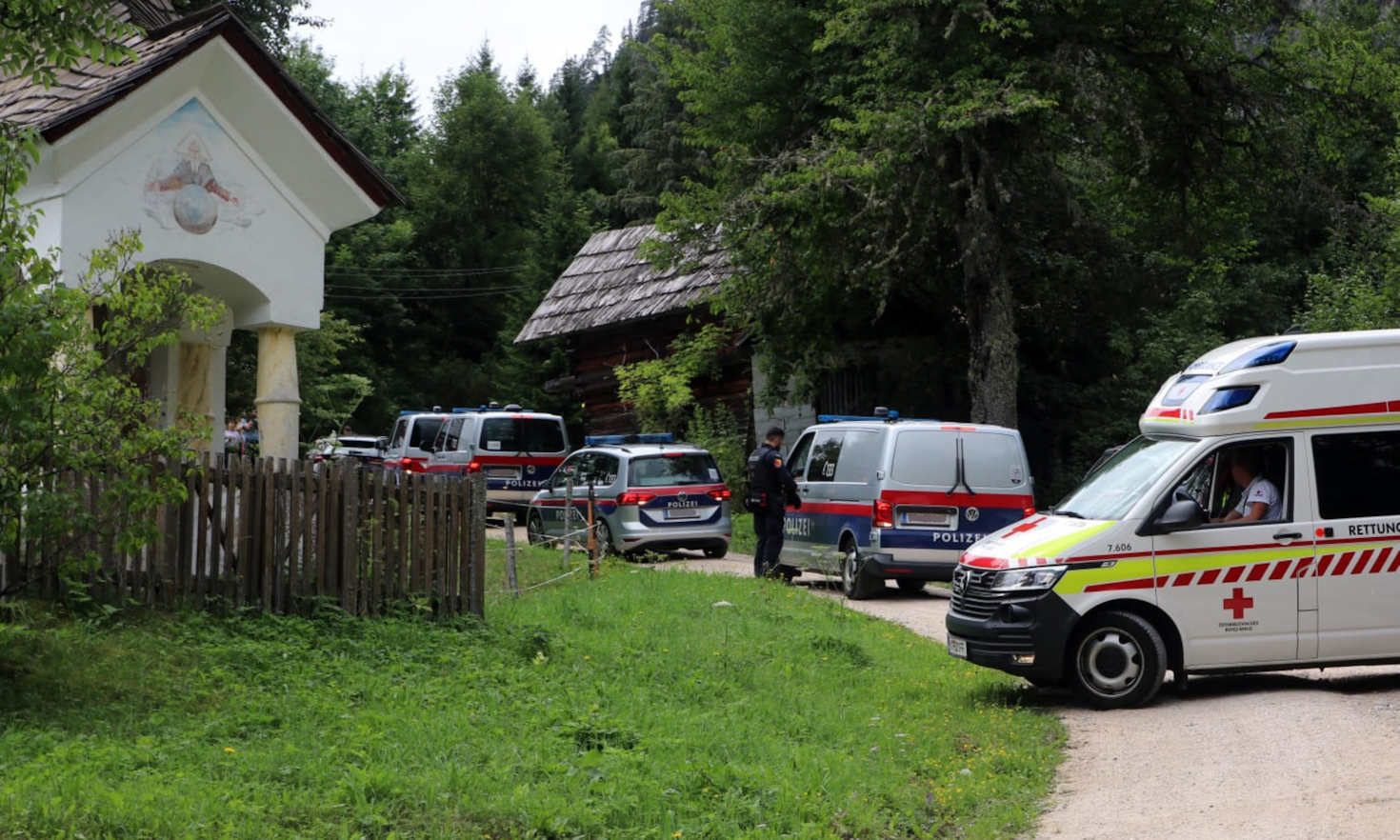
A large-scale police operation at the Peršmanhof memorial in southern Austria, one of the country’s most significant memorial sites dedicated to resistance and civilian victims of the Nazi regime, has drawn sharp criticism from civil society and political leaders. The incident has triggered a broader debate about remembrance culture, minority rights, and the role of state authority in Austria.
A heavy-handed response at a place of remembrance
On 27 July 2025, police intervened at an international youth education camp held at the Peršmanhof memorial, located in the Karawanks, the Carinthian Alps near Austria's border with Slovenia. The camp, attended by around 60 young adults from Austria, Slovenia and Italy, focused on antifascist education and commemorating the 80th anniversary of the end of the Second World War. The event was supported by the museum at the Peršmanhof memorial and organised by a Slovene student association based in Vienna.
Authorities cited alleged administrative violations, including unauthorised camping and environmental concerns, as the reason for the intervention. The scale of the response, however, was widely seen as excessive for such a context: over 30 police officers, some heavily armed, along with helicopters, drones and dog units, carried out identity checks and searched the premises. Several individuals were temporarily detained, and one person sustained minor injuries during the confrontation.
Critics argue that the operation was disproportionate and showed a lack of sensitivity to the symbolic significance of the location. The association Peršman has called for a full investigation into the rationale and proportionality of the police action.
The Sadovnik family's mountain farm, the Peršmanhof, was an important base for the resistance movement in Carinthia from 1942 onwards.
Credit: Association Peršman | All rights reservedFrom family farm to site of Nazi war crimes
The Peršmanhof memorial is more than just a museum – it is a place of profound historical and emotional importance. Originally a remote mountain farm, it became a centre of partisan resistance against Nazi occupation during the Second World War. On 25 April 1945, just days before the end of the war, members of the SS and Police Regiment 13 massacred eleven civilians, including seven children, at the site.
In the decades following the war, the Peršmanhof developed into both a place of remembrance and a centre for historical education. In 2012, it was expanded into a modern, bilingual museum (Slovene and German) that offers interactive exhibitions on persecution and resistance, particularly focusing on the Carinthian Slovene minority.
The museum’s permanent exhibition addresses key themes of the 20th century, including forced assimilation policies, deportations, concentration camps and the partisan struggle. It draws heavily on personal testimonies and multimedia installations, engaging visitors of all ages in critical reflection on Austria’s history and the role of minorities in it.
Accusations of disrespect and retraumatisation
For many, the timing and location of the police raid carry deeply symbolic and emotional weight. The year 2025 marks the 80th anniversary of the massacre at the Peršmanhof. That the police intervened at a peaceful educational event – involving descendants of Nazi victims and resistance fighters – has been described by community leaders as retraumatising and as an affront to the memory of those killed.
It shakes my trust – not only in the sensitivity of state institutions, but also in the sincerity of Austria’s remembrance of the crimes of National Socialism.
Bernard Sadovnik
Bernard Sadovnik, mayor of the nearby municipality Globasnica/Globasnitz and descendant of the murdered Sadovnik family, was among the most vocal critics. “A cold shiver ran down my spine when I was informed,” he wrote in a public letter to Austrian government officials. “When I arrived at Peršmanhof today, I couldn’t hold back my tears.” He described the police action as “disproportionate, disrespectful and retraumatising”, adding that it “shakes my trust – not only in the sensitivity of state institutions, but also in the sincerity of Austria’s remembrance of the crimes of National Socialism.”
Sadovnik has called on the government to explain how such a massive intervention could take place at a memorial site. The museum and camp organisers are also demanding that all charges be dropped.
What the Peršmanhof raid means for memory and minority rights

The events at the Peršmanhof memorial have raised deeper concerns about the sensitivity of state institutions towards issues of remembrance and minority rights. For the Carinthian Slovene community – historically marginalised and subjected to repression – the Peršmanhof memorial represents long-sought recognition and a space for collective memory.
Slovene partisans in Southern Carinthia offered the strongest militant resistance during Second World War against the Nazi Regime and contributed decisively to the re-establishment of an independent Austrian nation-state. The Moscow Declaration on Austria of 1943, in which the Allies for the first time collectively declared the intention to reestablish Austria after the war, called for the Austrian population to contribute towards its own liberation as an incitement to active resistance against the Nazi regime.
In this historical context, the disruption of this site by a forceful police operation has unsettled many and sparked concern beyond the region on European level. The incident highlights the need for respectful and culturally aware engagement at memorial sites, particularly those linked to minority experiences and historical trauma. In the coming weeks, much will depend on whether political and legal institutions respond with transparency and accountability.
Note: This article gives the views of the author and does not represent the position of the European Association of Daily Newspapers in Minority and Regional Languages (MIDAS) or Eurac Research.

Günther Rautz
Günther Rautz is the Head of the Institute for Minority Rights at Eurac Research in South Tyrol, where he has worked since 1997. He focuses his research on minority protection and human rights in Europe and internationally, including advisory work for the Tibetan community in exile. He has contributed to reports for the Council of Europe and the OSCE, and has co-authored commentaries on the Framework Convention for the Protection of National Minorities. He also helped to draft recommendations for the 'Minority Safepack Initiative', a European Citizens' Initiative. Until 2017, he served as General Secretary of the European Association of Daily Newspapers in Minority and Regional Languages (MIDAS), promoting media in minority and regional languages.
Discover
Making research visible.
Find the connected experts, projects, publications, and research areas behind this blog post.
This content is licensed under a Creative Commons Attribution 4.0 International license except for third-party materials or where otherwise noted.

This blog is supported by the European Association of Daily Newspapers in Minority and Regional Languages (MIDAS). MIDAS was founded in 2001 to provide assistance to minority language newspapers and nowadays has members all over Europe. MIDAS serves as a platform for exchange, uniting minority language newspapers to present a collective voice to the European institutions.




