


VilaWeb expands its audiovisual journalism and reaches out to a new generation
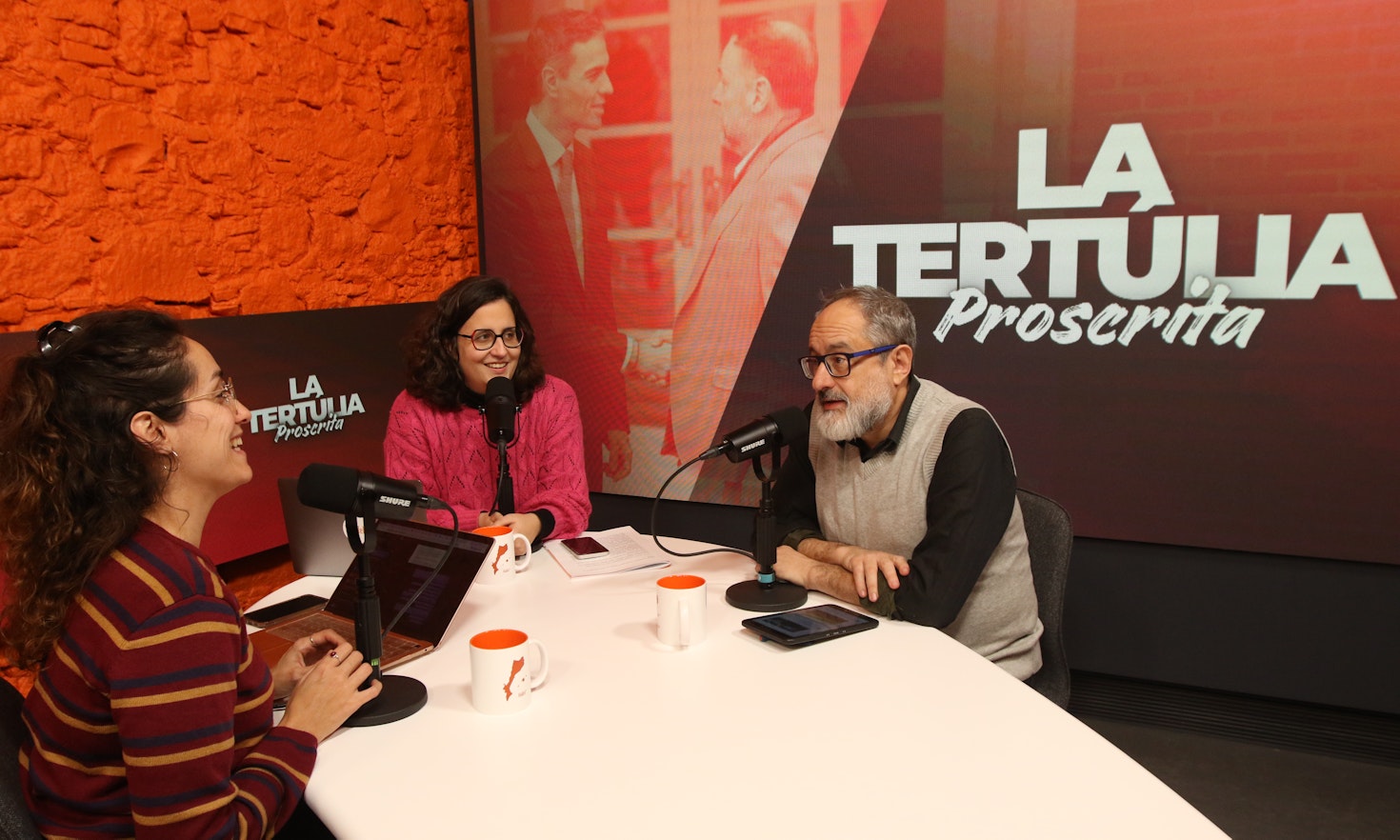
VilaWeb has opened a new in-house television studio as part of its strategy to strengthen audiovisual journalism. Funded with the support of readers, the studio enables daily video programmes and live broadcasts directly from the newsroom. At the same time, a new youth-oriented subscription initiative seeks to build closer ties with younger audiences.
VilaWeb has taken a further step in its audiovisual development with the creation of a television studio inside its newsroom. The initiative follows the launch of book publishing in 2025 and forms part of a broader effort to strengthen its presence across formats.
In recent years, VilaWeb has produced several audiovisual projects, including La tertúlia proscrita and La pissarreta d’en Partal. Building on these experiences, the editorial team decided to invest in a permanent studio space that would allow greater flexibility and reduce reliance on external premises.
A studio within the newsroom
To finance the project, VilaWeb turned to its readers for support. The response made it possible to complete the studio in January 2026. The new facility has been installed in Espai VilaWeb – a section of the newsroom previously used for public events – which now also functions as a television studio.
The space is equipped with large video screens, a new lighting system and updated audio and camera technology. The cameras incorporate built-in artificial intelligence, enabling the recording of programmes and live broadcasts to be operated by a minimal technical team. The development has also led to the appointment of a head of audiovisual operations within the newsroom.
All programmes are broadcast via VilaWeb’s website and on YouTube, and are also distributed in podcast format through major platforms.
A weekday schedule
With the launch of the studio, VilaWeb has introduced a regular weekday programme at 8pm, structured around different thematic formats.
The week opens with 72 minuts, presented by editor Vicent Partal, a miniseries reflecting on the contemporary risk of nuclear conflict. On Tuesdays, La crisi dels 30, hosted by Clara Ardèvol, focuses on the concerns of a generation around the age of 30 and combines recorded discussions with in-person gatherings in Barcelona. Midweek, journalist Ot Bou leads La taca d’oli, an interview-based current affairs programme analysing major social, economic and geopolitical debates. On Thursdays, La tertúlia proscrita, presented by Txell Partal, continues as a roundtable discussion with regular contributors and a monthly monographic edition. Every fortnight on Fridays, Poc cas is dedicated to children’s and young adult literature. Now produced in video format, the programme brings books and their creators into the studio for in-depth discussion.
Engaging a new generation
The focus on younger audiences is also reflected in the new VW30 subscription, launched to mark VilaWeb’s 30th anniversary. The initiative is aimed at people born in the 1990s and offers one year of free access, alongside participation in a dedicated community around the newspaper. Within a week, more than 1,000 young people from across the Catalan Countries had signed up.
The project was launched with a music event at the Razzmatazz venue in Barcelona, bringing together several hundred new subscribers. During the event, members of the editorial team stressed the importance of language as a way of understanding and explaining the world, and defended rigorous, ethical journalism in a media environment shaped by information overload and disinformation. The initiative encourages young subscribers to take an active role in the newspaper’s community, reinforcing VilaWeb’s emphasis on reader engagement.


The VW30 subscription was launched with a music event at the Razzmatazz venue in Barcelona.
Credit: VilaWeb | All rights reservedLooking ahead
The establishment of a permanent studio marks a structural development within the newsroom. Plans include the creation of a daily news programme and further live broadcasts in response to topics of particular interest to readers.
For minority-language media operating in competitive digital environments, such developments illustrate how a digital outlet can expand across formats while reinforcing its relationship with its readership – including a new generation of subscribers – and strengthening a shared linguistic and civic community.
Note: This article gives the views of the author(s) and does not represent the position of the European Association of Daily Newspapers in Minority and Regional Languages (MIDAS) or Eurac Research.

VilaWeb
VilaWeb is a Catalan-language web portal and daily news outlet founded in 1995. It was the first online medium produced entirely in Catalan and the first news media in Spain to be entirely online. It is a member of the European Association of Daily Newspapers in Minority and Regional Languages.
Discover
Making research visible.
Find the connected experts, projects, publications, and research areas behind this blog post.


This content is licensed under a Creative Commons Attribution 4.0 International license except for third-party materials or where otherwise noted.








 My cookie preferences