When Euskara meets Cymraeg: Reflections on a research visit to Wales
In this article, Maddi Dorronsoro Olamusu reflects on her research trip to Wales, looking at the Welsh situation through her Basque experience and expertise. She comments on some aspects of the current situation of the Welsh language – particularly in areas of high density where the language is stronger – and relates them to the Basque case. Through conversations with members of the Welsh-speaking community and local researchers, the piece offers a personal insight into the shared struggles and efforts to preserve their languages.
When I received an invitation to go on a one-week research visit to Wales, I was very excited. Coming from the Basque Country, I was familiar with the common comparisons between these two nations: strong national identities, similar population size, picturesque landscapes and rainy climates. The historical partnership between Wales and the Basque Country spans many areas, from sports to sociolinguistic research, making Wales a well-known point of reference in the Basque context, and vice versa.
But my perspective on these similarities has shifted now that I focus my research on the Basque-speaking high-density areas, known as arnasguneak. As researchers, we often seek comparable cases, but finding a similar case for Basque is quite challenging. Basque is a language isolate that only exists as a minority language, and there is hardly any other minority language in Europe that shares these characteristics while having a similar size or number of speakers. That is why Welsh – or Cymraeg – is an interesting case to look at from a Basque perspective: while different in many ways, both are unique minority languages with a similar size that are unintelligible with the neighbouring languages, which are global linguistic powerhouses. No wonder these two communities have long looked to each other for insights.
Although I was aware of these connections, as a Basque speaker, I was pleasantly surprised by the immediate sense of understanding I found with Welsh speakers. It was certainly refreshing to be able to draw parallels easily. In this way, my visit to Wales was full of insightful conversations and this post aims to collect some reflections – without intending to cover these issues in depth.
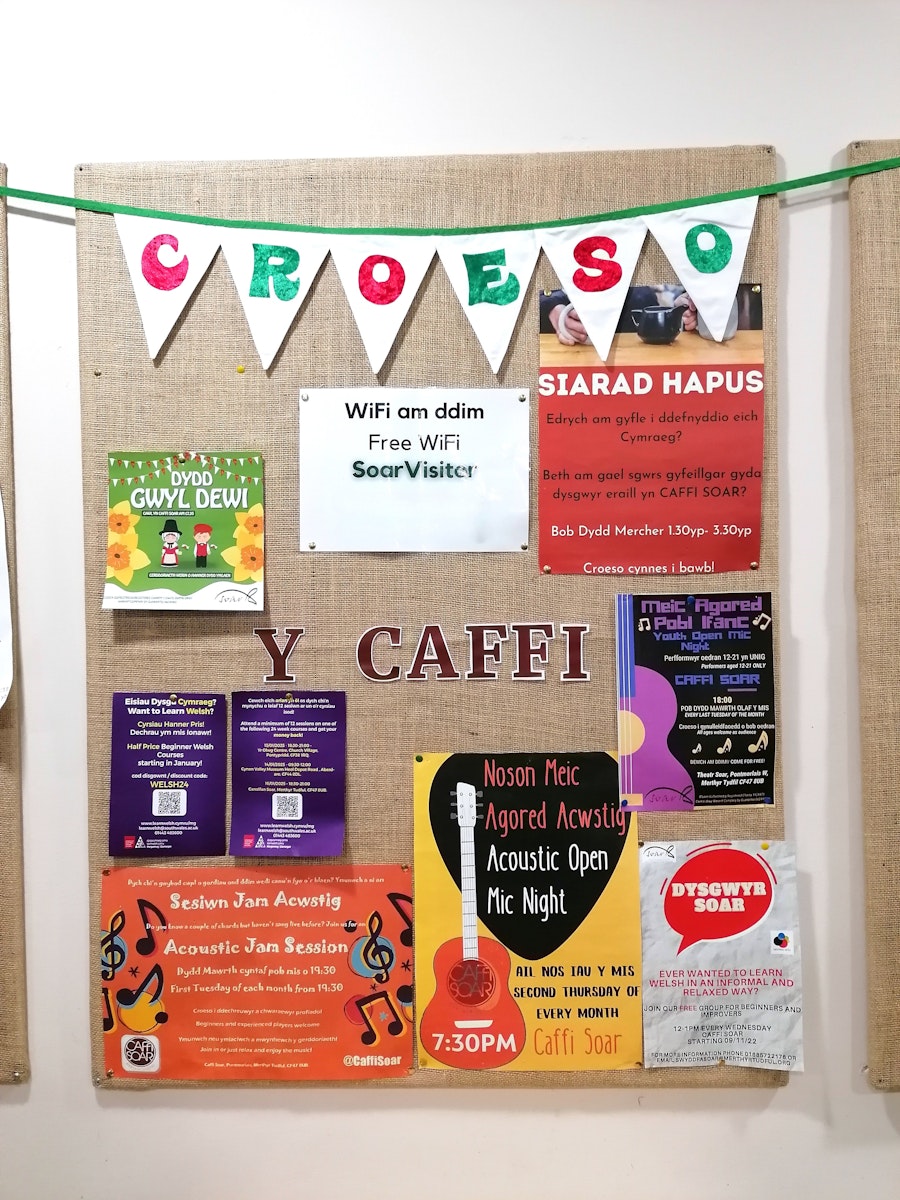
On the first day of my research visit, I met the members of the Commission for Welsh-speaking Communities and had the opportunity to participate in their programme for the day. We started with a short visit to Merthyr Tydfil, a small town in a low-density area of Welsh speakers in the South of Wales. Our stop at a local community centre, which offers different services for both Welsh and non-Welsh speakers – ranging from yoga, language classes, music concerts etc. – was particularly insightful. The person1 in charge of the centre passionately explained their mission:
‘This community centre is for what people need, not what we think they might need. When participating in the activities this place creates networks, for both Welsh speakers and non-speakers. We make community, and we use Welsh for that’.
Afterwards, the Commission gathered for discussion where I presented my research. As I explained, the arnasguneak have been going through deep sociolinguistic changes over the last couple of decades, often leaving locals unprepared for the shifting scenario. Among all the questions and comments, there was one that stuck with me.
One person commented that they found it interesting when I mentioned that people living in the arnasguneak had not seen the change coming, that is, they did not expect Spanish to gain presence in their community live. According to this person, this would not surprise anyone in Wales, suggesting that perhaps Welsh is already past the point where Basque is now.
This remark set the tone for the meeting, where two main topics stood out. First, the decline of Welsh as a community language. Indeed, in the report published last year – ‘Empowering Communities, strengthening the Welsh Language’ –, the Commission pointed out the decline of communities with a higher density of Welsh speakers based on the 2021 data:
‘As a result of long-term processes, Welsh today is weaker as a community language than ever before. Should current trends continue, and unless the situation is addressed via public policy interventions, it is not impossible that Welsh may eventually disappear as a community language used over a wide area’.
The second concern was the gap between knowledge and actual use. The fundamental question remains: how can we encourage people who know the language to speak it? While simple in form, the answer is far more complex. The Commission addressed the issue of the activation of speakers at length during the meeting, that is, promoting activities, spaces or contexts where people can bond through the medium of Welsh. The topics in this meeting deeply resonated with the current situation in the Basque Country and dissipated any illusions that ‘the grass is greener’ elsewhere.
Continuing my trip northward, I went from lower- to higher-density Welsh-speaking areas – an exciting direction given my research interests. A brief stop in Aberystwyth allowed me to visit the University of Wales and the National Library of Wales, where I had the pleasure of meeting some visiting researchers from other Celtic languages, such as Breton, which reminded me of the broader Celtic family that Welsh belongs to. In that sense, and despite the Basque Country having connections with fellow minority communities, I find that being Basque is a much lonelier experience as we do not have a linguistic family.
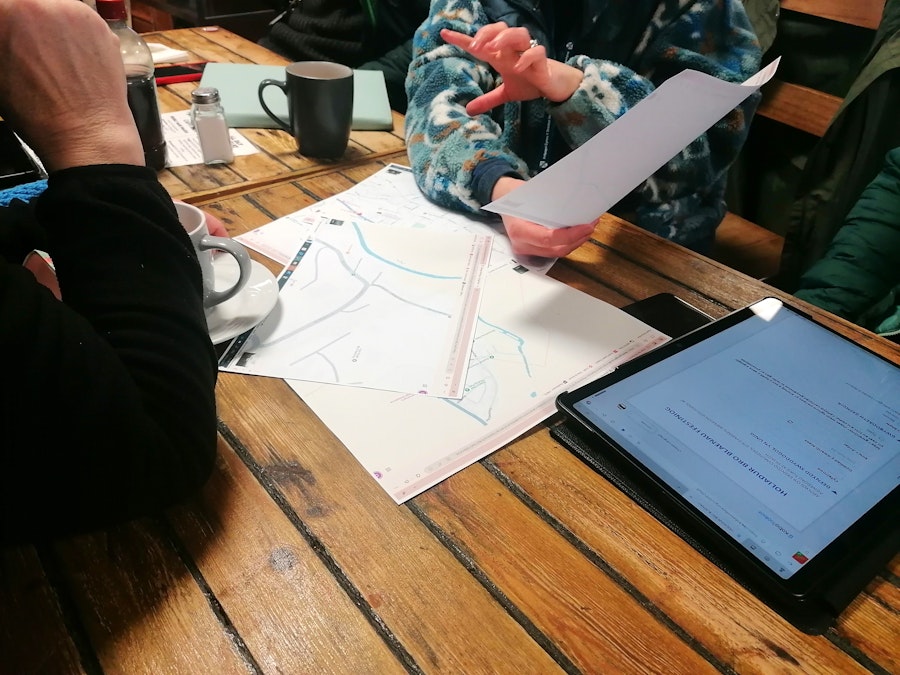
My third stop was in Blaenau Ffestiniog, a post-industrial town in Northwest Wales, where the researchers of the BRO Survey were conducting fieldwork. The BRO Survey is a ‘comprehensive socio-linguistic survey of the Welsh language in its heartlands’, which shows how both policy and research focus is shifting towards higher-density areas also in Wales.
High-density areas are important because the network of minority language speakers is tighter and there is a higher chance of conversations in the minority language, so the minority language continues to be the community language. Often overlooked in language policies, these areas are crucial for language revitalisation efforts, particularly for minority languages without a kin-state – as it is the case of both Welsh and Basque. These are the areas where the minority language is in the best shape when it comes to daily communication; therefore, they are both symbolically and practically crucial because they show that living in a minority language is possible. Of course, this has been said having Basque and Welsh in mind but might not apply to other smaller minority languages that have long lost their last strongholds.
The Welsh colleagues I met in Blaenau Ffestiniog underlined the challenges of high-density areas, particularly demographic and socioeconomic ones. One frequently discussed issue was the impact of non-local, often English, landowners purchasing second properties or houses for the tourism sector, driving up housing prices and making it harder for locals to remain. Additionally, younger families with children move to higher-density areas, which has an impact on the local community as the incoming population is usually English-speaking and often continues living in English. On top of that, these are rural or post-industrial areas, so the emigration of the local youth to the cities to pursue higher education or career opportunities aggravates the sociolinguistic gap. Despite the particularities of each context, it sounds like both Welsh and Basque high-density areas are dealing with very similar issues, reinforcing the need for mutual learning.


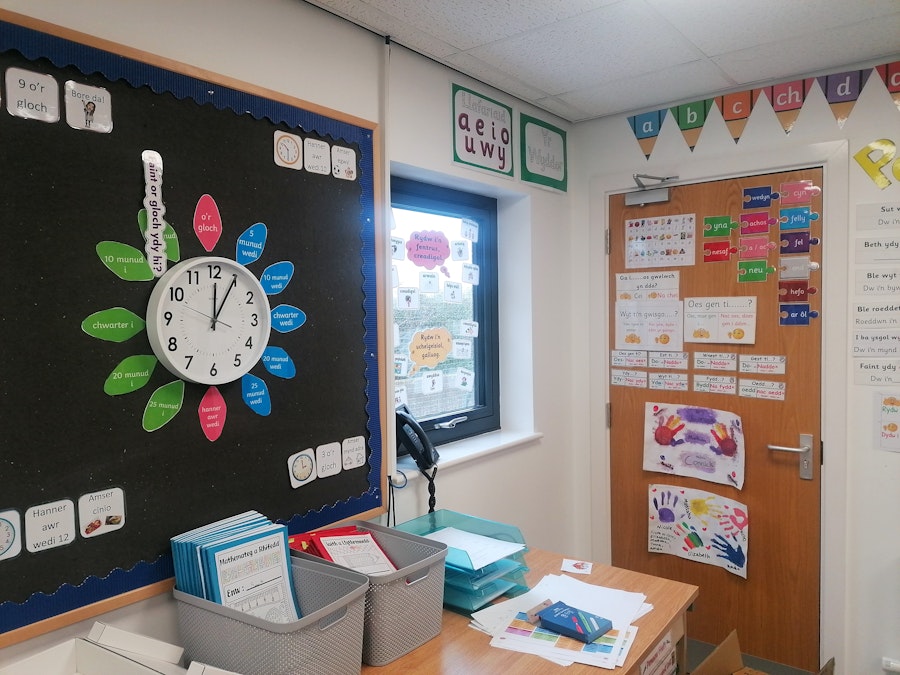
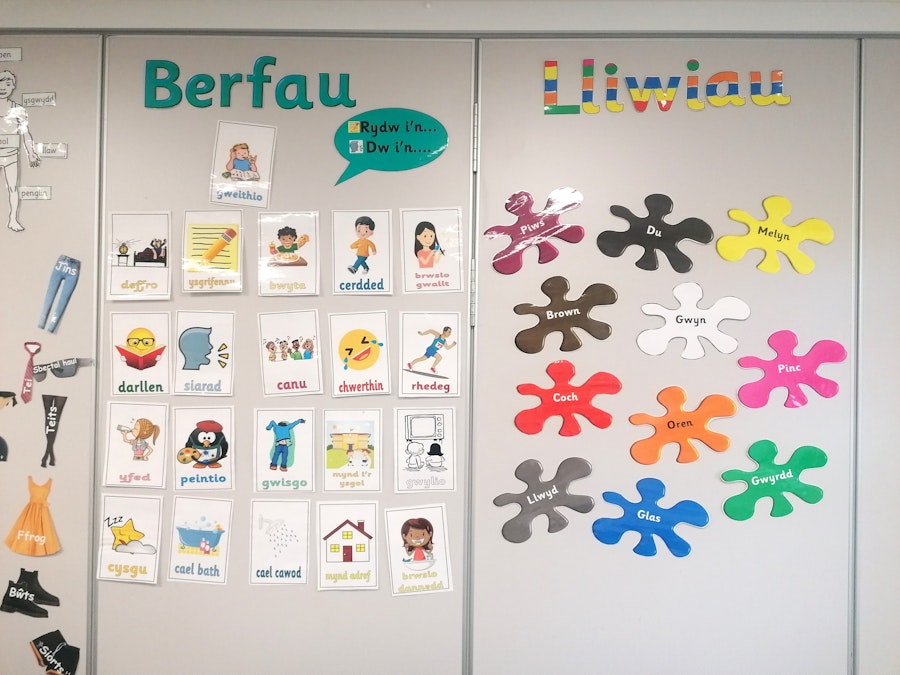
Once in the Northwest, I had the chance to visit Bangor – Bangor is located in the county of Gwynedd and according to the 2021 census it has 44.1% of Welsh-speakers, but the percentages of surrounding areas are higher than 70% – and the Ysgol Tryfan Welsh Medium School. I talked to several teachers in the school about the situation of Welsh in the area and they explained that their students have different linguistic profiles, with some speaking Welsh at home while others do not, but the school itself is a Welsh-speaking environment. However, teachers pointed out that the school has a limited influence on the language practices of the students as most of the afterschool activities or other aspects of their life where they use the language most are often in English. However, having a university and the main hospital in the area in Bangor involves a lot of mobility, which brings an influx of non-Welsh-speaking people to the area and this is reflected in the local schools. Besides, the topic of language attitudes towards Welsh, English as well as other languages was also a recurrent topic. They explained that pupils are, in general, happy to learn through the medium of Welsh, but more negative attitudes towards Welsh emerge as they get older, which also extends to the foreign languages taught, namely, Spanish. Since the school reflects broader family and societal trends, teachers were aware of these changes and were concerned about the development of Welsh in the area in the future.
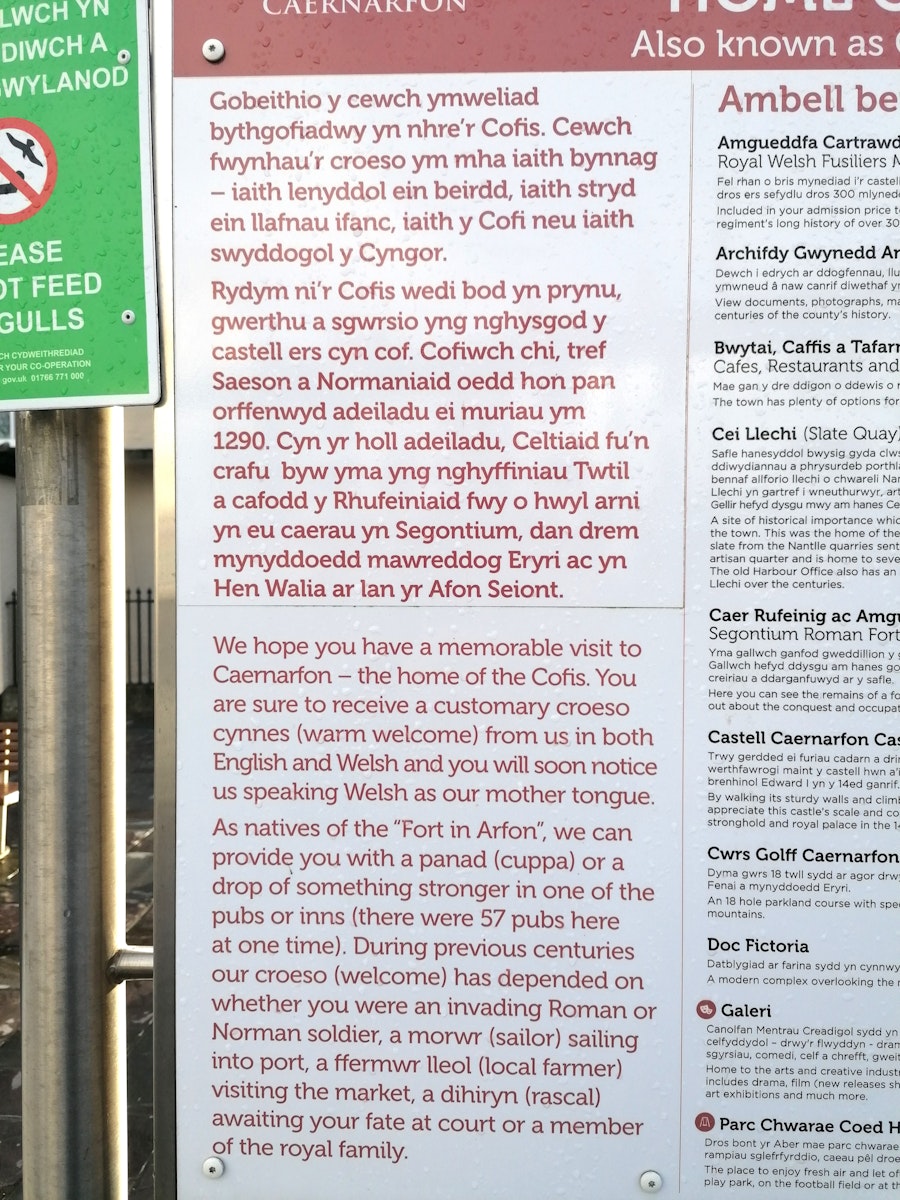
My final stop was nearby, in the picturesque coastal town of Caernarfon, which has a spectacular castle and the highest density of Welsh speakers in the county of Gwynedd at over 80%. Welsh had a prominent place throughout the town, both in the linguistic landscape and in conversations. I had a nice chat with a local shopkeeper about living in a place like Caernarfon as a Welsh speaker, which despite being the exception rather than the rule. She was aware that living mainly in Welsh was not common and might be even unimaginable to some, but it was her daily reality:
‘I am a member of a minority language, I know, but in the community where I live, I am part of the majority, so it is a bit different than in other places. And as a local majority, we have the responsibility to bring the non-Welsh speakers towards us’.
Crossing Wales from side to side in a week was quite an experience, and I was good finishing my visit to Caernarfon on a positive note. Reflecting on the trip, I realised that Wales and the Basque Country have a lot in common. So from now on, I will be keeping an eye on the whereabouts of my Welsh colleagues.
Note: This article gives the views of the author and does not represent the position of the European Association of Daily Newspapers in Minority and Regional Languages (MIDAS) or Eurac Research.

Maddi Dorronsoro Olamusu
Maddi Dorronsoro Olamusu is a researcher at the European Centre for Minority Issues (ECMI). Her research project focuses on communities with a high-density of Basque speakers, the Basque arnasguneak, and studies the language attitudes of the local Basque-speakers towards sociolinguistic changes in their communities, with a particular focus on the arrival of non-Basque speakers.
Discover
Making research visible.
Find the connected experts, projects, publications, and research areas behind this blog post.
This content is licensed under a Creative Commons Attribution 4.0 International license except for third-party materials or where otherwise noted.
This blog is supported by the European Association of Daily Newspapers in Minority and Regional Languages (MIDAS). MIDAS was founded in 2001 to provide assistance to minority language newspapers and nowadays has members all over Europe. MIDAS serves as a platform for exchange, uniting minority language newspapers to present a collective voice to the European institutions.