Why do national minorities receive less attention in the EU?
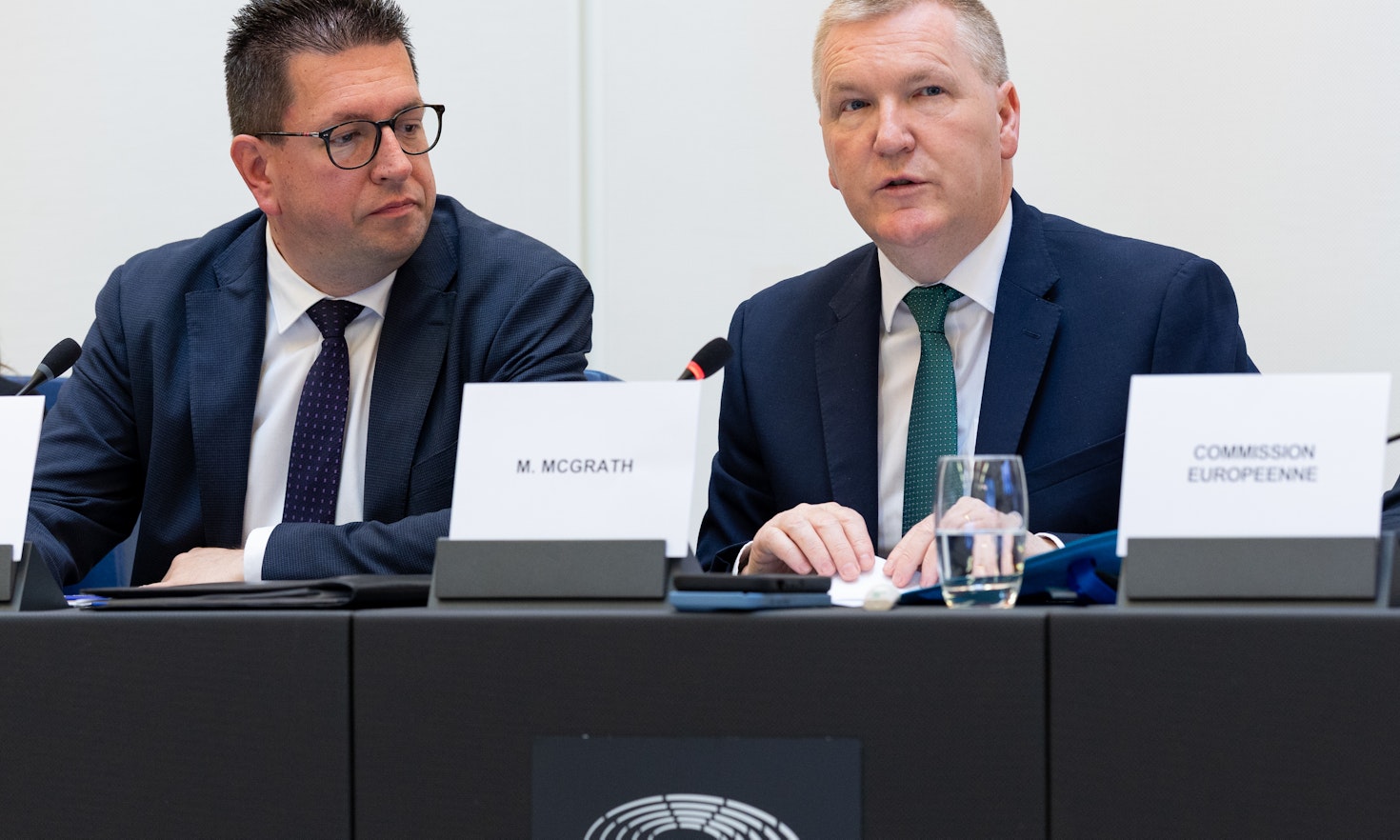
Why do national minorities receive less attention than other vulnerable groups in the EU? This question was raised during a recent exchange between EU commissioner Michael McGrath and members of the European Parliament. The discussion addressed the role of the EU and its member states in protecting minority rights.
These were among the questions faced by Michael McGrath, the European commissioner for democracy, justice, rule of law and consumer protection, at a recent meeting of the European Parliament’s Intergroup on Traditional Minorities, National Communities and Languages.
“Respect for the rights of persons belonging to minorities is one of the core values of the European Union,” McGrath said. “It underpins EU law and policy, and the Commission addresses this issue across a range of policy areas.”
He pointed out that the European Commission supports the rights of national minorities in many policy areas. In particular, it is making significant efforts to protect minorities in the field of hate speech. It also places great importance on multilingualism and actively promotes it.
The Commission is also aware of the difficulties faced by linguistic minorities in accessing audiovisual content in their own language (for example due to geoblocking), and is working to overcome these barriers.
“Do you see a way of integrating the protection of minorities more systematically into the EU’s broader efforts to uphold its values?” the chair of the intergroup, Loránt Vincze, asked at the outset of the meeting. Vincze, an MEP and former president of the Federal Union of European Nationalities (FUEN), belongs to the Hungarian minority in Romania.
The commissioner’s response was the same as the one he had recently given to a recent parliamentary question, reflecting the Commission’s position that responsibility for national minorities lies with the member states rather than the EU.
This position had previously led the Commission to refuse to engage with the substance of the European Citizens’ Initiative Minority SafePack, which had been supported by more than one million EU citizens.
McGrath did, however, indicate a willingness to include the issue of the treatment of minorities, including linguistic minorities, in the EU’s rule of law report.
He also referred to the recently launched European Democracy Shield, which aims to strengthen, protect and promote strong and resilient democracies across the EU. “If you have concrete ideas on how we can improve democratic participation and engagement of traditional and linguistic minorities, I would be happy to take them forward,” McGrath said.
Persistent challenges for minorities
During the meeting, several of the problems faced by national minorities in Europe were raised.
One example discussed was a law adopted by the Slovak parliament in December, which criminalises criticism of the Beneš decrees. These decrees were issued at the end of the second world war to provide a legal basis for the mass expulsion and discrimination of members of the German and Hungarian minorities in former Czechoslovakia.
To this day, members of these minorities can be expropriated without compensation on the basis of these decrees. This has repeatedly occurred in connection with the construction of a motorway.
McGrath said at the meeting that the Commission is aware of the issue, is examining the legislative changes and is “very actively engaged” with the matter. He added that he could not say more at this stage.
Vincze also referred to further systematic violations of rights by EU member states, “which have never been properly assessed and addressed by the European Commission”. These include discrimination in the use of minority languages in public life or in schools, as well as hate speech and hate crime targeting minority communities in everyday life or in sport, such as in football stadiums.
He also pointed to the lack of implementation of existing legal provisions relating to education and language use.
Note: This article gives the views of the author(s) and does not represent the position of the European Association of Daily Newspapers in Minority and Regional Languages (MIDAS) or Eurac Research.

Hatto Schmidt
Hatto Schmidt was born and raised in Baden-Württemberg, Germany. He studied history and political science in Freiburg and Tübingen, and then spent 33 years working as a journalist for the daily newspaper Dolomiten, which is published in South Tyrol. He has dealt with questions and problems of national minorities for many years.
Discover
Making research visible.
Find the connected experts, projects, publications, and research areas behind this blog post.
This content is licensed under a Creative Commons Attribution 4.0 International license except for third-party materials or where otherwise noted.