


A double-edged reality: how criminal networks shape migration
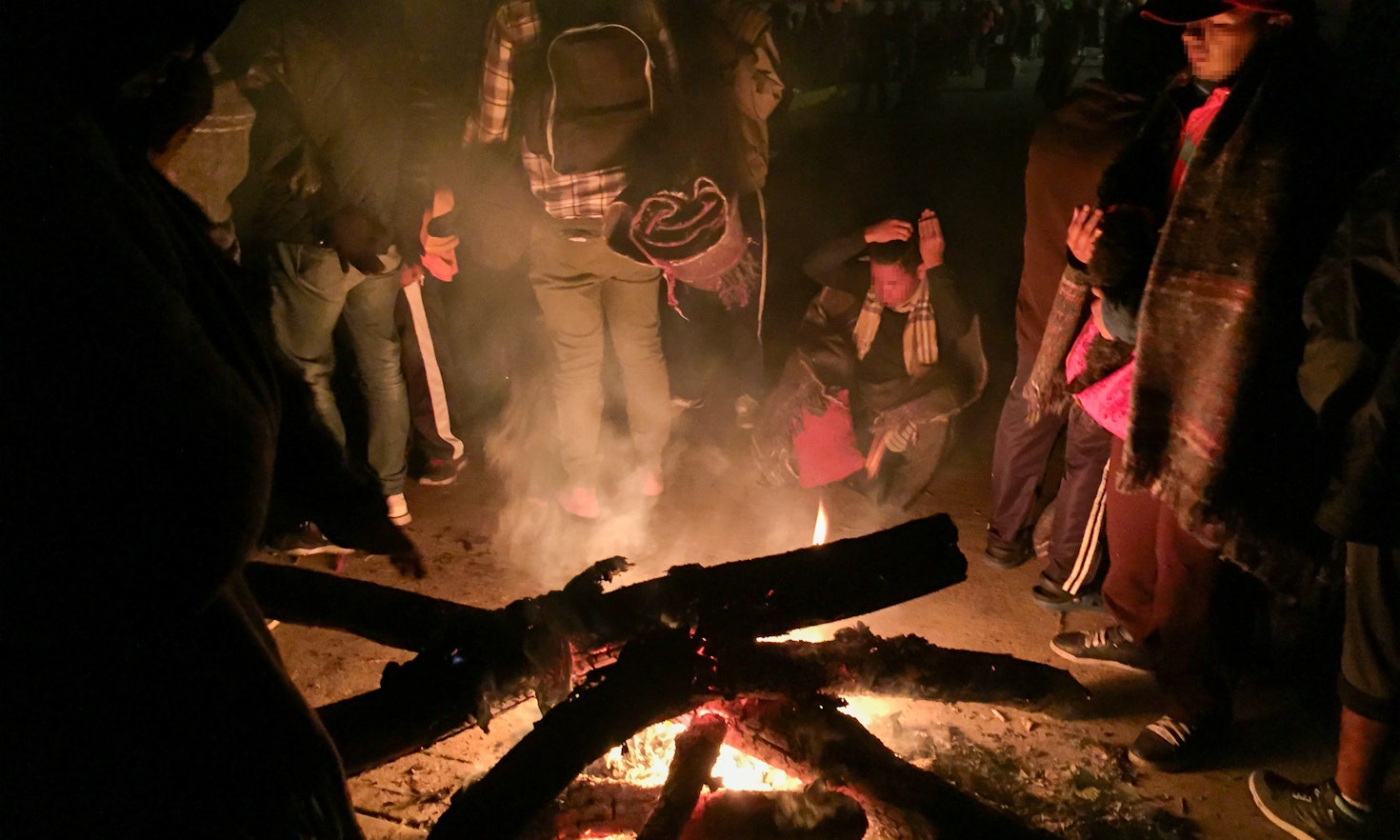
Achilli Luigi, an expert who focuses on the hidden dynamics that enable migration, was invited to Eurac Research to present an analysis on the role of transnational criminal groups in migration governance.
What aspect of migration are you exploring?
I focus on the role of criminal groups, such as human smugglers and trafficking networks, in migration governance as well as how migration is steered by various factors, including criminal actors. Usually, we see these groups as societal problems that disrupt migration governance – preventing states, international organizations, and civil society from making migration work properly. But through my research, I’ve found that criminal actors can actually play a functional role in how migration is managed.
For example, in Europe, there is no law allowing the regulated arrival of migrants and asylum seekers. If someone wants to claim asylum and become a refugee in Europe, they generally have to rely on irregular channels, often involving smugglers. This tells us that the asylum system itself largely depends on the operations of criminal groups. The very thing that makes Europe proud: granting asylum to those fleeing persecution and violence, relies on these criminal practices. Without smugglers, the system wouldn’t function, or it would function even worse than it does now.
This led me to rethink the role of criminal groups in migration governance. They don’t just disrupt it; they also sustain it. Sometimes, this is positive as it enables the asylum system to function, but in other cases, it’s highly negative.
This led me to rethink the role of criminal groups in migration governance. They don’t just disrupt it; they also sustain it.
Luigi Achilli
As a fulcrum which enables migration, can or should these groups be moderated?
Yes, we can prevent criminal groups from becoming key players in migration governance by facilitating legal migration channels for those seeking protection. This means either strengthening existing legal pathways or creating new ones, such as humanitarian corridors. People end up using smugglers because they have no other option. If we truly want to protect asylum seekers and address the role of criminal groups, the best approach is to reduce the demand for smuggling services rather than just cracking down on smugglers themselves. Instead of focusing on eliminating smugglers, we should help those who need them, the migrants themselves. Right now, Europe’s migration policy is largely security-driven, with tighter border controls and externalizing asylum responsibilities to third countries to prevent departures. But this approach fuels the demand for smuggling services. By blocking legal mobility, we push people toward illegal routes. Smuggling doesn’t always involve exploitation, but criminalizing migration inevitably fuels illegal activity.
Where are migration policies working?
The case of Ukraine is a clear example. Until recently, there was no significant smuggling of Ukrainian asylum seekers because European countries provided temporary protection status, allowing them to move legally and avoid exploitation. There are several reasons. One is racial profiling – Ukrainians are seen as white, blonde, and more “European-like.” Of course, Europe is much more diverse than this stereotype, but the idea of white Europeans fleeing war struck a chord more easily with the European public.
As we know, not all conflicts have the same results…
It’s interesting. Research on Palestinian refugees and war-related displacement has revealed some patterns. In Palestine, for example, up until the recent ceasefires, people in Gaza were desperately trying to flee under heavy shelling but couldn’t because the borders were closed – not only by Israel but also by Egypt. So, even when there’s some self-identification with them as fellow Arabs, political and geopolitical factors come into play. To what extent does race actually play a role in preventing people from leaving? I think it’s always a combination of geopolitical interests and cultural factors, with each playing a role depending on the context, but often strategically intertwined. In Europe, self-identification played a huge role in how Ukrainian refugees were received. Journalists covering the war often said things like, “These are people like us.” What does that imply? That people from the Middle East or Asia are not like us? That’s the key point–self-identification. People sympathize more with those they can relate to.


So, given that criminal groups are deeply involved in migration to Europe, what drives them? Is it just money, or is there more to it?
We need to distinguish between human trafficking and human smuggling. Roughly speaking, while the two may overlap in practice, they are generally distinct. In human smuggling, the migrant buys a service, typically involving illegal border crossing. The smuggler provides this service, usually for financial gain–though not always, but I’ll get to that later. In human trafficking, the migrant doesn’t pay for a service but is instead exploited by the trafficker. A classic example is forced prostitution or sex slavery. Of course, the reality is often more complex, but that’s the fundamental distinction.
So, in one case, the person pays for a service...
And in the other, they are the service. When we think of human smugglers, we often imagine ruthless criminals who abandon people at sea or leave them to die in the desert. But what surprised me in my research was the deep, often personal relationships between smugglers and migrants. Many of the smugglers I met were once asylum seekers themselves. Some became smugglers out of necessity. We tend to see smugglers and migrants as two separate categories – the heartless criminal and the vulnerable victim. But in reality, these roles often blur. This leads some people to argue that if smugglers were once migrants, then migration itself is criminal. That logic fuels policies that criminalize asylum seekers. But in truth, the cause of this overlap is the prolonged marginalization and criminalization of migrants. Many are left with no other option but to engage in smuggling as a survival strategy. When I traced the backgrounds of smugglers I interviewed, I found that many had spent years struggling to survive–living on the streets, facing constant instability. Eventually, they turned to smuggling, not necessarily as criminals, but as a way to get by.
But why do you think the media portrays smugglers as purely exploitative criminals who abandon people for profit? Is there truth in that narrative?
I think it’s because we like to divide the world into clear moral categories – good and bad, victim and villain. It makes it easier to justify our policies. We tell ourselves that we’re the good guys, the smugglers are the bad guys, and the migrants are helpless victims. It’s like a Sergio Leone movie – that binary way of thinking serves media narratives well. Look at how migration policies are justified today. Many governments argue that stopping migrants from crossing dangerous routes isn’t just about border control – it’s about saving them from smugglers. But in reality, these policies create more demand for smugglers, increasing risks for migrants. My research shows that exploitation itself – whether being exploited or exploiting others, is often a form of agency whereby people can make choices, even in vulnerable situations. When I was researching in Turkey, I met a young man who was 19 at the time. He had started working for a smuggling network when he was just 17. He wasn’t paid – he worked for free. Because he and his family couldn’t afford to escape the war in Syria. So, he made a deal: the smugglers would take his family to safety, and in return, he would work for them. So, is the head of that smuggling group an exploiter? A benefactor? Or both? Reality is far more complex than the simple narratives we hear. Sometimes, exploitation is the only way out.
Can we talk about how smugglers operate on social media?
Absolutely. I recently finished a study on the use of TikTok by human smugglers. These videos show everything from border crossings to direct testimonials from migrants. But what’s fascinating isn’t just the content – it’s the level of engagement. Some of these videos get hundreds of thousands of likes. Some smugglers even become influencers.
Like folk heroes?
Some gain so much popularity that they start advertising other products–milk, juice, even ice cream. Their popularity reflects a deeper sentiment among migrants and potential migrants. They tap into a sense of resilience and defiance, not just desperation.


About the Interviewed
Luigi Achilli is a senior researcher at the European University Institute in Florence, Italy, and the Christian Michelsen Institute in Bergen, Norway. His research focuses on irregular migration, transnational crime, refugee studies, and Palestinian nationalism. He has published extensively on these topics. His recent publications include the volume Global Human Smuggling (for Johns Hopkins University Press, 2023); the special issue “Migration and Crime in a Divided World” (for The ANNALS of the American Academy of Political and Social Science, 2024); and the article “The Missing Link: The Role of Criminal Groups in Migration Governance” (for the Journal of Ethnic and Migration Studies, 2024). In 2024, he was awarded a prestigious European Research Council Consolidator Grant for his project “UNDERGOV – The Underbelly of Migration Governance: Exploring the Intersection of Transnational Crime and Migration Governance.”
Rachel Wolffe
Rachel Wolffe writes regularly on culture, society, the environment and the science at work in our lives. Inspired by the mycelial connections that exist between nature and wellbeing, as well as the power of words in shaping realities, working at Eurac Research is the ideal ecosystem for her interests which are as varied as the topics she confronts in her writing.
Discover
Making research visible.
Find the connected experts, projects, publications, and research areas behind this blog post.


This content is licensed under a Creative Commons Attribution 4.0 International license except for third-party materials or where otherwise noted.








 My cookie preferences