


Migration and race: Why we need to talk about Central and Eastern Europe
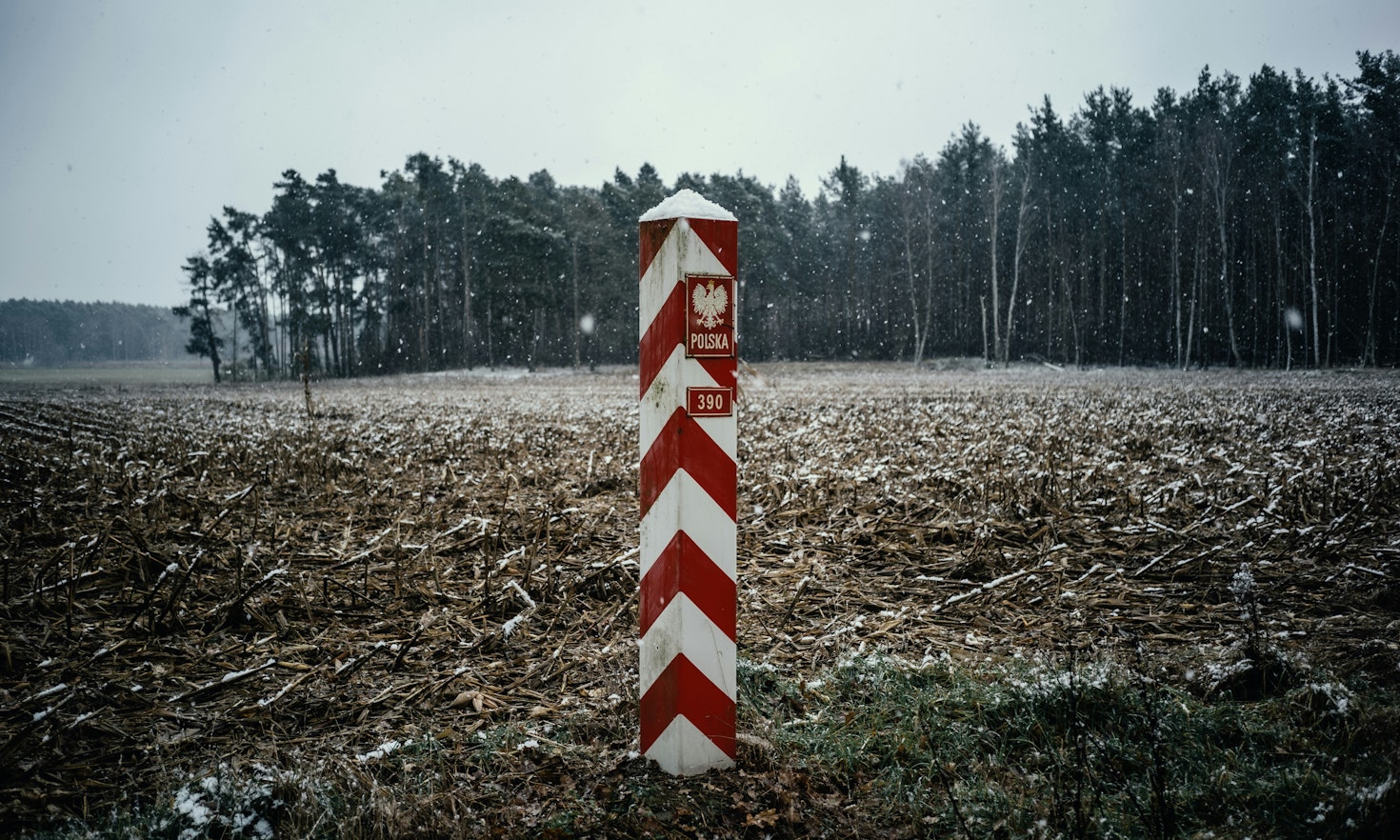
With over 11,000 pushbacks and almost 100 migrants found dead since 2021, the Polish-Belarusian border has joined the ranks of some of the most hostile European borders. This happens in the context of full-scale Russian invasion of Ukraine and the Lukashenka’s regime easing of the entry restrictions for migrants intending to travel to the West. Those being denied entry, pushed back or dying are disproportionately migrants from East African and Middle East countries. This is symptomatic of some of the dramatic changes that Central and Eastern Europe is facing in relation to migration, including increasingly hostile anti-immigration rhetoric. But not all migrants are unwanted in what - at the core - is a conflict around race, whiteness and belonging. Our recent book (2025, Routledge) centres racialisation in the study of contemporary migrations to, from and within Central and Eastern Europe.
In March 2025, the Polish government suspended the right of migrants to claim asylum. This policy does not impact all those crossing into the European Union (EU) through Poland, but specifically those migrants who since 2021 have been attempting to regularly or irregularly cross through the EU’s eastern border with Belarus.
The inability to seek asylum, which is a right guaranteed under both international and EU laws, was introduced to keep away those entering the EU from Belarus. The official rhetoric around what is taking place at the border is steeped in racially tinted language of ‘invasion’ and ‘overtake’. Pushbacks and bans have been justified by claims that migrants, especially those arriving from Africa and Asia, might pose a danger and that the region does not have a responsibility to accept migrants from outside Europe because they have never exploited their countries through colonisation.
Who is ‘invading’ and why
The migrants stuck on the Poland-Belarus border travel from countries including Syria, Yemen, Afghanistan, Sudan, Somalia and Ethiopia – all having ongoing or/and often longstanding conflicts and being increasingly on the receiving end of the global climate crisis. Despite that, they are considered illegal and dangerous and the border repressions against them have escalated since the Polish centre-liberal government took office in late 2023. Shortly after his election, the Prime Minister, Donald Tusk, spoke of the risk of millions of migrants entering from Muslim countries and thus undermining ‘our Western civilisation’, not dissimilar to his Hungarian counterpart employing replacement theories to defend Western Christian civilisation against ‘invaders’ lurking at the border. The rhetoric of control and security is attached to brown and black bodies of migrants who in the national and European imaginary are encroaching white space.
And yet, Central and Eastern Europe (CEE) is in demographic decline. Coupled with large-scale westward emigrations (especially from Poland and Lithuania) in the past two decades the region needs workers. Immigration statistics into CEE have recently surpassed emigration ones, meaning that more people are now coming into the CEE than leaving it and this potential workforce is acutely needed. What the large-scale Ukrainian migration to Poland in the past few years have shown is that migrant labour is good for the country’s economy. Despite all that, not all migrants are welcome in the region and who gets in or is pushed back or left to die is determined by race and the value attached to racialised human life.
We can no longer ignore race
For too long, race has been ignored or dismissed as irrelevant in CEE when it is, in fact, at the centre of ever-escalating tensions around border security in Europe. This was justified by the fact that CEE lacks ethnic and racial diversity, to claims that the region never engaged in colonialism, or does not receive many migrants and thus do not have similar issues to its Western neighbours. Despite a lacking engagement with race in the region, migration to, from and within CEE have always been racialised, i.e. stereotyped, discriminated, and marginalised in racial terms.
Our recently published edited collection challenges the erroneous yet lingering belief that CEE is untangled from global racial formations. It invites empirical perspectives to already established theoretical interventions on the study of race, racism and whiteness in Europe’s East. The CEE perspectives on migration and race span chapters on the partial and always conditional whiteness of CEE migrants and that of non-CEE migrants at its borders. Daria Krivonos deconstructs the white/non-white binary that often shapes debates on the in/exclusion of Ukrainian labour migrants in Poland. Scholars and border activists Kamila Fiałkowska and Natalia Judzińska point to the racial violence at the Polish-Belarusian border from the perspective of the activists helping them. Špela Drnovšek Zorko proposes a reading of postsocialist biographies against the context of transitions from imperial (socialist and colonial) histories. Chapters by Irma Budginaitė-Mačkinė and Dominika Blachanicka-Ciacek as well as the chapter by Anna Safuta explore the race-class nexus of CEE migrants in the ‘West’, while a group of Polish-Roma scholars (Monika Szewczyk, Sonia Strykacz, Ignacy Jóźwiak, Elżbieta Mirga-Wójtowicz and Michał Garapich) reflect on the shifting racialisation of Roma migrants. Finally, Milena Błahuta explores mobilisations of race and whiteness in growing ‘trans-peripheral’ migrations within CEE itself.
Migration to, from and within CEE is of growing importance. For the past two decades, CEE citizens have been migrating west, often to provide cheap essential labour to countries such as the UK, Italy or Germany and have experienced a process of racialisation as they migrate. Increasingly, these patterns are both intensifying, shifting and diversifying with more people migrating not only from the CEE region but also to it as well as within it. With growing economies and demographic crises in Poland and other CEE countries, migrants are needed. Who is welcome and who gets pushed back at the border is at the core of the project of fortification of European borders. Security concerns, control and hybrid wars are buzzwords concealing a continuum of racialised border violence that is at its peak in CEE and requires our urgent critical attention.

Kasia Narkowicz
Kasia Narkowicz is Senior Lecturer in the Department of Law and Social Sciences, Middlesex University London, UK. She works on migration, Central and Eastern Europe, Islamophobia and race/racism, with a focus on Poland and Polish migrants in the UK. Dr Narkowicz holds a PhD from the University of Sheffield and has held positions at the University of York, University of Cambridge and Södertörn University in Sweden. @Linkedin
Anna Gawlewicz
Anna Gawlewicz is Senior Lecturer at the School of Social and Political Sciences, University of Glasgow, Scotland. She has a PhD in Human Geography and contributed to multiple research projects exploring East-West migrations in Europe and social relations between migrant and long-settled populations, including in the context of Brexit and the Covid-19 pandemic. Her current work focuses on responses to hostile immigration regimes, migration-driven urban and rural communities, and migrant essential workers. @Linkedin

Konrad Pędziwiatr
Konrad Pędziwiatr is Professor in the Department of International Affairs at the Cracow University of Economics, Poland. He is deputy director of the Center for Advanced Studies of Population and Religion (CASPAR), coordinator of the Multiculturalism and Migration Observatory (MMO) and associate researcher of Centre for Migration Research University of Warsaw. Prof. Pędziwiatr has published widely on issues of migration and Islam in Poland and internationally. @Linkedin
Discover
Making research visible.
Find the connected experts, projects, publications, and research areas behind this blog post.


This content is licensed under a Creative Commons Attribution 4.0 International license except for third-party materials or where otherwise noted.








 My cookie preferences