


Neo-McCarthyist Deportation Policies of the U.S. and the Structural Fragility of American Democracy
The recent wave of neo-McCarthyist deportation policies in the United States raises urgent questions about the resilience of American democracy. Under the pretext of national security, these measures have increasingly targeted academics, activists, and students, particularly those who are critical of U.S. foreign policy. As a result, a chilling effect on freedom of expression has taken root, silencing dissent not through argument but through expulsion. This trend not only recalls the darkest moments of Cold War paranoia but also exposes how democratic systems, no matter how mature or institutionalised, can buckle under pressure when core liberties are undermined. In this blog, I examine how these developments reflect deeper structural vulnerabilities in the U.S. political system and what they reveal about the limits of liberal democracy when confronted with internal dissent.
According to an old Soviet joke, when asked about the difference between the American and Soviet constitutions, the answer goes: the Soviet Constitution guarantees “freedom of speech,” while the American Constitution guarantees “freedom after speech.” This may have been more meaningful — and perhaps funnier — in the past. But today, the extent to which liberal democracies actually protect the freedom after speech is increasingly debatable. When we think of democratic erosion, the United States is now one of the first countries that comes to mind.
Collier and Levitsky’s famous concept of democracy with adjectives, coined nearly a quarter-century ago to describe flawed democracies, has perhaps drawn more attention than they could have imagined. Among the 550 types of such hybrid democracies, the most encompassing category may be fragile democracies. However, Issachroff diverges from this typology and offers a crucial insight: in short, all democracies have the potential to be fragile, we call them “established” merely because they have not yet been tested. A clear example of this is the erosion of democracy witnessed under the Trump administration in the United States today.
Democracy and Freedom of Expression
Freedom of expression is the cornerstone of democracy. All other fundamental rights and liberties are directly or indirectly linked to it. Without freedom of expression, there can be no meaningful exercise of personal development, press and academic freedom, or the right to assembly and protest. As such, any infringement upon this freedom jeopardises the entire architecture of fundamental rights. Regardless of how free and fair elections are, if freedom of expression is not guaranteed, we cannot truly speak of democracy. This is perhaps why the First Amendment to the U.S. Constitution protects this right.
It is often said that freedom of expression is the most valuable of all liberties, yet it is also the most frequently violated. Those who think critically and express their ideas freely pose a grave threat to despots and authoritarian rulers. We are entering a period in which the once-cherished narrative of a “global village” is being replaced by a growing call to “go back to your own village and deal with your own fate.” Perhaps the world is on the brink of a major paradigmatic shift.
McCarthyism
In the early 1950s, Senator Joseph McCarthy launched a veritable witch hunt by claiming that communist spies had infiltrated every corner of the country. From government officials to Hollywood stars, and from academics to journalists, many were accused of being communists. There was often no concrete evidence, yet lives were ruined. People lost their jobs, were blacklisted, and imprisoned. The atmosphere was so intense that some believed naming someone else would be enough to save themselves. When institutions like the House Un-American Activities Committee (HUAC) began supporting McCarthy’s claims, things spiralled further. A group known as the “Hollywood Ten,” consisting of screenwriters and directors, was banned from their professions for refusing to testify. Government officials, too, were targeted — Alger Hiss was accused of espionage, and Julius and Ethel Rosenberg were executed for allegedly passing nuclear secrets to the Soviets. McCarthy’s rise was swift, and so was his downfall. In 1954, he accused the U.S. Army of cooperating with communists. This led to the Army-McCarthy Hearings, which were broadcast live. The public watched McCarthy’s baseless accusations and smear campaign without concrete evidence. The Senate ultimately censured him, and his political career came to an end in disgrace. But the damage had already been done. Freedom of expression had taken a serious blow, and countless careers were destroyed. The paranoia that gripped American politics continued to echo for years. Today, “McCarthyism” is shorthand for baseless allegations and political witch hunts. History has shown time and again how those in power can weaponise fear, and McCarthy’s era remains one of the most striking examples.
Neo-McCarthyist Policies and Practices in the U.S.
Today, we may be witnessing a second McCarthyist wave in the United States. There exist several cases in the U.S., like a Palestinian activist, Mahmoud Khalil and a Turkish post-doc student, Rümeysa Öztürk, who have suffered the consequences of their choices. Let us consider the case of Öztürk, a Fulbright scholar pursuing her Post-doctoral studies in the Department of Child Studies and Human Development at Tufts University. On Tuesday, March 25th, she was on her way to attend a Ramadan event with friends when she was abducted by masked plainclothes agents. These individuals identified themselves as police officers, but neither their appearance nor their vehicles indicated any official sign. Eyewitnesses, including friends who were with her at the time, asked a simple but critical question: “How do we know this isn’t a kidnapping?”
It turned out they weren’t police officers at all. They were agents from U.S. Immigration and Customs Enforcement (ICE). What’s more, Rumeysa had legal residence status. Such an intervention by ICE against someone with valid documentation is practically unheard of. In the history of the United States, the number of similar cases, where individuals were detained in this manner, is just three: one in 1832 and the other two during World War I and World War II. That Rumeysa’s arrest occurred in 2025 suggests that the Trump administration’s “wars” extend well beyond trade wars.
For 24 hours, no one knew where Rumeysa was or what had happened to her. Despite a court order that prohibited her from leaving the state of Massachusetts, the Trump administration had her transported to Louisiana, thousands of miles away from her legal aid network. The goal was clear: to isolate her from support.
Was she detained for breaking the law? No. There isn’t a single piece of evidence suggesting she committed any unlawful act. Her sole “offence” was writing an opinion piece within the university platform provided to her in which she criticised her institution’s financial investments in Israeli-linked companies. She called for the acknowledgement of the genocide being committed against Palestinians and emphasised the equality and dignity of all people.
Shortly after, pro-Israel groups began targeting her, initiating a public smear campaign. Their efforts culminated in her arrest, not because she posed a legal threat, but because she had dared to speak out. Despite the lack of any evidence against her, Öztürk was unlawfully detained for nearly two months. She was finally released as a result of intense public pressure and is now awaiting a decision on her potential deportation.
During these troubled times, chilling remarks came from the U.S. Secretary of State: in essence, the statement goes like “the era of activism is over. If you come here, stick to your studies, stay out of politics, and return to your home country. If you criticise us, there will be consequences.” This was not just a warning; it was a nail in the coffin of freedom of thought.
The Chilling Effects of Deportation Politics: Free Speech Under Siege
The chilling effects of the Trump administration's controversial deportation policies are increasingly visible in the media and academia. Several critical journal articles addressing U.S. foreign and migration policies have been blocked from publication by the Harvard and Columbia Law Reviews under dubious circumstances, despite the editorial and review committees initially accepting their submissions. The rejections have ranged from editorial pressure to fabricated claims about peer review.
What we are witnessing in the United States is not merely a crisis of free speech. It is a deeper structural erosion of democratic norms. The deportation of a legally residing researcher, the censorship of academic writing, and the chilling effect on campus discourse are not anomalies. They are symptoms of a fragile democracy under pressure, where freedom of expression increasingly depends on who is speaking and what they are saying.
If freedom of speech no longer protects those who challenge power, then the United States risks becoming the very thing it once claimed to stand against. The joke from the Soviet era may have lost its punchline, because “freedom after speech” is no longer guaranteed in an established democracy.
Finally, and perhaps more importantly, as the United States, once a self-proclaimed exporter of democracy, begins to import repression, the consequences will echo beyond its borders. Autocratic regimes will seize the opportunity to deflect criticism, pointing to America’s own democratic backsliding as justification for their abuses. In silencing dissent at home, the US not only weakens its moral authority abroad but also fuels a global chilling effect on free speech.
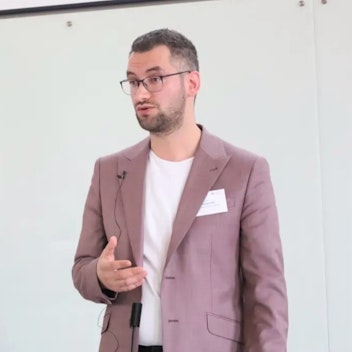
Muhammet Derviş Mete
Muhammet Derviş Mete is currently in the final year of his PhD at the University of Edinburgh, where his research focuses on Constitutional Referendums in Competitive Authoritarian Regimes of Latin America. He earned his LLB from Ankara University in 2014, followed by an LLM from Durham University in 2018. In 2020, Muhammet completed a second LLM in Advanced Studies of Public International Law at Leiden University thanks to the merit-based Jean Monnet Scholarship awarded by the European Commission. For nearly a decade, Muhammet has been working as a practising lawyer in the fields of constitutional and criminal law.
Discover
Making research visible.
Find the connected experts, projects, publications, and research areas behind this blog post.


This content is licensed under a Creative Commons Attribution 4.0 International license except for third-party materials or where otherwise noted.








 My cookie preferences