


Red Gold and Black Labour: Life and Survival in the Ghettos of Southern Italy
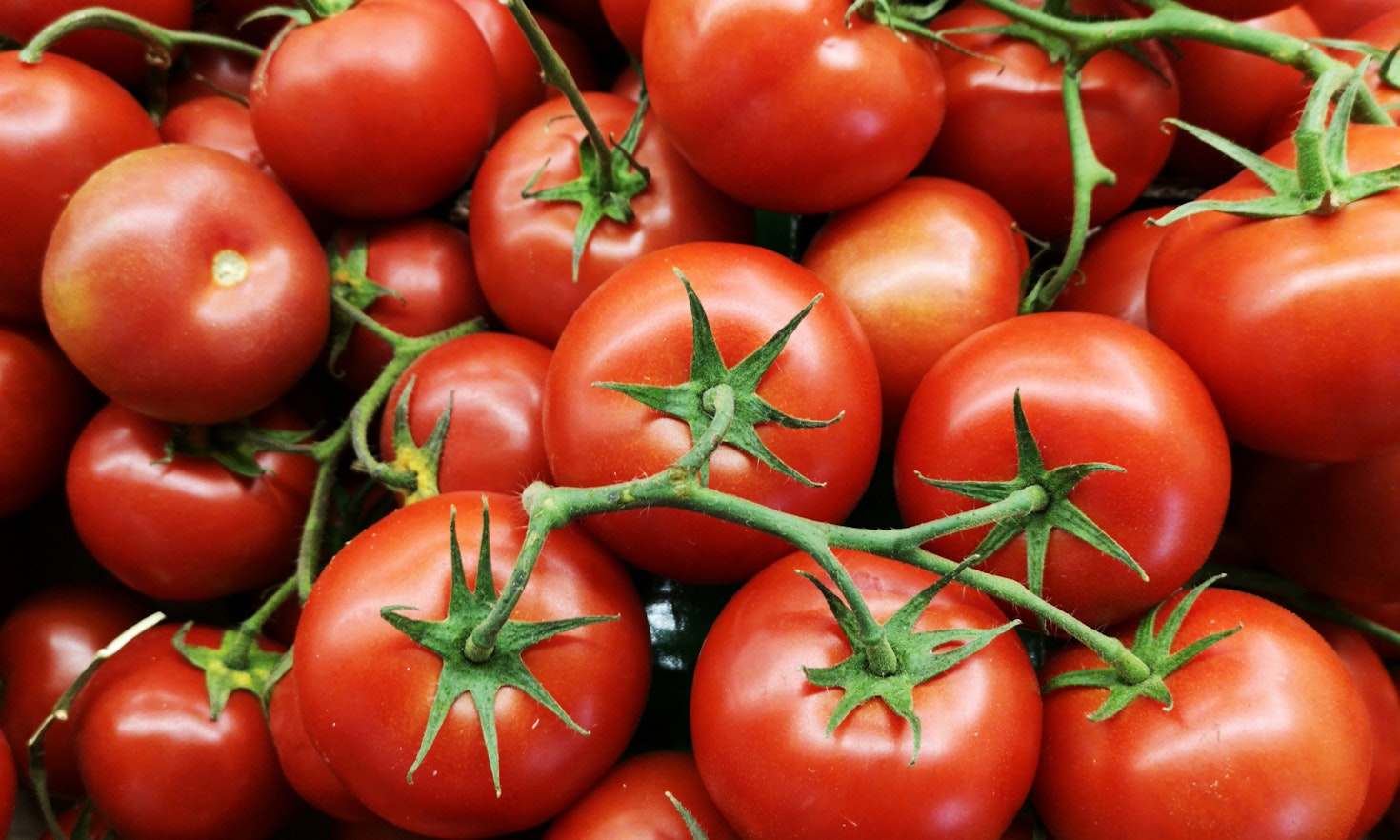
Red Gold and Black Labour: Sub-Saharan Migrants’ Struggles for Survival in the Rural Ghettos of Southern Italy, the title of my PhD thesis at the University of Sussex (2025) is based on one and a half years of ethnographic fieldwork (conducted over a period of three years). The study piece examines how racialised labour, border governance, and everyday survival strategies intersect in one of Europe’s hidden rural frontiers.
The Harvest Behind Italy’s “Red Gold”
Each summer, across the Tavoliere plain in Puglia, thousands of migrant workers rise before dawn and travel to the fields. Their task: to harvest tomatoes for Italy’s industrial processing sector, tomatoes that are transformed into canned and concentrated paste and circulated through global supply chains. In southern Italy’s scorching heat, the workers, predominantly young men from Sub-Saharan Africa, labour under conditions of severe exploitation, earning generally three to four euros per a 300-kilogram box. For many, this seasonal work becomes a cycle of dependence that stretches far beyond the summer months.
This extractive model of labour, essential yet devalued, visible yet politically invisible, lies at the core of racialised rural capitalism, sustained by the irregularisation of migrant work. Tomatoes, celebrated as a symbol of Italian identity, conceal a deeply stratified labour regime. The “red gold” economy depends on a workforce rendered precarious by migration and asylum policies. Many of the workers I met were asylum seekers who had been granted humanitarian protection and who, upon leaving reception centres, could find no alternative to informal agricultural labour.
Italy’s bureaucratic bordering mechanisms (residence permits, renewal delays, and regional restrictions) actively shape the labour market by determining who may work legally and under what conditions. The border, in this context, is not a distant line but an apparatus that governs mobility and access to work. The tomato harvest thus becomes both an economic process and a form of border governance embedded in the countryside, where migration control and economic extraction converge.
The Ghetto
My primary field site, Borgo Mezzanone, lies on the periphery of Foggia, on the grounds of a former military airstrip. What began as an informal encampment has become a sprawling settlement of over 2,000 residents, with grocery stalls, barber shops, mosques, and churches, initially built from recycled materials and subsequently often rebuilt in brick and mortar.
While the term ghetto, used both by residents and in public discourse, evokes exclusion, Borgo Mezzanone is far more complex than a space of neglect. It functions simultaneously as a hub, a refuge, and a site of exploitation, sustaining the onward migration trajectories of Sub-Saharan workers seeking to move northward. For many, it offers a temporary but vital base: a place to regroup, earn short-term income, and gather the resources needed to continue the journey. At the same time, Borgo Mezzanone provides affordable housing, and a degree of autonomy often absent in Italy’s reception system. This autonomy however coexists with surveillance and control. Since 2018, the settlement has been periodically targeted by state interventions framed as humanitarian or safety measures. Police operations, demolitions, and fire-prevention campaigns have sought to “clean up” the area, generally without offering alternatives. These cycles of eviction and reconstruction produce a sense of permanent temporariness that shapes both the physical and psychological landscape of the ghetto.
Masculinities and Survival Strategies
The ethnographic work I carried out in Borgo Mezzanone examined how gendered expectations shape the migration and labour trajectories of young Sub-Saharan men. Most migrated with the responsibility of supporting their families at home and to attain the social recognition associated with adulthood. Migration, in this sense, is not only an economic strategy but a moral pursuit, a way of becoming a man through risk-taking and sacrifice.
These aspirations however collide with the racialised and dehumanising conditions of agricultural labour. As one Burkinabé worker told me: “I am a man; where I get the work is there where I will stay. I stay where I can get a job, so I can do my life; we stay.”
“I am a man; where I get the work is there where I will stay. I stay where I can get a job, so I can do my life; we stay.”
Burkinabé worker
His words capture the moral logic of migrant masculinity: to be a man is to work, to act, to sustain oneself and one’s family wherever the opportunity arises. The impossibility of achieving legal stability or family life undermines the masculine ideals of autonomy and adulthood. Mosques, churches, self-organised associations, and fitness courses become spaces of affirmation where dignity and moral value are collectively rebuilt. Religious faith also plays a key role, allowing men to transform hardship into moral narratives of purpose. Masculinity in the ghetto thus operates as a set of shared practices through which men reassert agency and meaning in the face of systemic marginalisation.
From Field to Factory: The Political Economy of the Tomato
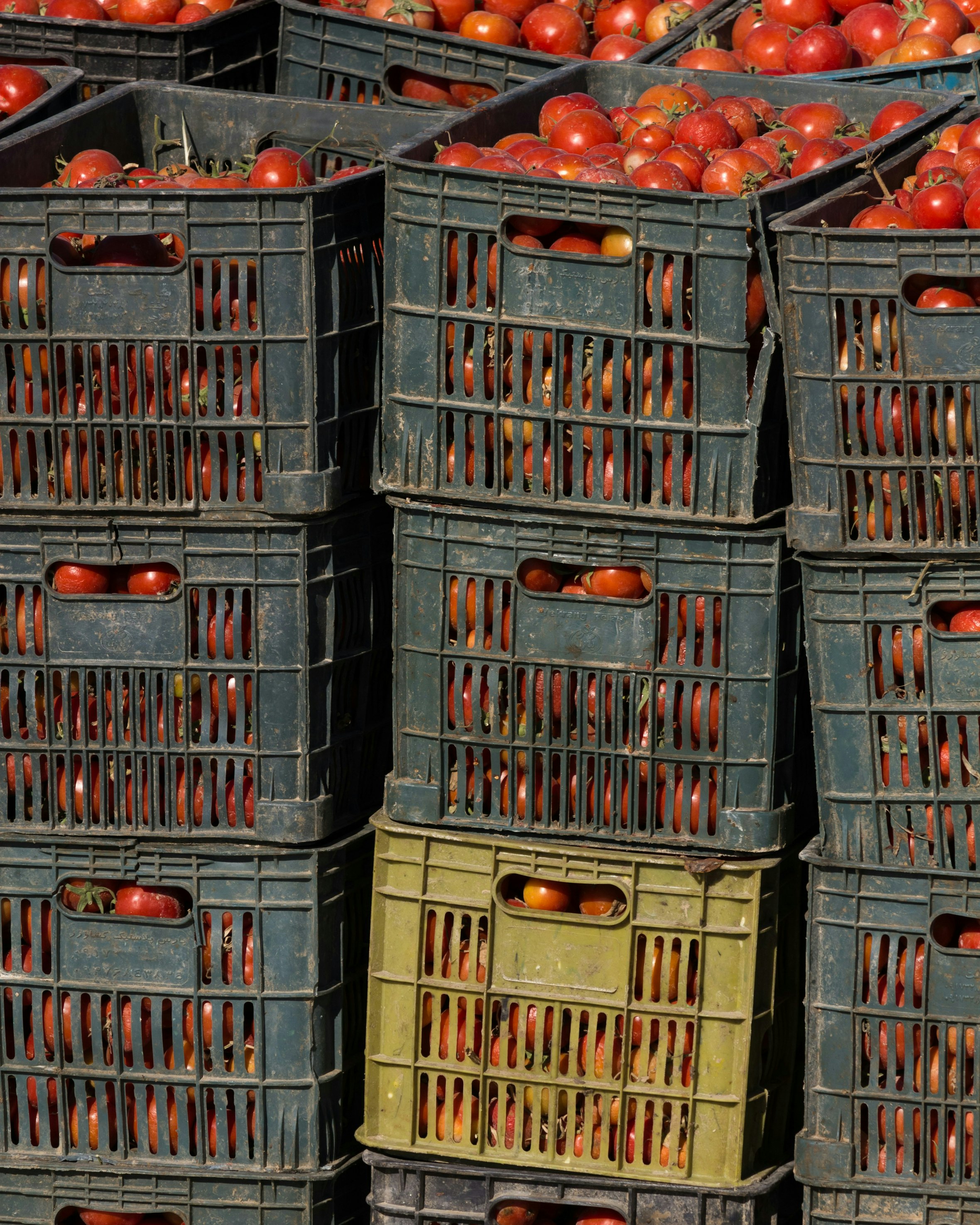
Sub-Saharan African workers are incorporated under conditions of differential inclusion: indispensable to production yet denied full rights and recognition.
Credit: Tavazoei Unsplash | All rights reservedMigration is embedded in the political economy of the agri-food industry in Italy’s rural south. The tomato sector in Puglia’s Capitanata region is worth over three billion euros a year and supplies nearly half of Europe’s processed tomatoes. It relies on a stratified chain of production extending from small growers to multinational retailers. Within this chain, the caporalato system of informal labour contracting remains a key mechanism of recruitment and control.
Sub-Saharan African workers are incorporated under conditions of differential inclusion: indispensable to production yet denied full rights and recognition. Paid by the crate rather than the hour, they bear the burden of a system driven by supermarket price negotiations that push producers to cut costs at every level. The result is a structure of racialised dependency in which exploitation is not an anomaly but a systemic outcome of global competition. The ghetto becomes both a space of refuge and a logistical node in the commodity chain, housing the very workforce that sustains Italy’s celebrated “red gold” economy.
To understand migration in contemporary Europe, is to follow the tomato as a commodity that binds Africa, the Mediterranean, and European consumers through asymmetric relations of labour and capital. The ghettos of Puglia are not marginal but central to Europe’s food system production, spaces where humanitarianism, criminalisation, and survival coexist. Any attempt to address informal settlements must therefore begin by confronting the structural violence of this supply chain: who cultivates Europe’s food, under what conditions, and with what rights.
Beyond the Ghetto: Imagining Rural Justice
Southern Italy’s countryside tells a story that urban debates on migration often overlook. In the plains of Foggia, the tomato harvest binds African workers, Italian farmers, and European consumers in a single chain of dependency. The ghetto, the field, and the factory are not separate worlds but interconnected parts of the same system. Italy’s rural South exposes how Europe’s food economy depends on racialised labour regimes sustained by subsidies, supermarket pricing, and deregulation. Reimagining rural belonging requires systemic change: policies ensuring fair working conditions, legal status, and housing for those who carry out the harvest. Without such reforms, informal settlements will persist, not as exceptions but as enduring features of the Italian countryside.

Emilia Helen Melossi
Emilia Helen Melossi is a Post-doc Researcher at Eurac Research’s Centre for Migration and Societal Change. Her doctoral thesis, Red Gold and Black Labour: Sub-Saharan Migrants’ Struggles for Survival in the Rural Ghettos of Southern Italy (University of Sussex, 2025), examines the intersections of migration, race, and labour in Southern Europe through an ethnographic lens.
Discover
Making research visible.
Find the connected experts, projects, publications, and research areas behind this blog post.


This content is licensed under a Creative Commons Attribution 4.0 International license except for third-party materials or where otherwise noted.








 My cookie preferences