


The (Not So) Hidden Barriers Behind Research with Romani Minorities

Roma are among the most disadvantaged and marginalised minorities in Europe. Generations of discrimination, enforced assimilation and structural exclusion have shaped not only socioeconomic conditions but also deeply rooted experiences of mistrust. Many Romani continue to face limited access to quality education, high unemployment, inadequate housing and persistent exposure to hate speech. These histories shape how institutions are perceived today and they form the backdrop against which any research encounter takes place.
Before a researcher enters a Romani neighbourhood or meets a community representative, the field is already unfolding. It exists in the long shadow of border crossings without rights, languages spoken without recognition and public authorities approached with caution rather than confidence. For researchers, this context is not abstract. It influences who will speak, what can be shared and how trust is built. Very often, the most difficult challenges emerge not during the interview itself, but in the invisible spaces around it.
Challenge 1: Mistrust and the legacy of extractive research
Mistrust of institutions often extends to researchers, particularly when research roles, intentions and outcomes are not clearly communicated. In communities that have historically experienced surveillance and discrimination, a researcher may be viewed as yet another external actor collecting information without meaningful return. Even clear explanations of aims and methods may not fully address this concern, especially when studies are short-term and rely solely on interview-based approaches. When participants have little involvement in shaping the process, research can feel extractive and one-directional. Building meaningful trust therefore requires time, presence and engagement beyond the limits of short empirical projects.
Challenge 2: Gatekeepers as bridge-builders and meaning-makers
In many cases, access to Romani communities depends on individuals who act as gatekeepers. These are often politically active Romani, community organisers or leaders of grassroots associations. They play a crucial role in introducing the researcher, establishing credibility and explaining the study in culturally and linguistically meaningful ways. Their influence shapes who becomes accessible, how the project is understood and how trust is negotiated.
Relying on gatekeepers, however, brings its own challenges. Their translation, paraphrasing or framing of information may shift meaning, particularly in contexts where no shared written form of the Romani language exists. Communication becomes a chain of transmission, with each step carrying the possibility of reinterpretation. The difficulty of access intensifies when working with stateless Romani. Legal invisibility pushes individuals further to the margins, making them unreachable through formal recruitment methods. Reaching such communities requires collaboration with practitioners, associations and local actors who have already established trust. Without these intermediaries, participation may remain extremely limited.
Challenge 3: Ethical boundaries and expectations of assistance
A third challenge concerns the boundaries of the researcher’s role. Many Romani, especially those dealing with statelessness, precarious living conditions or administrative exclusion, may hope that the researcher’s interest signals an ability to offer practical assistance. This expectation is not naive. It reflects long histories in which external attention often came from actors who could intervene. Researchers must therefore make their position clear from the outset. They are not legal advocates and cannot promise solutions, even when they empathise deeply with what they encounter. Communicating this boundary openly is essential for avoiding unintentional harm and maintaining transparency, while still engaging respectfully and attentively with participants’ concerns.
Challenge 4: Language barriers and the limits of standardised consent procedures
The absence of a standardised Romani language adds another layer of complexity to ethical research. Romanes is not a single language but a constellation of dialects that often lack mutual intelligibility and, in many cases, have no widely used written form. In communities affected by poverty or statelessness, literacy levels may be lower and proficiency in majority languages more limited. Standard written consent forms, which function well in majority-language contexts, may therefore be inaccessible or intimidating. They risk reproducing power imbalances by placing the burden of understanding on participants within a linguistic system not designed for their realities.
Rigid, text-based consent procedures further assume that languages are consistent and standardised. This assumption does not hold in Romani contexts. Producing a single Romani consent form would be inaccurate and culturally inappropriate, while producing multiple dialect-specific forms may be unfeasible. Meaningful consent therefore requires alternative approaches. Oral explanations, dialogic conversations and the use of trusted intermediaries create space for participants to ask questions and genuinely understand the purpose, methods and possible risks of the research. Ethical consent is achieved not through signatures alone, but through understanding.
Looking Forward: Challenges as pathways to better research
The challenges outlined above are substantial, but they should not discourage engagement. Instead, they reveal why research with Romani communities is both necessary and deeply worthwhile. These complexities create opportunities for researchers to rethink established practices and to adopt approaches that are more flexible, more relational and more attentive to lived realities.
Working responsibly requires time for community engagement, recognition of historical and linguistic context and a willingness to adapt methods to people rather than expecting people to adapt to methods. When approached with humility, patience and openness, research can become a space of recognition and dialogue rather than extraction.
Far from being obstacles, these challenges can strengthen research practice. They encourage ethical reflection, foster collaboration and build relationships that lead to richer, more grounded insights. Ultimately, they remind us that inclusive research is not simply about overcoming barriers, but about learning from them and creating pathways for meaningful participation and shared understanding.
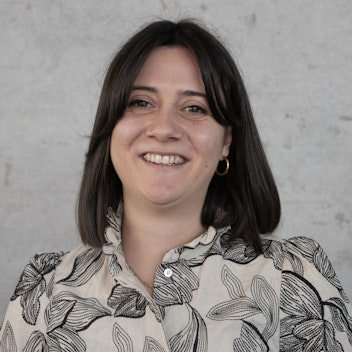
Sophia Schönthaler
Sophia Schönthaler is a Post-Doc-Researcher at the Center for Migration and Societal Change of Eurac Research and administrator of the Eurac Research Ethic Review Board. Her research interests lie at the intersection of gender and ethnicity, with a particular focus on the political participation of Romani women.

Ivana Spirovska
Ivana Spirovska is a Researcher and Doctoral candidate at the Centre for Southeast European Studies, University of Graz. Her background is in law, education, and migration studies. She holds a Bachelor in Law and a Bachelor in Education: English Language and Literature from the University St. Kliment Ohridski in North Macedonia, and an ERASMUS Mundus Joint MA Degree in Migration and Intercultural Relations (EMMIR) from a Consortium of seven universities coordinated by the University of Oldenburg in Germany. Her research has been centred on human rights, statelessness, citizenship, national/ethnic minorities, ageing, and migration studies.
Discover
Making research visible.
Find the connected experts, projects, publications, and research areas behind this blog post.


This content is licensed under a Creative Commons Attribution 4.0 International license except for third-party materials or where otherwise noted.








 My cookie preferences