


Visibilization of the human migrant: is an alternative border possible?
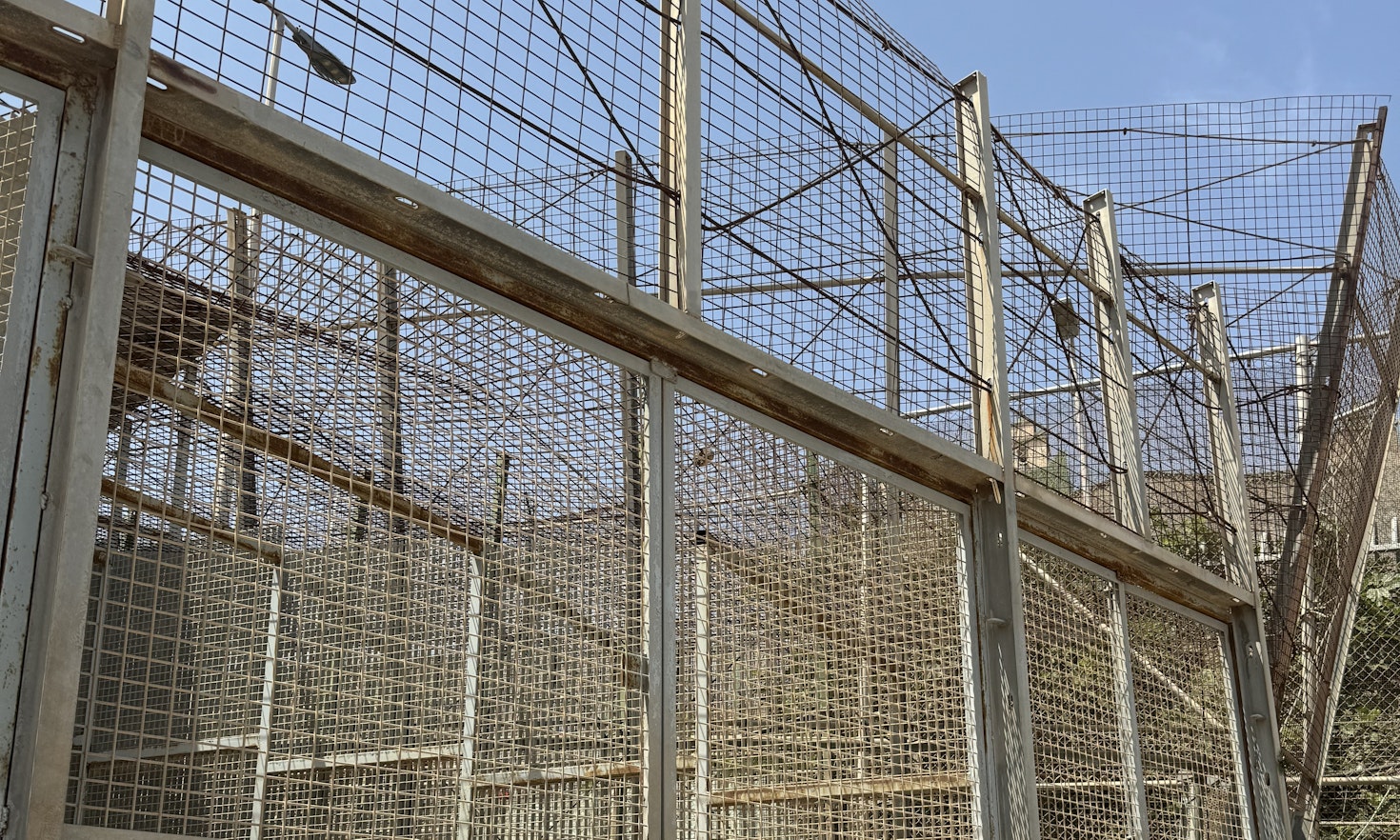
The piece presents the – often overlooked – framing of migration and migrants by specific actors of Ceuta and Melilla’s civil society. It reflects on how civil society in the Spanish enclaves fosters an alternative representation of migration and people on the move on the border by bringing forward the humanity involved in the migration process and the principles that should guide it.
Migration as attack
Ceuta and Melilla are Spanish and European Union borders. Isolated territories whose representation has contributed to creating bordering imaginaries and processes at the national and EU levels, the two enclaves represent Spanish colonial legacy in African and Moroccan territory and, consequently, constantly re-enact an economic, cultural and historical-political disparity. Here, numerous actors are involved in the governance of the border and the movement of people across it.
The enclaves’ municipalities are autonomous; however, the national state asserts its institutional presence through the Guardia Civil and the Policia Nacional, national police forces on these borders. In addition, since Europeanization and the implementation of Schengen within Spain, the European Border and Coast Guard Agency (Frontex) is also present on these territories, which have become EU borders. As you might imagine – especially if you have followed the developments of the EU and its member states’ migration governance over the last decade – institutional narratives of migration and people on the move crossing the enclaves have been highly securitized in the last decades.
When looking at disruptive events on these borders such as the ones I investigated in recent works (1, 2), we witness framings of migration which are deeply managerial, enhancing the bureaucratization of migration as a process and invisibilizing its human aspect. In several instances, institutional narratives even report disruptions linked to migration through a vocabulary associated with warfare. Amongst others, a clear example of this association with warfare is in the statements by Prime Minister Pedro Sánchez, Spanish Socialist Workers’ Party (PSOE), and other ministers of his Government on June 24, 2022, the day of the Melilla massacre at the hands of Moroccan and Spanish police forces. On this occasion, Pedro Sánchez described the moment as critical to “ensure Spanish territorial integrity” calling for the intervention of the North Atlantic Treaty Organization to respond to migrants “attacking” the Spanish border.
Writing an alternative story
However, there is a part of the civil society in these enclaves that tells us different stories of the border. Through my research, I came into contact with non-governmental organizations operating in these territories and working with people on the move, which offered alternative representations of migration. The stories they tell have migrants as protagonists, not threats without name nor face, but human beings with specific backgrounds, trajectories ahead and lives to be lived with dignity. I define these civil society actors as “independent activist organizations” (IAOs), bringing forward a framing which challenges the institutional bureaucratic approach and underlines the humanity in migration, by using terms related to protection and specific human rights and rights of people on the move. They describe people on the move through characteristics that might refer to their mobility intentions, but also to other characteristics unique to the human being beyond the categorization of “migrant”.
Representatives of the independent organizations refer to men, women and minors: “We mostly work with minors, we give information to the youngsters that are afraid of what might happen to them. They get scared due to misinformation when they hear that something has happened to someone […]”. One representative discusses the authorities’ urgency—a kind of “fetishism”—in categorizing human beings first and foremost as “migrants”: “[…] they are not minors to their eyes [the eyes of the authorities]. They are criminalized before everything else. Minors are here treated like adults.” While the human appears invisible to the authorities, IAOs enact on these borders a governance which takes into consideration the human beyond the migrant.
“Sus cuerpos cayeron, nuestra memoria los levanta”
And it is in life and death that such organizations bring forward a framing of people on the move, first and foremost focused on their humanity: every year since 2022, on June 24, day of the brutal attack of Moroccan police forces towards migrants attempting to cross to Spain at the abandoned border crossing of Barrio Chino, such organizations are at the heart of the coordination of commemorative acts. On this day, the known names of the dead and missing were pronounced out loud: the people present taking part to the commemorative acts were asked to attach flowers to the walls of Barrio Chino, connecting the act to the ritual of honouring the death of dear and loved ones, and to write messages directed to these humans whose lives were brutally taken away by the border as national and supranational institutions have constructed it.
These acts are crucial in the way they break the post-massacre violence perpetrated through impunity for the massacre and institutional unwillingness to investigate and try to identify all deceased and disappeared. The commemoration acts communicate that there is out there a community that is still remembering. In addition to remembering, these acts commemorate and honour these losses of human lives on the border, fabricated by a border created and managed with the intention of hurting and killing human beings. “Their bodies fell, our memory lifts them up” is one of the many slogans presented through the commemorative acts, highlighting the ongoing commitment to remember in order not to allow violence to be perpetrated through silence and oblivion. From their migration narratives and governance in the community to commemoration acts in remembrance of the innocent lives killed at the border, these organizations – and the diverse types of people building them up – make a constant effort in order to portray and communicate that migrant lives are visible and matter.


Anna Marino
Anna Marino is a doctoral researcher at the Swiss National Center of Competence in Research – The Migration-Mobility Nexus (nccr – on the move), and at the University of Neuchâtel. Anna holds an interdisciplinary MA in European Studies from Maastricht University and has experience as junior lecturer at the Faculty of Arts and Social Sciences of Maastricht University. She holds a Certificate of training in European Migration and Asylum Law issued by the Odysseus Academic Network for Legal Studies on Immigration and Asylum in Europe. Anna's PhD thesis "Who’s Beyond the Border? Narratives and Counter-Narratives of Migration in Southern European Border Societies", under the supervision of political philosopher Matteo Gianni, Professor at the University of Geneve, is situated within the broader nccr – on the move project on "Narratives of Crisis and Their Influence in Shaping Discourses and Policies of Migration and Mobility"
Discover
Making research visible.
Find the connected experts, projects, publications, and research areas behind this blog post.


This content is licensed under a Creative Commons Attribution 4.0 International license except for third-party materials or where otherwise noted.








 My cookie preferences