“It felt like a wonderland for me”: Edit Slezák on MIDAS’s journey over a quarter of a century

This year, three long-standing and distinguished figures stepped down from the MIDAS Governing Board: Bojan Brezigar, Toni Ebner and Edit Slezák. All three played a key role in shaping MIDAS since its foundation in 2001. Hatto Schmidt interviewed each of them.
About Edit Slezák
Edit Slezák comes from a town some 200 kilometres east of Pozsony/Bratislava and belongs to the Hungarian minority in Slovakia. She worked as a business journalist for the Hungarian daily Új Szó and later spent many years as managing director and publishing director of the publishing houses that published Új Szó and the weekly supplement Vasárnap. Slezák has been with MIDAS from the very beginning, serving on the Governing Board since its inception and as President from 2013 to 2025.
MIDAS (Hatto Schmidt): How did you join MIDAS?
Edit Slezák: There’s a personal side and a corporate side. At that time, Új Szó was published by a small publishing house, but the owner was the publisher of the Rheinische Post. In 1998, we received an invitation to a conference in Trst/Trieste; it went to the editor-in-chief of Új Szó. A few days before the event, he had a car accident. Nothing happened to him, but he was unable to travel to Trst/Trieste. The next personto be considered was me.
MIDAS: So you went to the conference?
Slezák: Yes. There were a lot of people from different countries and from different minorities at the conference. Everyone had to give a short presentation about their newspaper. I introduced myself by saying: My name is Edita Slezáková in Slovak, but in Hungarian it is Edit Slezák. Everyone who had been asleep was now awake. I told them about the Hungarian minority and thatÚj Szó was celebrating its 50th anniversary this year. Bojan Brezigar, who has always been one of the most active members of MIDAS, suggested that we should put something together about Új Szó so that the other newspapers could write an article about it on this birthday.
For me personally, but also as a publishing director, it was very special to see that the world was now as open to me as it was to others. I saw what was out there. It was like a wonderland for me.
Edit Slezák
MIDAS: How was the conference for you?
Slezák: It was very interesting for me. For the first time in my life, I saw that there are so many minorities and that each one is fighting for itself, each one has different problems, because the economic and political conditions are different everywhere. For me, the conference was very special indeed. You have to remember that I grew up under socialism and that not long before we were struggling with things like not being able to buy toilet paper. You couldn’t speak your mind in public, you couldn’t even trust your own friends, because you didn’t know who was in the state security service. For me personally, but also as a publishing director, it was very special to see that the world was now as open to me as it was to others. I saw what was out there. It was like a wonderland for me.
MIDAS: How did the other Hungarian-language newspapers get involved with MIDAS?
Slezák: I have to explain a little. After the change, a man from Budapest contacted me. He was the head of an advertising paper. He proposed a cooperation with a Hungarian daily in Romania, one in Transcarpathia in Ukraine, with Új Szó and his own newspaper. His idea was to publish a joint weekly supplement. The aim was to bring together the Hungarian minorities in the region. The project lasted for about two years. Then the man from Budapest left and the cooperation came to an end. That was the first cooperation between Hungarian newspapers. And now to the question. I don’t remember which Hungarian newspapers were present at the Trst/Trieste conference. But they were members of MIDAS from the beginning. That was not my success. Despite the cooperation on the supplement project, there was no close contact with the Hungarian newspapers. You have to remember that at that time there were twelve Hungarian newspapers in Romania alone. It’s a very big country and each region had its ownnewspaper. The fact that the other Hungarian newspapers are with MIDAS is a success for Bojan.
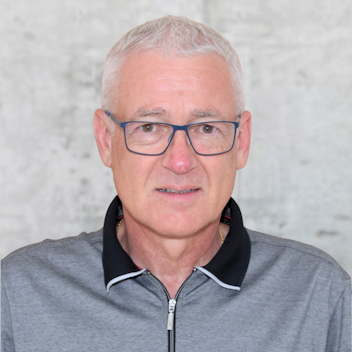
Edit Slezák, General Manager of Új Szó, became President of MIDAS in 2001. She succeeded Toni Ebner.
Credit: Karin Riggelsen | All rights reservedMIDAS: What were the most difficult moments during your presidency?
Slezák: There were two big problems before I became President: the biggest was the closure of Euskaldunon Egunkaria in 2003. Then Serbske Nowiny got into very serious financial difficulties. The Foundation for the Sorbian People had cut the newspaper’s funding. In order to get a clear picture, Bjarne Lønborg from Flensborg Avis went there and took a close look at everything, including the financial data from the sale. In this way we were able help Serbske Nowiny with arguments for their negotiations with the Foundation. During my own time as President, the big change from print to online and the expansion of online started. The fact that the newspapers have such different problems is an interesting aspect. There are dailies that get a lot of funding, but there are also some that get very little. There are newspapers that have no serious problems with domestic politics in their country and with coexistence, while others do. We cannot offer a solution to every problem, but we can bring together the different activities of minorities in different countries so that everyone can learn from them and adapt good ideas that have been successful in individual newspapers. That is why I have tried to encourage activities in this direction.
MIDAS: Do many minority dailies have economic problems?
Slezák: Almost all of them. Perhaps all MIDAS members should think about possible sources of income. I don’t want to say that we should act as a media agency or an advertising agency. But without state or other support for the media, it won’t work. In most cases, even such support is not enough. The advertising market is changing, even online. For example, if I had a good income from banners last year, this may not be the case next year because the advertiser has set up his own website or found other distribution channels. This part of the business is changing so much that this source of income has become uncertain. So we need a broad brainstormingbecause we need money to produce our publications. It would be good to organize a workshop with experts in the field.
MIDAS: You mentioned problems in the coexistence of the majority and the minority in domestic politics. What do you mean by that?
Slezák: A small example from Slovakia. I am convinced that representation in parliament is very important for a minority. In Slovakia, we Hungarians do not have our own parties in parliament. What we do have, are Hungarian MPs in the ranks of Slovak parties. But we can’t do anything with these people. If anyone is interested in us, it’s only every four years when there are elections. In the meantime, as a minority, we can’t achieve anything.
MIDAS: You mentioned the move to online. What challenges do you see for newspapers and for MIDAS?
Slezák: We are facing very big changes and we are already in the middle of this process. All over the world, print is mainly read by the older generation. Young people don’t look for information in print. They are not interested in what we produce. But what kind of information are they looking for? There is also the question of whether or not belonging to a minority is as important to young people as it is to me. My sons live in England. The political situation in Slovakia is so bad that as a mother I can’t tell them to come back, I have to tell them that it’s so difficult here that they shouldn’t come back. What is the best way, the right way? The young generation is scattered all over Europe. Is being a minority as important to them as it is to me? Social media and technology are changing all the time. Even on Facebook, young people are not there anymore. What was fashionable five years ago is no longer fashionable.
If we don’t take good care of these systems, and just one or two of them disappear, we will never be able to build new institutions in their place. What we lose, will be lost for all time.
Edit Slezák
MIDAS: How important are minority media?
Slezák: Minorities have their own institutions, such as daily newspapers, theatres, teacher organizations, schools in the minority language. If we don’t take good care of these systems, and just one or two of them disappear, we will never be able to build new institutions in their place. What we lose, will be lost for all time. That’s why every one of us who is still active and has ideas must fight. The Slovaks don’t understand us Hungarians, they can’t think with our heads. When a law is put on the table, the Slovaks don’t understand what this particular law could mean for us Hungarians. Not because they are bad people, but because they don’t think like us. This is why minority newspapers play such an important role in the distribution of information. If we add artificial intelligence to this situation and everything that goes with it, then we are in a very complicated situation.
MIDAS: So the challenge for minority dailies is how to use the channels to get the important information to young people?
Slezák: Yes. But it’s not easy. Young people don’t read, and when they do, it’s often from online sources that prioritize entertainment over depth. On the Internet, only articles that contain nonsense get good click rates. That’s a disaster. How are you supposed to get people the important information they need to live their lives?
MIDAS: MIDAS members are mainly print newspapers. Should the association open up more to the online world?
Slezák: Yes, absolutely. Things are already moving in that direction. In Romania, the two Hungarian dailies Nyugati Jelen and Bihari Napló have not been available in print since the beginning of 2025. I have spoken to representatives of both newspapers. They want to remain members of MIDAS. We can’t say: you’re no longer in print, so goodbye. MIDAS has to take care of newspapers that are not in print or are no longer in print. We have to open up to online, also because of our current member newspapers. This is the way to get more online newspapers as members.
The MIDAS journey: A European history
Together with many others, Bojan Brezigar, Toni Ebner and Edit Slezák have played a decisive role in shaping MIDAS since its foundation in 2001. As a token of gratitude and in anticipation of the association's 25th anniversary in 2026, MIDAS has published the booklet "The MIDAS journey: A European history". Through brief texts and images, it offers a retrospective look at the association's history. The above interview is featured in the booklet. You can download the PDF version below.

Hatto Schmidt
Hatto Schmidt was born and raised in Baden-Württemberg, Germany. He studied history and political science in Freiburg and Tübingen, and then spent 33 years working as a journalist for the daily newspaper Dolomiten, which is published in South Tyrol. He has dealt with questions and problems of national minorities for many years.
Discover
Making research visible.
Find the connected experts, projects, publications, and research areas behind this blog post.
This content is licensed under a Creative Commons Attribution 4.0 International license except for third-party materials or where otherwise noted.

This blog is supported by the European Association of Daily Newspapers in Minority and Regional Languages (MIDAS). MIDAS was founded in 2001 to provide assistance to minority language newspapers and nowadays has members all over Europe. MIDAS serves as a platform for exchange, uniting minority language newspapers to present a collective voice to the European institutions.