


A revolution at the ballot box? Untangling Tisza’s win and implications for Europe
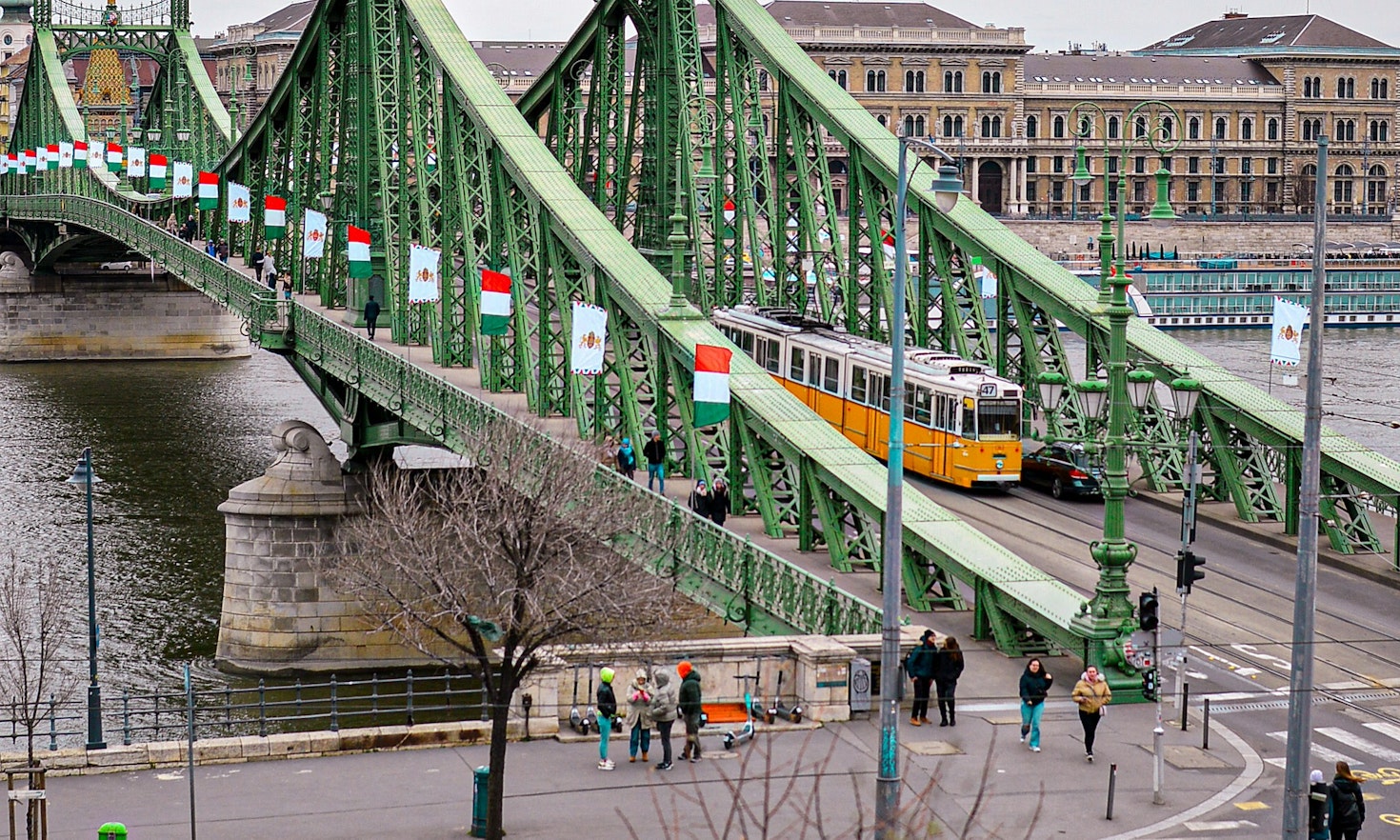
The Hungarian elections on 12 April 2026 were arguably the most important elections since the country’s democratic post 1989 transition, and certainly the EU’s most crucial elections of 2026. Political newcomer Péter Magyar and his Tisza (Respect and Freedom) party ousted Viktor Orbán and won a supermajority, opening up a pathway to restore the rule of law, democratic institutions, and repair relations with Hungary’s neighbors and the EU.
Making sense of the result
The political change in Hungary amounts to a revolution at the ballot box. Voters did not only deselect a former government but ousted an increasingly autocratic system. The elections saw a record turnout of almost 80%, and Tisza got the highest number of votes a political party in Hungary has ever received. How can we make sense of this result?
It’s the economy, stupid!
Tisza’s landslide victory reflects widespread dissatisfaction and frustration after 16 years of Viktor Orbán’s rule. In the 2010s, Orbán built a system known as "Orbánomics": welfare provisions catered towards the middle-class and pensioners, paired with tax cuts and subsidies to attract foreign capital, especially the German and Chinese automotive industry. However, since the pandemic, the economy stagnated, budgets became tighter, energy and cost-of-living prices skyrocketed. Additionally, frozen EU funds due to Hungary’s violations of the rule of law and fundamental rights hit the country hard. Years of a lack of investment into education, health and infrastructure became apparent. At the same time, though, Orbán and his circles built luxurious mansions, vacationed on yachts or build business empires by embezzling public (including EU) money. While ordinary Hungarians became poorer and poorer, the corrupt Fidesz system became harder and harder to ignore. This was the fertile ground Tisza’s campaign built on.
What Tisza got right
Tisza successfully combined charismatic leadership with a movement-style grassroots organization approach. Despite being political newcomers, Magyar and Tisza built a professional party structure around Magyar as the central figure. For two years prior to the elections, Magyar had toured the country, visiting small towns and villages, supported by local grassroots chapters loosely affiliated with the party. Without being integrated into a tightly controlled formal party structure, these so-called "Tisza islands" were decisive in reaching out to voters both digitally and personally in local districts.
As a former Fidesz confidant and political newcomer, Péter Magyar cleverly addressed voter’s dissatisfaction by juxtaposing it with the blatant corruption of Fidesz, effectively using the populist narrative – the "people" versus the "elite" – against its masters. Breaking the ranks with Fidesz allowed Magyar to convincingly address the corruption of the system and attract/capture former Fidesz voters who did not find a home with other opposition parties before.
Furthermore, Magyar managed to unite large segments of the electorate around a positive, future-oriented vision of Hungary. For 16 years, Fidesz reformulated Hungarian identity in a nationalist, exclusionary fashion. Magyar, in turn, reappropriated Hungarian symbols, including the national anthem and the flag, offering voters a different concept of national identity. At Tisza rallies, EU flags and "Russians go home" slogans testified to a more EU-oriented vision of "Hungarian-ness". Instead of fear – the central motif of Fidesz’ (and any authoritarian movement) – Tisza symbolized hope for change after 16 years of illiberal government and reconciliation with European partners and neighboring countries. Importantly, the rallying-around-the-flag effect of Tisza was also possible because after the political collapse of the traditional opposition parties, most of whom chose country over party by not running in the elections so as to not disperse the opposition votes.
Fidesz’ failure
As much as this victory is Magyar’s success, it is also a failure of Fidesz itself. Despite the party’s professional structure and experience, it made a surprising series of mistakes and miscalculations in the past months. The most consequential of which – how the party completely underestimated the threat to their rule which Magyar and Tisza represented. Magyar broke ranks with Fidesz in 2024, after reports about a presidential pardon in a child abuse case became public. With additional scandals emerging from other child-protection institutions, Fidesz suffered a huge loss of credibility on one of their core issues.
Another of the party’s consequential errors was building its electoral campaign on foreign policy issues. A core topic of Fidesz’ campaign was creating the fear that Hungary would be dragged into Russia’s war against Ukraine by Kyiv and "Brussel’s bureaucrats". In that narrative, only Viktor Orbán’s experience and resistance would keep the country out of the war. The government propaganda painted Péter Magyar pouring Hungarian taxpayers’ money down the toilet together with Ukrainian president Volodymyr Zelenskyy and European Commission President Ursula von der Leyen. However, the massive fear-mongering and antagonization of Ukraine and the EU not only completely missed out on voters’ concerns on bread-and-butter issues. It also mobilized pro-European spirits in a country with stable support for its EU membership despite Orbán’s quarrels with EU partners. Taken together, this made Fidesz appear completely out of touch with citizens, while bolstering Magyar’s argument of a corrupt Fidesz elite.
Furthermore, Fidesz underestimated the possible effects of the electoral system it itself built. The strong majoritarian elements of the electoral law benefit the largest party; if you win, you win big. This turned the system against its own masters and allowed Tisza to come to a two-thirds majority despite the gerrymandering of constituencies that clearly benefitted Fidesz.
The resilience of civil society and media
In 16 years of its rule, Fidesz used every chance to discredit any potential veto players, from the political opposition to organized civil society, academia or media. Through a sophisticated oligarchic network and fuelled by state resources, public and private media became effectively Fidesz propaganda channels. Péter Magyar’s first appearance on state TV was only on the first day after the elections. The few remaining independent media operated under a hostile system facing intelligence services and specialized legislation used against them. Similarly, the ruling party severely restricted the space for citizen engagement and public deliberation to crush dissent. Despite these conditions, the resilience of independent journalism, civil society and academia was a key factor to keep national and European audiences informed and mobilize voters. A series of scoops and whistleblowers exposed the government’s tactics – including a false-flag bomb threat against a pipeline in Serbia – and thus were decisive prior to the elections.
Ways ahead for Hungary and the EU
Paradoxically, nothing and everything changed in Hungary over night after the election. In political terms, one two-thirds majority in parliament was replaced by another. Tisza now has the political and legal mandate to amend the constitution at will, and to implement wide-ranging reforms. While Magyar publicly committed to rebuild the rule of law, disentangle the state capture by Fidesz and repair the media sector, it is tempting to keep this power. If they are serious about re-democratization, Magyar and Tisza must restrict their own political power, although Fidesz remains the biggest opposition party in parliament and its appointees lead many important institutions. Thus, shortly after the election, Magyar already called for a number of Fidesz appointees to step down, including President Tamás Sulyok, the president of the Supreme Court (Kúria) and Constitutional Court as well as of the media authority, state audit office or Competition Authority.
For the EU, Magyar’s win will open some deadlocks, especially on short-term financial support for Ukraine. Other challenges will remain, however, including the general question on Ukraine’s EU accession, which Magyar remains sceptical about. Additionally, Orbán’s obstruction gave other EU member states cover. As this ends, pathways for much-needed EU reforms open and must be used. Orbán’s "veto diplomacy" demonstrated how vulnerable the EU’s decision-making procedures are for political hostage-taking. As my colleague Daniel Hegedüs convincingly argues, the EU now has 12 months until the 2027 French presidential elections to introduce Qualified Majority Voting in EU foreign policy decision-making procedures to prevent similar scenarios in the future.
Furthermore, Orbán’s legacy must serve as a warning for the EU. He illustrated how fragile democracy and the rule of law are, if there is political will to undermine or break them. It also shows that eventually, voters remain the most decisive factor in defeating competitive autocracies. Even under a tilted system such as Hungary’s, voters turned up once there was an opposition party combining a credible program based on voters’ everyday grievances, distance from discredited previous opposition, opportunities for local participation and innovative communication. In other words: to save democracy, you must win elections.
To conclude, Hungary’s election mirrors an ongoing anti-establishment trend in European elections. In many EU countries, the far-right benefits from voters’ dissatisfaction with centrist parties. However, Orbán’s defeat shows that this anti-establishment sentiment can also affect the authoritarian-populists who claim to offer an alternative to mainstream parties, if they are in power long enough. Put in populist terms: you cannot drain the swamp if you are the swamp. While this trend swept Orban out, it still entails a concerning message for many other EU member states. As the weakness of pro-democratic, centrist parties continues, the struggle for safe liberal democracy goes on.

York Albrecht
York Albrecht is a Research Associate in the project RESILIO-ACCESS — Resilience Observatory on the Rule of Law in EU Accession Candidates and re:constitution fellow 2025/26. His research focuses on democracy and democratic resilience, the rule of law, populism and illiberalism.
Discover
Making research visible.
Find the connected experts, projects, publications, and research areas behind this blog post.


This content is licensed under a Creative Commons Attribution 4.0 International license except for third-party materials or where otherwise noted.








 My cookie preferences