


Enhancing transboundary biodiversity governance in the Julian Alps
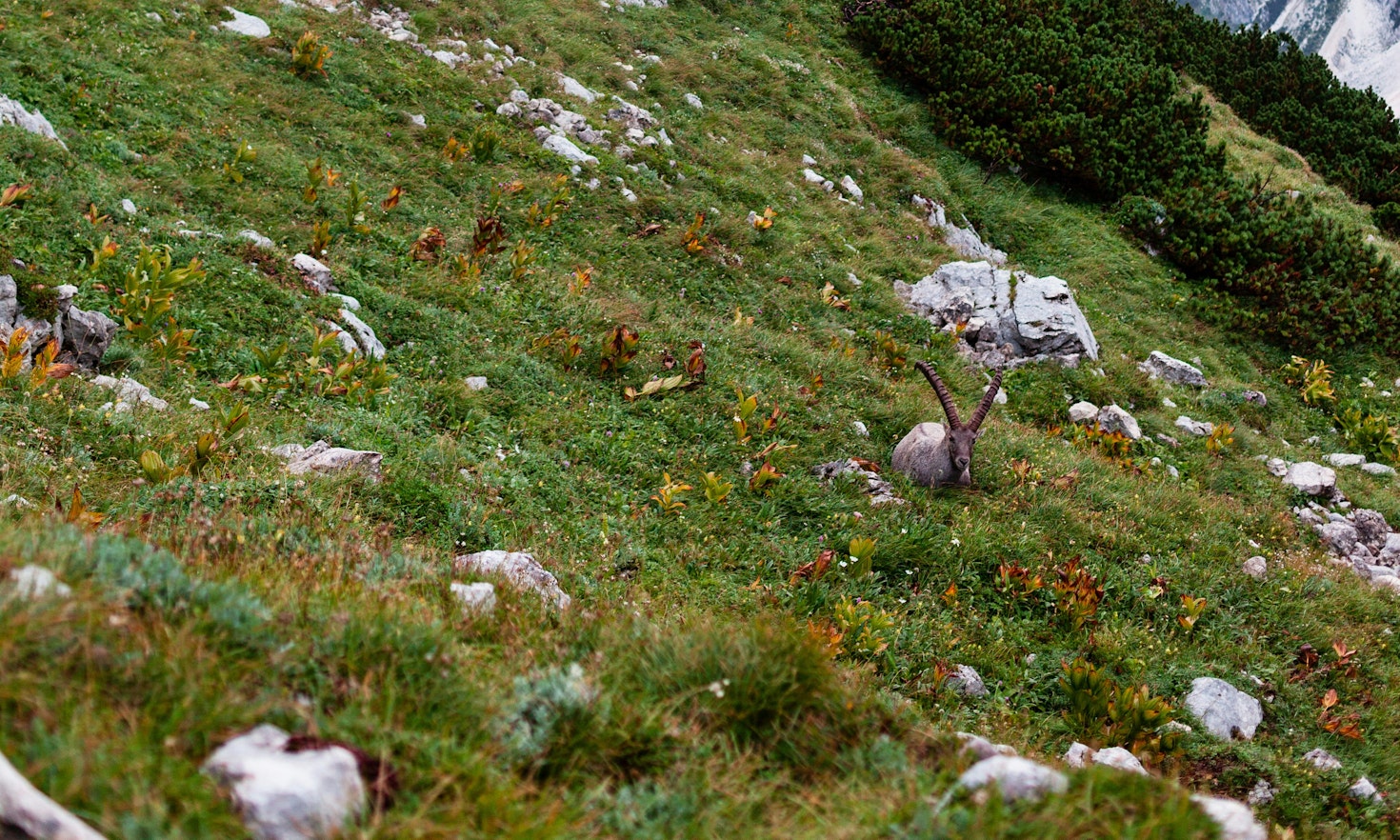
Since the mid-1990s the Triglav National Park (TNP) and the Julian Prealps Natural Park (PNPG) have been cooperating to strengthen transboundary biodiversity conservation in the Julian Alps, a mountain range that straddles the border between Slovenia and north-eastern Italy. In July 2024, they obtained the recognition of the Julian Alps UNESCO MAB Transboundary Biosphere Reserve (JATBR).
Efforts to further transboundary biodiversity governance in this area could be enhanced by following the policy recommendations elaborated by the Eurac Research team in the framework of the TRANSNATURE project, building on information collected through both desk research and fieldwork (22 interviews and 1 focus group meeting from April to November 2024). A first draft of policy recommendations focusing on governance and financial aspects was presented during an online stakeholder meeting on 1 October 2025 and further circulated to relevant contacts. The feedback collected will be crucial to developing a final set of recommendations by the end of the project. This article briefly introduces five governance policy recommendations for the Julian Alps.
Balancing biodiversity conservation
Policy Recommendation 1 proposes balancing biodiversity conservation with local development and resource use by adopting an ecosystem-based approach that integrates the management of soil, water, and living organisms while actively involving local communities. Extending conservation efforts beyond protected areas through expanded buffer zones, strengthened ecological corridors, and the removal of obsolete infrastructure that fragments habitats would be beneficial. Since biodiversity protection is often perceived as a constraint on economic activities, residents and operators should be sensitized to the value of biodiversity as an economic asset and how to directly benefit from it. To this end, sector-specific guidelines could be developed together with and for farmers, tourism operators, and local populations in general to help them identify and adopt biodiversity-friendly practices. This activity could be carried out within the thematic working groups foreseen in the JATBR; these groups have the potential to foster the participation of relevant territorial actors, facilitate the emergence of specific requests, needs and perspectives and prompt an exchange among corresponding stakeholders at cross-border level. Young people, acting as "ambassadors", could further promote biodiversity-friendly practices, innovation and sustainability. Responsible authorities are invited to simplify procedures for compensation and incentives, provide administrative support in completing paperwork, and collaborate across borders to ensure that conservation and development reinforce each other rather than compete. The existence of the transboundary biosphere reserve facilitates joint planning of certain actions and expands the pool of actors potentially involved in conservation efforts. However, this dimension is not always sufficient, and at times may require the involvement of competent ministries (see Policy Recommendation 3).
Integration of existing monitoring systems
Policy Recommendation 2 calls for the integration of existing monitoring systems in the Julian Alps to address fragmentation, inconsistent data collection, and lack of dedicated resources. An integrated framework focusing on mountain biodiversity should define shared monitoring parameters, data collection techniques, and sentinel species or habitats, ensuring that data are comparable and collected continuously rather than through short-term projects. Integrating existing monitoring systems could require the conclusion of dedicated agreements or memoranda of understanding within broader cooperation frameworks, such as the Alpine Convention or the Biodiversa+ partnership, and stable funding. It is highlighted the need for identifying mountain-specific indicators and developing a "red list" of mountain species and habitats that reflect the unique pressures of alpine ecosystems with the contribution of external European and international actors.1 New technologies should be deployed to gather data in remote or inaccessible areas, while existing projects and local knowledge should be integrated to capitalize on past experience. An integrated monitoring system would enable parks to identify cross-border biodiversity challenges more effectively, plan coordinated interventions, and use accessible data to raise awareness of the ecological value of the Julian Alps.
Improving multilevel governance
Policy Recommendation 3 focuses on improving multilevel governance in the Julian Alps by addressing fragmented responsibilities, weak coordination, and misaligned policies between Italy and Slovenia. Because biodiversity conservation intersects with sectors such as tourism, agriculture, hunting, transport, and energy – each governed at different administrative levels – stronger vertical coordination (national–regional–local) is essential in both countries. Horizontal coordination among authorities with different but relevant competences is equally important to ensure coherent policy implementation. Establishing institutional contact points and organizing regular bilateral or trilateral meetings would help align priorities between the PNPG and TNP, which operate under different governance levels. Better vertical and horizontal coordination could also facilitate the creation of cross-border working groups to tackle specific issues (e.g. wildlife crime or ecosystem restoration) and overcome a vision limited to national interests at the expense of broader ecosystem needs requiring coherent strategies across the borders. For instance, Italy and Slovenia could work toward aligning their implementation of EU environmental regulations, including the Nature Restoration Law. Identifying and addressing regulatory and operational misalignments is crucial, and tools such as the BRIDGEforEU Regulation can support legislative harmonization. To sustain this cross-border vision, stable funding and dedicated staff – such as “territorial facilitators” – are needed to strengthen cooperation and engage local actors effectively.
Strengthening the operational capacity of local authorities and territorial actors
Policy Recommendation 4 aims to strengthen the operational capacity of local authorities and territorial actors through targeted training and skills development, enabling them to fully benefit from the opportunities offered by the transboundary biosphere reserve. Many actors struggle with complex procedures, limited technical expertise, and language barriers, which hinder their ability to participate in cross-border initiatives. Parks and competent authorities are suggested to develop training programs on topics such as EU project management, UNESCO MAB-related benefits, and the functioning of networks like EUROPARC and ALPARC. Local authorities should also consider hiring staff with specific thematic and linguistic skills to be involved in activities and projects related to the transboundary biosphere reserve: in so doing, they would create new professional opportunities for young people in the region. Tailored training for farmers, entrepreneurs, and tourism operators would help them understand biodiversity-related funding and incentives and, hopefully, encourage their involvement in the cooperation process. Joint training initiatives can pool knowledge and resources across governance levels, while existing training opportunities offered by international networks should be mapped, promoted, and integrated. Strengthening local capacity in this way will enhance participation, improve project implementation, and reinforce cross-border collaboration.
Need to broaden public participation
Policy Recommendation 5 emphasizes the need to broaden public participation and consequently strengthen the cooperation process in the Julian Alps, which has so far been driven primarily by the parks. To build long-term legitimacy and resilience, cooperation must involve a wider range of actors, including residents, local associations, farmers, tourism operators, and municipalities. Raising awareness of the environmental and cultural value of the Julian Alps and clearly communicating the benefits of cooperation are essential to fostering a shared sense of belonging to a borderless territory. The JATBR thematic working groups can serve as spaces for discussing how different actors benefit from biodiversity conservation, addressing conflicts among them, and identifying ways they can contribute to cooperation. Access to information is a prerequisite for meaningful participation, so parks and authorities should invest in communication strategies and share achievements with local communities. The introduction of a bilingual “territorial facilitator” could help strengthen relationships between parks and stakeholders by communicating results achieved and gathering input from the territory. Within the JATBR thematic working groups and other meetings the use of interpretation or automatic translation tools can broaden participation, while expanding the thematic scope of working groups can help address emerging issues such as climate change and adaptive management that are currently disregarded.
As highlighted in the policy recommendations the JATBR, its governance structure and the cross-border operational capacity it provides to the parks – in terms of planning and implementation – have the potential to ensure the long-term sustainability of cooperation in the Julian Alps. Nevertheless, these efforts should be backed up by stable funding and the political commitment of responsible authorities at all levels.

Emma Mitrotta
Dr. Emma Mitrotta is an Independent Researcher in environmental law and policy, and works at the Autonomous Province of Trento as a Civil Servant dealing with the implementation of the EU-Strategy for the Alpine Region. She was awarded her PhD cum laude in International Studies (2019, University of Trento) for her thesis exploring the involvement of local actors in the protection and management of transboundary natural resources in Europe and southern Africa. Her research interests and expertise lie at the intersection of biodiversity protection, multilevel governance, cross-border cooperation, and participation. She acquired extensive experience in international project management and implementation by collaborating with, inter alia, the IUCN Environmental Law Centre, Eurac Research and the Economist Intelligence Unit. She is part of the Eurac Research team in the project "TRANSNATURE, Transboundary governance models of biodiversity protection: case studies for an enhanced protection of natural resources in Europe".
Discover
Making research visible.
Find the connected experts, projects, publications, and research areas behind this blog post.


This content is licensed under a Creative Commons Attribution 4.0 International license except for third-party materials or where otherwise noted.

The TRANSNATURE research was funded by Biodiversa+, the European Biodiversity Partnership under the 2021-2022 BiodivProtect joint call for research proposals, co-funded by the European Commission (GA N°101052342) and with the funding organizations, the Autonomous Province of Bolzano-Bozen - South Tyrol, the Academy of Finland, the Agencia Estatal de Investigación, and the Research Foundation Flanders.








 My cookie preferences