


Internal self-determination and the struggle of minorities in Afghanistan: between legal entitlement and political tension
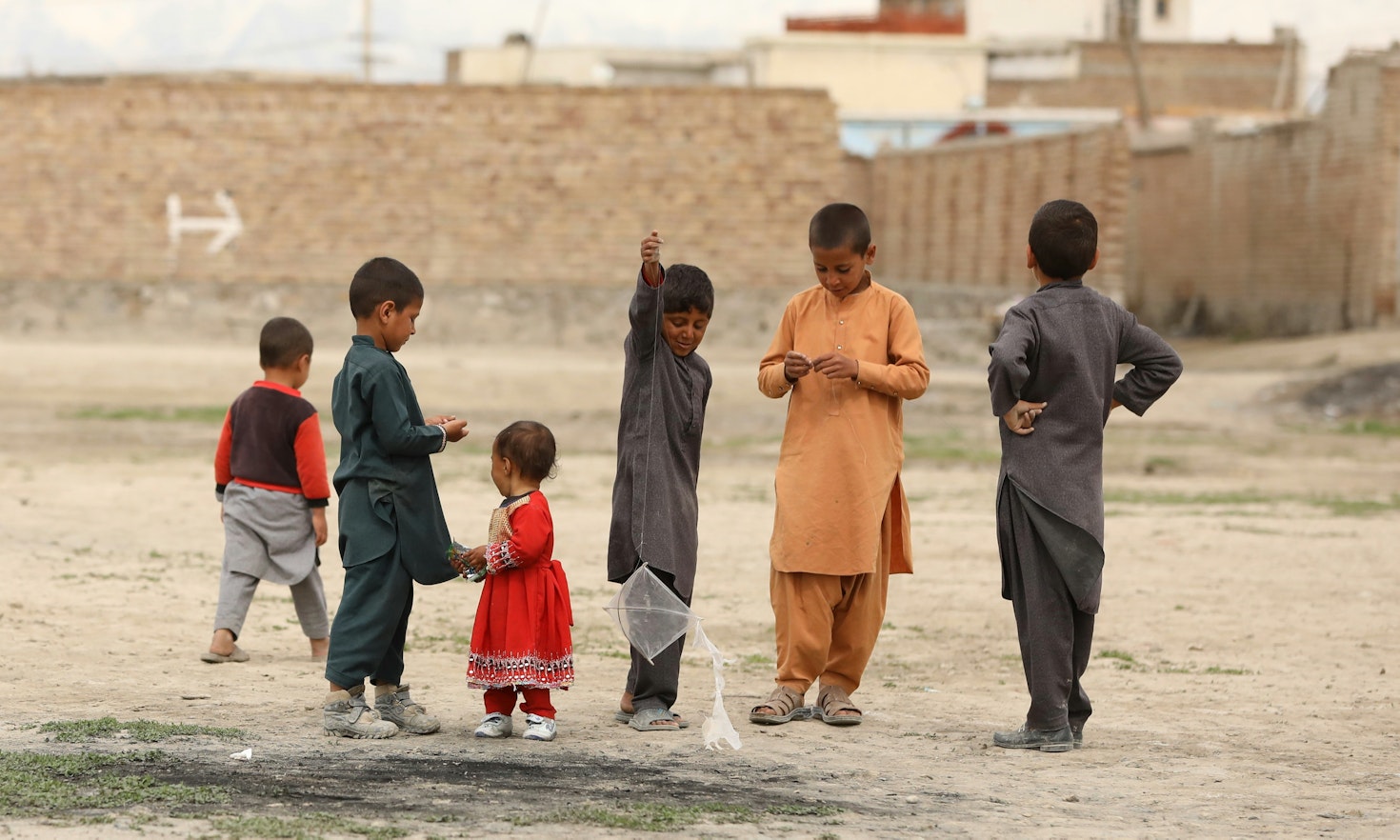
The return of the Taliban to power in 2021 did not merely mark a change of government with the overthrowing of the fledgling democratic system; whatever fragile achievements people had made in their socio-cultural, political and economic lives drastically collapsed. Afghanistan has never been an easy place to govern across ethnic lines. Ethnic minority communities whose coexistence has always been negotiated, never assumed, spent two decades after 2001 within an imperfect and corrupt constitutional order but, despite everything, were formally recognized as having equal participation. That recognition collapsed, and what replaced it after the Taliban takeover is a government composed almost entirely of Pashtun men, dominated by theological decrees rather than popular consent.
Afghanistan’s systematic denial of internal self-determination to minority communities constitutes a grave violation of obligations that the international community cannot afford to treat as a purely domestic matter. It contends that internal self-determination is not only a political aspiration but a legally grounded entitlement under international human rights law. In Afghanistan, the discrepancy between political reality and legal entitlement is not accidental. It requires analytical attention because of its structural nature. This argument is primarily a legal question rather than a political one: has Afghanistan given up the conditions that make internal self-determination possible, and what does international law say should follow? The answer to the first question is yes. The second has no honest answer yet, and that absence is itself the argument.
What internal self-determination actually means
Self-determination, according to most, is about secession, a people detached from one state to form their own. That’s the external dimension. The internal definition of self-determination is quieter and, in practice, more consequential for the majority of the world’s minorities, who live within states they didn’t choose and can’t leave.
Internal self-determination means the right of a people to pursue their own political, economic, social, and cultural development within an existing state, typically through meaningful participation in governance. Nasir Qadri, in The Basis of the Right to Self-Determination, puts it plainly: outside the context of decolonization, self-determination "has an internal nature that consists of a people’s right to freely pursue their economic, social and cultural development, ideally through democratic governance." Article 1 of both the ICCPR and the ICESCR states this without qualification: all peoples have the right to self-determination, by virtue of which they freely determine their political status and are able to freely pursue their economic, social and cultural development. The text is explicit in implying that all people, not some, are included.
The implication that gets missed most often is this: self-determination is a peoples’ right, not a state’s right. The state is the mechanism through which the right is either honored or denied. Father Robert Araujo, writing in the Fordham International Law Journal, makes the deeper logic explicit: self-determination is the connective tissue of human rights law, the exercise through which popular sovereignty becomes real. By its denial, the structure of rights protection doesn’t weaken gradually. It collapses from the foundation.
Ulrike Barten’s Minorities, Minority Rights and Internal Self-Determination (Springer, 2015) closes the gap between “peoples” and minorities and shows how states have often used this distinction to exclude minorities from both categories and their associated rights.. The tradition that self-determination belongs to citizens, and that minorities are something different, cannot withstand scrutiny once you examine how fully minority rights overlap with the political, economic, social, and cultural dimensions which self-determination is supposed to protect.
What Afghanistan built, and what replaced it
The US-led intervention in 2001, opened a little window for Afghanistan’s minorities after the Bonn conference. In this era, minorities gained constitutional recognition, entered parliament, and achieved limited but real gains in education and public life. Afghanistan’s 2004 Constitution, despite being imperfect in many ways, established formal democratic institutions which guaranteed equal rights and participation regardless of ethnicity and religion. By creating a civic space, it at least acknowledged that all of Afghanistan’s communities had a claim on the state.
The Taliban ended that acknowledgement in a single week. The governing structure that replaced it is ethnically homogeneous at every level. As of 2026, no member of minority communities has held a senior ministerial position. The legitimating principle is not representation; it is a theological interpretation of a particular Deobandi tradition, applied by men from a particular ethnic background, accountable to no electorate. This is documented not by advocacy organizations but by UNAMA, the UN’s own mission on the ground, and by Human Rights Watch, whose reporting on targeted killings of Hazara civilians runs to hundreds of pages. Afghanistan is becoming, in practice, a mono-ethnic, mono-religious (Hanafi sect) state and is being administered as if the other communities within it either don’t exist or don’t matter.
In between legal clarity and political turmoil
The ICCPR and ICESCR principles are clear-cut on the issue of self-determination. The 1970 Declaration on Friendly Relations (GA Res. 2625) requires governments to represent their entire population without distinction as to race, ethnicity, or color. The 1992 UN Minority Rights Declaration specifies minority rights to participation, cultural expression, and non-discrimination with enough precision that Afghanistan’s current governance fails on every count. Afghanistan, as a UN member state, is bound by these norms in theory. The problem is enforcement, legitimacy, and political will. In the practical sense, the fact that the Taliban regime per se is not a signatory to any human rights instrument and does not recognize the authority of treaty bodies, cannot justify the violation of these rights.
Afghanistan became a party to these treaties as a fully recognized state (de jure recognition); hence, legally speaking, the current de facto regime does not have the legitimate authority to denounce or terminate these binding treaty obligations. Nonetheless, the country is governed by theological decree, not constitutional charter.
What Afghanistan reveals is not simply a failure of governance. It is a test case for the limits of international human rights law in situations where formal legal obligations exist but institutional enforcement does not. It is clear enough that the failure of enforcement cannot be explained as ambiguity. Those are different problems with different remedies, and conflating them, treating this as a legal puzzle rather than a political failure, is how the international community, which has retreated to cautious engagement rather than principled accountability, avoids responsibility for the latter. The question of whether Afghanistan still meets any recognizable standard of internal self-determination must be answered in the negative.
The idea of internal self-determination is not exclusive to stable democracies. It exists as a legal right because history has repeatedly shown what happens when minorities are excluded from governance. The exclusion of minorities which is taking place in Afghanistan is not accidental. It is systematic and methodical by nature. Both the legal framework that ought to protect minorities and the political reality that denies them protection are evident. There is more than just a policy difference between the two. Even though the international community struggles to address it, it is a moral and legal failure that needs to be openly acknowledged.

Shafiq Shayan
Mohammad Shafiq Shayan is an MA student of Human Rights and Sustainability (MAHRS Programme) at the OSCE Academy in Bishkek, Kyrgyzstan. He holds an LLM in International Law from South Asian University in New Delhi and an LLB from Avicenna University in Kabul. His research interests lie in International Human Rights Law and International Criminal Law, with a particular focus on the Responsibility to Protect, exploring new and complementary accountability paradigms for the prevention of mass atrocity crimes and the protection of minorities.
Discover
Making research visible.
Find the connected experts, projects, publications, and research areas behind this blog post.


This content is licensed under a Creative Commons Attribution 4.0 International license except for third-party materials or where otherwise noted.








 My cookie preferences