


Kast triumphs in Chile’s 2025 presidential elections
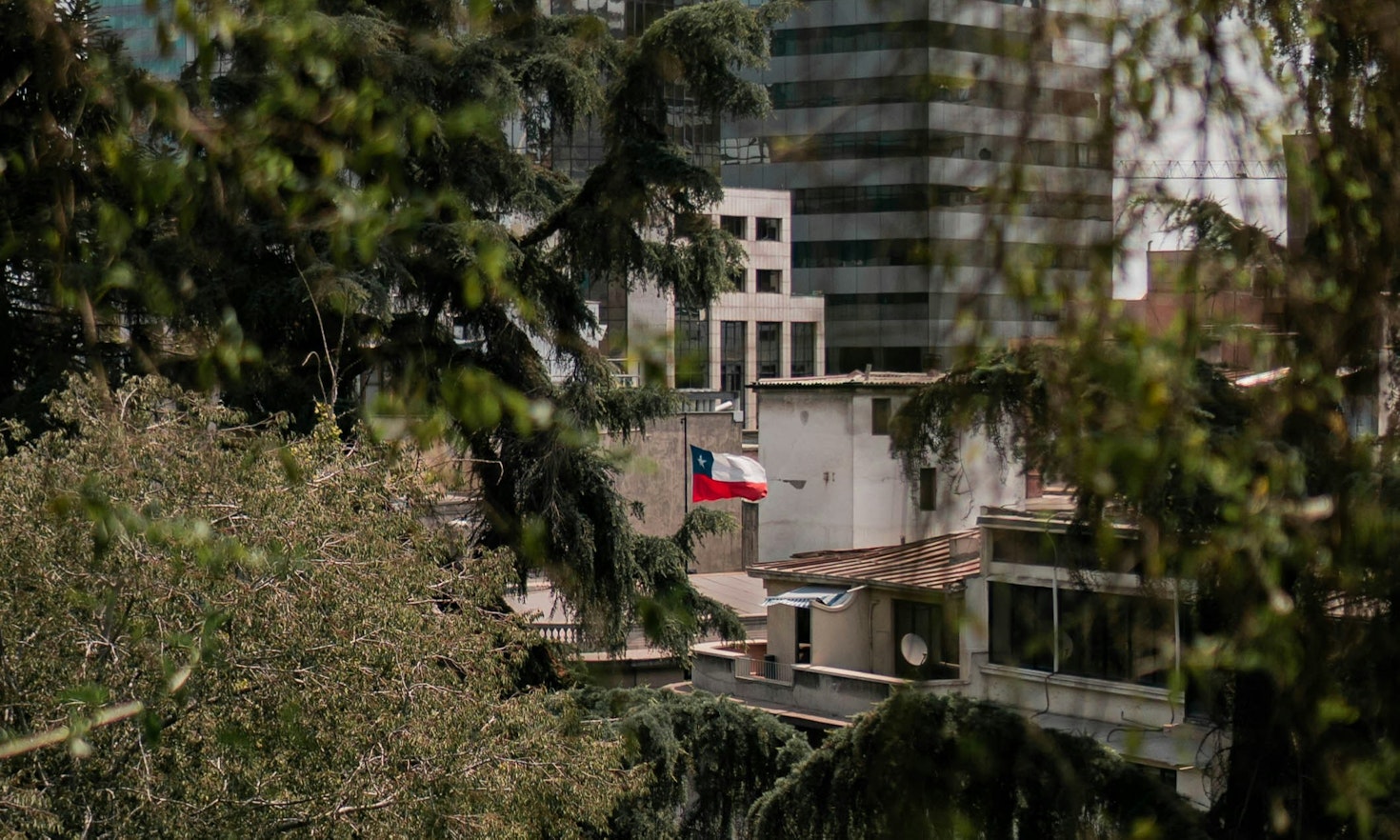
Amid promises of security and a hold on immigration, the far right has won in Chile. Is this a contingent phenomenon or part of a broader wave affecting Europe, the United States, and Latin America?
Kast: university years to the presidential elections
On 14 December, more than 12 million Chileans went to the polls for the second round of presidential elections. Voters were called to express their preference for the country’s most important political figure. Indeed, while a presidential system is surely not an exception in the American continent, Chile has long been marked by a hyper-presidentialist character. This is evident from the executive’s ability to limit Congress, as illustrated by the president’s legislative power index.1 For this highly significant role, more than 58% of the electorate voted for the founder of the Chilean Republican Party, José Antonio Kast, who will become Chile’s next president on 11 March 2026. Kast has now become the most voted president in the history of Chile (7,2 million votes), distancing by more than 16 percentage points the other candidate, Jeannette Jara, of the Communist Party.
But let’s take a deeper dive into Kast’s political career. Kast, a 59-year-old lawyer, was already active in politics whilst at Chile’s Pontifical Catholic University in Santiago, where he was a follower of Jaime Guzmán, one of the main ideologues behind the Pinochet dictatorship. After years in the Unión Demócrata Independiente (UDI), Kast founded the Partido Republicano in 2019 as an expression of more radical views than conventional right parties. The 2025 elections represented his third attempt at the presidency – he came close in 2021 – but finally lost to Gabriel Boric in the second round. In his third attempt, Kast carefully molded his rhetoric, avoiding explicit references to his most conservative positions on abortion or the morning-after pill, among others. However, this does not change the fact that Kast will be Chile’s first president to have openly voted "yes" in the 1988 plebiscite2 and a person notoriously opposed to feminist, environmentalist, indigenous, and LGBTQ movements. In 2017, he said, "If Pinochet were alive, he would vote for me." Not only is his connection to the dictatorship personal, but also familiar: Kast’s father was a member of the Nazi party, and his brother Miguel was one of the Chicago Boys3 and a minister to Pinochet.
But how did Kast manage to convince millions of Chileans to cast their votes after four years of left-wing government? How did he emerge after the social unrest of 2019, which denounced the neoliberal system, along with the then-president Piñera (Chile Vamos, right-wing party)? His electoral program mainly focused on two issues: security and the fight against illegal immigration. The two issues were easily linked when tackling drug-related crimes and the emergence of a Chile-zuela (a dystopian and insecure Chile in the wake of Venezuela). Even before his election, Kast had started a frightening countdown for immigrants to "self-deport", prompting a large number of immigrants to flee to neighboring countries and leading Peru to declare a state of emergency. Vagueness characterized other promises, such as those of cutting $6.5 billion in public spending and supporting a free-market economy. Vagueness aside, those promises were enough to win the hearts of many Chileans and gain leverage on an insecurity paradox. On the one hand, Chile has experienced an increase in drug trafficking-related crimes. On the other Chile remains among the safest countries in the region despite its citizens’ rampant fear of insecurity.
The "threat" of migration and the "need" for security on the international stage
The focus on security and immigration in Chile echoes situations already observed in other countries in South America and the United States. It is no coincidence that Donald Trump (President of the United States), Marco Rubio (United States Secretary of State), and Javier Milei (President of Argentina) have welcomed Kast’s election against the backdrop of a renewed Monroe Doctrine, in which US "leadership is coming roaring back stronger than ever before". Similarly, in the European Union, encouragement has come from the Italian Prime Minister Giorgia Meloni, who hopes for "even stronger bilateral relations, starting with issues such as economic cooperation and the fight against irregular immigration." On the other hand, Kast has never hidden his interest in migration policies in Italy and has often cited Meloni as a role model. In Europe, he also joined a conference of the Spanish far-right party Vox, meeting Santiago Abascal (President of Vox), Nayib Bukele (President of El Salvador), and Viktor Orbán (Prime Minister of Hungary) who were all in attendance.
When considering the international context, one wonders whether Kast can solely be understood in the Chilean context or as part of a broader process. A process in which security is placed at the center, and far-right parties win consensus. On the internal front, Chile has long had a history of political alternation, in which voters traditionally vote for political candidates opposed to those in office. Following this explanation, Kast’s election is a textbook example of alternation after four years of Boric’s left-wing coalition. However, a second consideration also comes into play: compulsory voting. Kast became Chile’s most voted president thanks to the reintroduction of compulsory voting. The effect of this phenomenon has been of great interest in recent years, since Chile embarked on a two-pronged attempt at constitutional reform, with both cases endorsed by popular referendum (2020-2023). On those occasions, the introduction of compulsory voting in the exit referendum brought to the polls a segment of the electorate that had been alienated from politics for years and whose behavior was difficult to understand.
Between rampant far-right parties and the need to rethink the political arena
The political disaffection suggests that Kast’s election can also be viewed from an external front. The phenomenon, like the intensification of securitization and the fight against migration, is not alien to the European landscape. In this context, long-term involvement with traditional parties and formal membership has declined, leaving room for new political agency. This ranges from alternative and non-institutional political participation to the emergence of far-right alternatives – initially anti-establishment and now changing the rules of the system itself. The political disaffection of a growing number of people (at the international level) does not imply that elites remain the only ones equipped to manage the res publica. On the contrary, it prompts us to understand what the root causes of this lack of trust are, as well as the shortcomings of other political forces. In Chile, now that the "no" to the 1988 plebiscite has ceased to be an ordering factor of the democratic life, what other cleavages will gain importance? What ideas, needs, and fears will develop among the electorate? And which ones will be easy to manipulate? These reflections might not only be useful in Chile, but also closer to home.

Chiara Serioli
Chiara Serioli is a Ph.D. Candidate at the School of International Studies of the University of Trento, Italy, where she conducts comparative research on Indigenous recognition and referendum processes in Chile and Australia. Her research interests include pluralism, decolonial studies, autonomy, and independence processes. For her research, she visited the University of Calgary, Canada, and the Pontifical Catholic University in Santiago, Chile. In Trento, she has been a Teaching Assistant for the course Civil Societies and Contentious Politics. Chiara worked as a Trainee Researcher at Eurac Research, at the Institute for Comparative Federalism. Within the paper series Diversity Governance Papers (DiGoP), Chiara published her paper "Cultural Genocide of Indigenous Peoples in Canada. A Legal and Socio-Political Analysis of the Limits of Reconciliation". Her email is chiara.serioli@unitn.it.
Discover
Making research visible.
Find the connected experts, projects, publications, and research areas behind this blog post.


This content is licensed under a Creative Commons Attribution 4.0 International license except for third-party materials or where otherwise noted.








 My cookie preferences