


Reflections on the 2025 Winter School on Federalism and Governance: a journey of learning, exchange and discovery
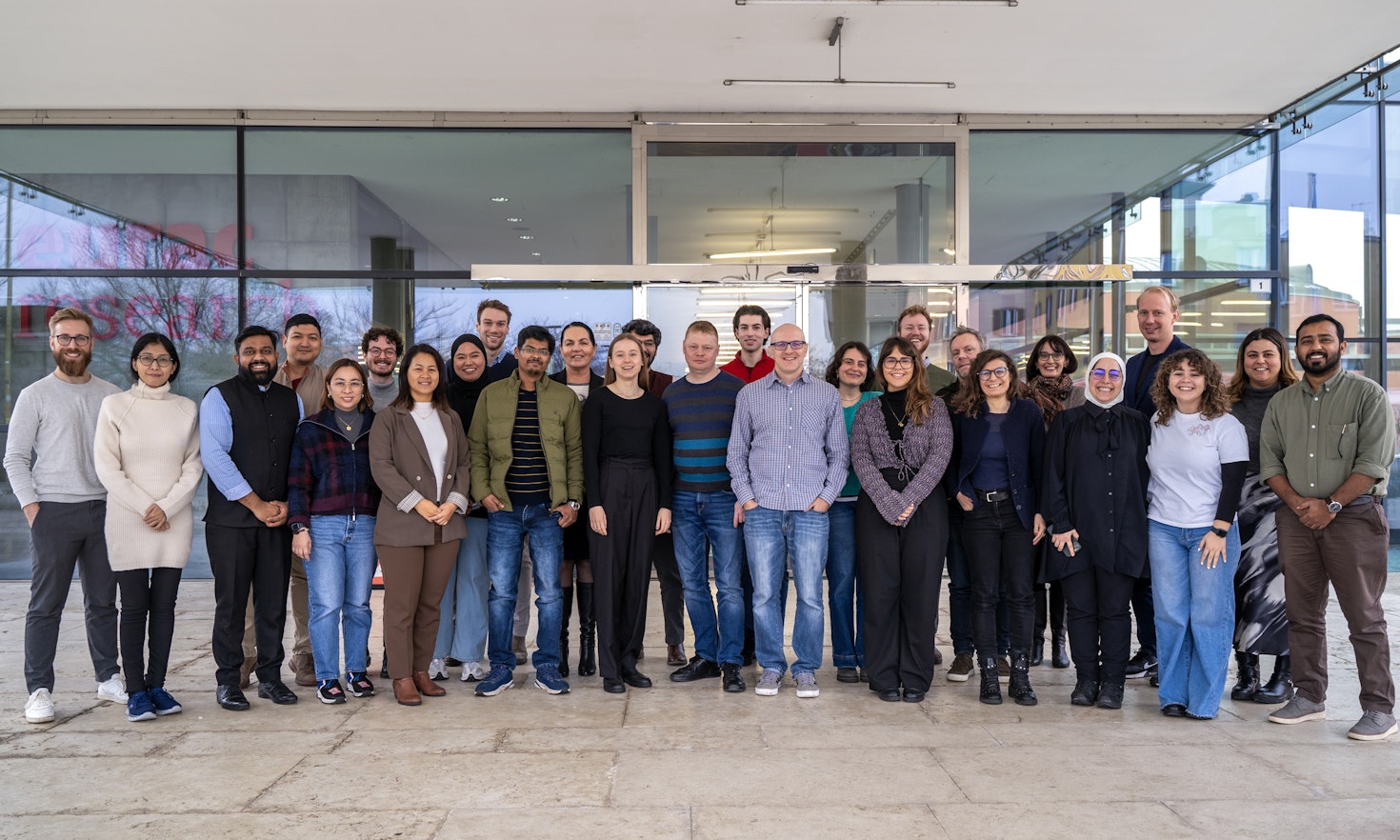
One can rarely find a place where self-reflective thinking, cultural exchange, and academic engagement all come together so well. The 2025 Winter School on Federalism and Governance, jointly organized by the Eurac Research Institute for Comparative Federalism and the University of Innsbruck, is one such confluence. This year’s edition focused on the theme of “Federalism and the Separation of Powers”, which took place from 3 to 14 February 2025 in Innsbruck, Austria, and Bolzano/Bozen, Italy. It provided an exclusive and remarkable experience that extended well beyond the classroom. We, as participants from various countries and backgrounds, spent two weeks exploring the different dimensions of federalism, not as a static model of governance, but as a dynamic and changing framework for fostering democracy, embracing diversity, and enabling.
With a background in Political Science and an academic interest in decentralization and comparative governance, the topic of this year's Winter School on Federalism and Governance felt rather familiar, yet it also felt quite new. It was a distinct opportunity to discuss my ideas on the pertinent issues of federal importance with the experts who offered viewpoints based on actual political experiences.
The first week took place in Innsbruck, Austria, where we were introduced to the core themes of federalism and the separation of powers, followed by a tour of the city nestled in the heart of the Alps. The imperial and modern architecture was truly magnificent and fascinating. The following day was composed of various sessions on the origins of the separation of powers, shared rule, and intergovernmentalism. We learned about the role of courts in federal systems and examined how the separation of powers functions at the subnational level.
The one thing that amazed me was the open and honest discussions we had despite the topic’s urgency. For instance, the roundtable discussion on “Does a Vertical Separation of Powers Prevent Authoritarianism?”, in which we debated the relationship between federalism and democracy. Subsequently, we participated in a team-building activity centered around an innovative experiential learning exercise., It helped us coordinate with fellow participants and deepen our understanding of the nuances of federal systems around the world. On the final day of the week, the simulation game made the course very exciting, with participants given a challenge to design a hypothetical federation with sub-units having peculiar governance attributes and societies.


The discussion concerning research on Austrian Federalism, co-hosted by the Institute for Federalism based in Innsbruck, was very engaging. It demonstrated how an institution can work so dedicatedly to preserve the principles of federalism, which Daniel Elazar rightly points out, “as a way to peace”.
I found myself going back to my original research questions and considering how institutional design affects democratic resilience, particularly in heterogeneous cultures like India.
Each day, we had a routine that combined concentrated study sessions with chances for informal dialogue and cross-cultural interaction. The mornings in Innsbruck were usually organized around lectures that established the theoretical framework, including the role of courts and subnational organizations, the horizontal and vertical separation of powers, and asymmetries in federal systems.
The most memorable moments were at the group dinners when conversations were streamed as naturally as the laughter at the table. We used to have a consensus on which restaurant we were going to, like Indian, Korean, Italian, and so on. Over dinner, I was reminded that information tends to spread most swiftly during shared meals.
The second week of the course began in Bolzano/Bozen. The focus of the lectures changed from conceptual depth to comparative and empirical investigation with the first lecture on “The Italian Regional System: From Theory to Practice”. A visit to the South Tyrolean Parliament was extremely insightful. The Provincial Counsellor was very engaging and patient with all the questions that were posed to him, ranging from the relevance of green parties to the intricacies of the functioning of the South Tyrolean government. The visit was followed by a guided tour of the historic city of Bolzano/Bozen. The city itself seemed like a real example of federalism in action, with slogans of autonomy written on the walls along with the magnificent Victory Monument of World War I.
The second week, we explored how the separation of powers functions in particular federations through case studies from the United States, Canada, Africa, Asia, and the European Union. The thematic workshops provided practical insights into crucial linkages between federalism and financial relations, environmental litigation, migration, and digitalization. Specifically, I was in the migration workshop, which was very interactive – comprised of quizzes and fun games.
The most enriching component was the concluding student presentations, which went beyond a simple synopsis of studies or text; instead, they were deeply personal reflections on how each of us related to the theme of the Winter School and highlighted the intricacies of the federations in our home countries. It was inspiring to witness that, despite the variations in each person's background, everyone shared a concern for coexistence, equity, and participation. The final day wrapped up with the diploma ceremony and a tour of a local winery, where we enjoyed a hands-on overview of the wine production method. The group dinner was an emotional goodbye to all the fellow participants, who had become very dear friends.
Despite our diverse origins in academia, countries, and cultures, we were bound together by a spirit of democratic governance. It was very refreshing to spend the evenings at the cafes, karaoke nights, and while walking and talking across the cities.
Looking back on those couple of weeks, I realize that the Winter School was much more than an academic program. As I always say, the growth of a creature requires an ecosystem, and that ecosystem was provided to me through this Winter School. It fostered in me a firm belief in federalism and good governance. It turned out to be both an experience of learning and unlearning, posing interesting questions and engaging in vibrant discussions on how we govern ourselves in the complex plural societies.
It reinforced the conviction that federalism is a dynamic system that must evolve and adapt to meet the needs of people, not just a set of laws or a clause in the Constitution. It may provide a means of balancing autonomy and accountability, efficiency and representation, and unity and diversity. As a participant from India, the opportunity was profoundly motivating, as India has been a federal country for ages. I hope to employ all that I learned through the program in my future academic research.
Most importantly, it served as a reminder that scholarly knowledge has genuine significance when it is discussed, questioned, and based on actual human experience. That is precisely what the Winter School on Federalism and Governance 2025 provided–a space for the exchange of ideas, the development of friendships, and the meeting of minds.
Last but not least, I would like to thank the Eurac Research Institute for Comparative Federalism, the University of Innsbruck, all lecturers, and fellow participants for such a delightful and mesmerizing learning experience. I return home not only with a better grasp of federalism, but also with fresh optimism about the potential for democratic resilience via decentralization, diversity, and discourse.

Utkarsh Agarwal
Utkarsh Agarwal is a doctoral research scholar at the Department of Political Science, University of Delhi. His research interests span federal reforms, institutional governance, public policy, and political processes in India. His research engagement in federalism and public policy research are also reflected in his work as a Research Associate for the Planning Group on Federal Democracy: Sub Group 2 on Federal Reforms at the India International Centre, New Delhi, and as a Senior Consultant in the Indian Council of Social Science Research project on 'Cooperative Federalism and Access to Education: A Study of Selected ‘Aspirational Districts’ in India'.
Discover
Making research visible.
Find the connected experts, projects, publications, and research areas behind this blog post.


This content is licensed under a Creative Commons Attribution 4.0 International license except for third-party materials or where otherwise noted.








 My cookie preferences