


The Scheldt Estuary: A long-standing model for transboundary nature governance
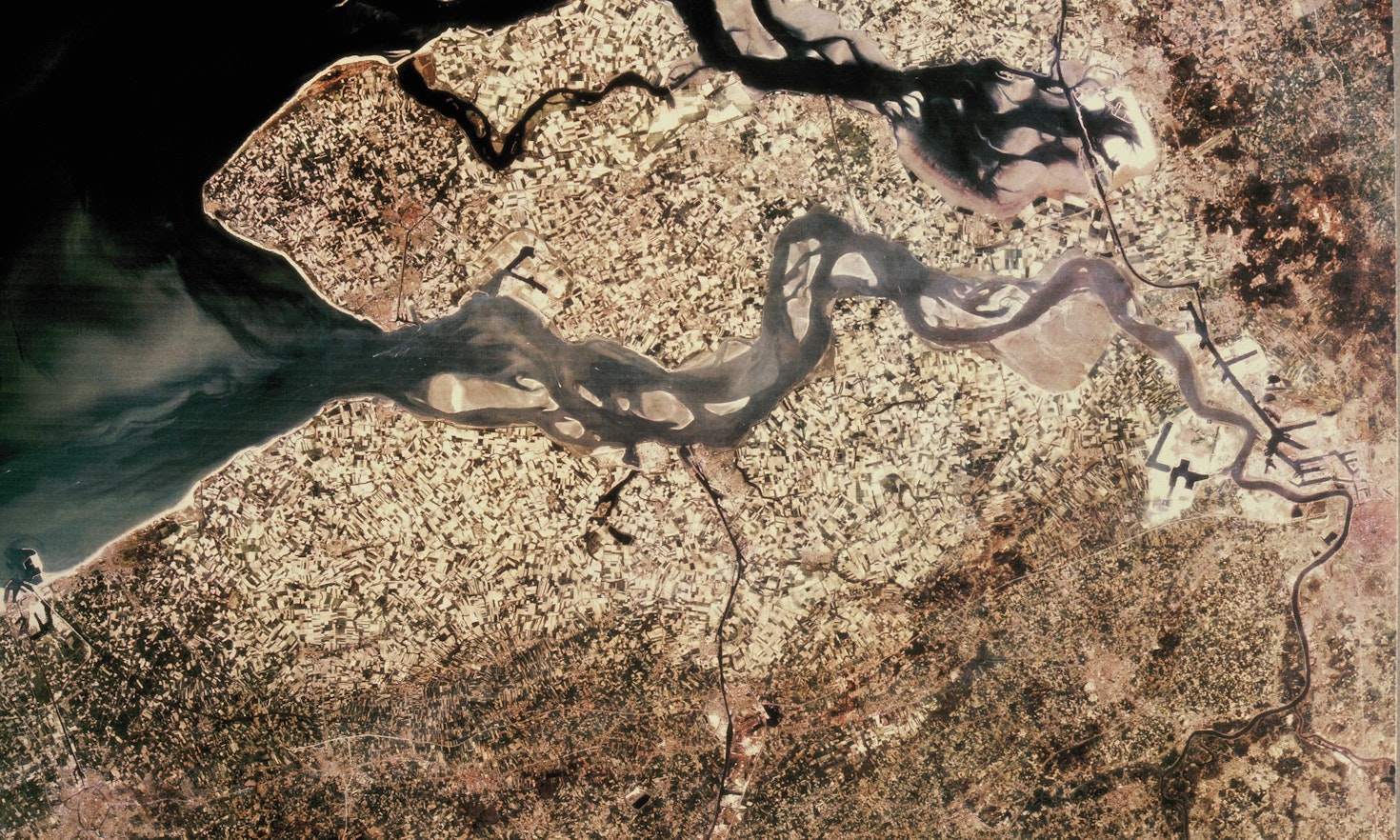
The Scheldt Estuary is a shared ecosystem between Flanders (Belgium) and the Netherlands. Its waters, habitats, and species do not stop at national borders, even though the legal and administrative frameworks that govern them are largely confined within national boundaries. At the same time, the estuary is a key economic artery, hosting major ports such as Antwerp and Vlissingen and supporting shipping, industry, and logistics of European importance. This combination of ecological interdependence and economic intensity has made cross-border cooperation a practical necessity and has shaped the evolution of transboundary governance and stakeholder collaboration in the estuary.
Over time, this necessity has been translated into a well-established governance framework. While bilateral treaties covering issues regulating the use of the Scheldt date back to the 1839 (Separation) Treaty, the most recent bilateral treaties between Flanders and the Netherlands (2005) on the policy and management of the Scheldt Estuary established joint institutions such as the Flemish-Dutch Scheldt Commission (VNSC). In addition, a Scheldt Council was established (2014), bringing together stakeholders and policymakers, as an important advisory body which contributes to building a broad consensus before decisions are taken.
Compared to many other transboundary ecosystems in Europe, the Scheldt stands out as a context in which governance structures have been tested, adapted, and institutionalized over decades, providing a long-standing model for transboundary environmental management. This has already yielded some impressive results in terms of nature restoration (including approximate 600 hectares depoldering of the Hedwige-Prosperpolder), although it needs to be stressed that part of these nature-areas qualify as an offset for recent port expansion works. The TRANSNATURE study, amongst others, sought to identify best practices and develop policy recommendations in the areas of coordination, participation, and funding to enhance transboundary biodiversity governance. Based on desk research and fieldwork (23 interviews and one focus group in the period April-December 2024), several policy recommendations were formulated. The most pressing recommendations are outlined below.
1. From legal fragmentation to joint assessment: harmonizing environmental standards to avoid (further) transboundary court cases
Environmental permitting in the Scheldt Estuary is undermined by inconsistent and sometimes conflicting pollution standards and procedures between Flanders and the Netherlands, in particular regarding substances such as PFAS and nitrogen. This misalignment negatively affects effective ecological protection, creates legal uncertainty, and complicates the assessment of cumulative cross-border impacts on shared Natura2000 sites.
Although both jurisdictions are subject to the same EU legal obligations which include the Habitats Directive and the Water Framework Directive, pollution-related impacts are assessed using different – and sometimes conflicting – national or regional standards, thresholds, and scientific assumptions. Currently, no jointly agreed scientific baseline or procedural framework exists for applying Article 6(3) of the Habitats Directive in a transboundary context. The relevance of these governance challenges was starkly illustrated by the 2023 decision of the Flemish Council for Permit Disputes to annul the environmental permit for INEOS’s planned ethane cracker in the Port of Antwerp. In siding with objections raised by Dutch authorities regarding transboundary nitrogen impacts on a Dutch Natura2000 site, the ruling exposed how divergent national nitrogen standards and assessment practices can escalate into high-profile transboundary litigation with significant economic and diplomatic repercussions.
Existing instruments for transboundary assessment and consultation, including the Espoo Convention, the SEA Directive, and the EIA Directive, are applied in an ad hoc and case-driven manner rather than being embedded in a systematic and institutionalized permitting procedure. To avoid further diplomatic conflicts and future courtroom battles between Dutch and Flemish authorities, greater attention should be placed on the establishment of common standards and guidelines for the appropriate assessment procedure under Article 6(3) of the Habitats Directive, which might be particularly relevant for addressing the transboundary nature of biodiversity impacts in the Scheldt Estuary. Such efforts could serve as a crucial first step toward harmonizing how pollution-related impacts, especially from PFAS and nitrogen, are evaluated across borders.
While recognizing the significant progress made through joint work on monitoring and operationalization in the context of the Scheldt Estuary, this recommendation calls for the further development of joint guidelines and benchmarks for appropriate assessments, including thresholds and approaches to assessing cumulative impacts, as well as the establishment of shared procedures, timelines, and data-exchange mechanisms. By further integrating the procedural obligations of the Espoo Convention and the SEA and EIA Directives with the substantive requirements of Article 6(3) of the Habitats Directive, Flanders and the Netherlands can improve early consultation, coordinated decision-making, and legally robust assessments. This would ease and facilitate permitting procedures while simultaneously strengthening legal certainty and bolstering the protection of the ecological integrity of the Scheldt Estuary and its Natura2000 network in a transboundary context.
Beyond nature restoration: integrating biodiversity and climate adaptation in the Scheldt Estuary
Over the past decades, substantial progress has been made in restoring nature within the Scheldt Estuary, yet significant challenges remain, particularly in light of accelerating climate change. While a range of restoration measures and governance mechanisms have been implemented, the estuary remains highly vulnerable to climate-related impacts such as sea-level rise, salinization, and increased flood risks. Addressing these pressures requires building on existing cross-sectoral coordination and further integrating biodiversity protection with climate resilience and adaptation strategies.
Despite clear synergies and emerging legal obligations under EU and international law, biodiversity restoration and climate adaptation remain poorly integrated in practice due to fragmented governance, declining restoration drivers, sectoral compartmentalization, and limited public support. Historically, large-scale ecosystem restoration in the estuary was strongly driven by compensatory requirements linked to port expansion, but as this driver weakens, implementing new restoration measures has become increasingly challenging. At the same time, ecosystem restoration and nature-based solutions are recognized as essential instruments under the Nature Restoration Law and the EU Climate Law, which require Member States to promote ecosystem-based adaptation, particularly in vulnerable sectors. Nevertheless, implementation in Flanders and the Netherlands remains limited, often due to land-use conflicts, high population density, and difficulties in making the multifunctional benefits of restoration visible to stakeholders.
The ongoing revision of the VNSC long-term vision provides a strategic opportunity to address these challenges. While the three pillars of the 2005 Scheldt Treaty – accessibility, flood safety, and nature – cannot be altered, the re-assessment (herijking) allows biodiversity restoration and climate adaptation to be explicitly integrated into their implementation and further elaboration. Embedding these themes as cross-cutting priorities would improve coherence between sectors, strengthen links between ecosystem restoration and climate resilience, and enhance the social legitimacy of restoration projects. It would also help prevent biodiversity and climate objectives from being overshadowed by other interests and support alignment with binding EU legal obligations. By promoting a more integrated and future-oriented approach within existing institutional structures, this recommendation aims to strengthen the ecological effectiveness, policy coherence, and long-term resilience of the Scheldt Estuary.
From sectoral participation to civil impact: strengthening funding for citizen engagement
Citizen-based initiatives, local groups, and NGOs have played a crucial role in protecting biodiversity and addressing environmental and health impacts linked to pollution. This involvement also extends to the Scheldt Estuary, including complex and politically sensitive contexts such as PFAS contamination and nitrogen emissions. Acting as early-warning actors, community watchdogs, and contributors to public debate, these organizations support accountability and effective environmental governance. For example, grassroots groups have detected pollution hotspots and NGOs have successfully challenged permits that would have caused (transboundary) environmental harm.
Despite their importance, meaningful participation by citizen groups and grassroots organizations in permitting procedures, public consultations, and legal actions is often constrained by unstable or inaccessible funding and high administrative requirements. Recent cases in Flanders show that legal action by these groups can directly influence environmental decisions, including permitting and pollution management. When funding is limited or uncertain, however, many groups cannot participate fully in consultations, monitoring, or legal challenges, undermining their rights under the Aarhus Convention to early and effective participation, access to information, and fair, timely, and affordable access to justice.
The recommendation calls for simpler and more transparent funding procedures, fewer administrative hurdles, stable multi-year support, and inclusive frameworks that make it easier for smaller grassroots organizations to participate on an equal footing. By supporting citizen and NGO engagement in environmental decision-making, this recommendation reinforces obligations under the Aarhus Convention and complements EU requirements under the EIA and SEA Directives. Improved funding access would enhance public participation, transparency, and accountability in transboundary environmental governance, contribute to stronger legal compliance and biodiversity protection, and increase the legitimacy and quality of decision-making in the Scheldt Estuary.

Nienke van der Burgt
Nienke van der Burgt is a researcher at the University of Ghent, where she is involved in the TRANSNATURE project on transboundary biodiversity protection. Before, she worked for 15 years as senior legal adviser at a law and policy consultancy, where she worked on projects in different areas, including environmental law.

Hendrik Schoukens
Hendrik Schoukens is Professor for Environmental Law at the Faculty of Law at the University of Ghent (since 2021). In 2012, he joined the department of European, Public and International Law, where he wrote his doctoral thesis on the legal aspects of ecological restoration in the EU. His post-doc research focused on rights of nature in the EU.
Discover
Making research visible.
Find the connected experts, projects, publications, and research areas behind this blog post.


This content is licensed under a Creative Commons Attribution 4.0 International license except for third-party materials or where otherwise noted.

The TRANSNATURE research was funded by Biodiversa+, the European Biodiversity Partnership under the 2021-2022 BiodivProtect joint call for research proposals, co-funded by the European Commission (GA N°101052342) and with the funding organizations, the Autonomous Province of Bolzano-Bozen - South Tyrol, the Academy of Finland, the Agencia Estatal de Investigación, and the Research Foundation Flanders.








 My cookie preferences