


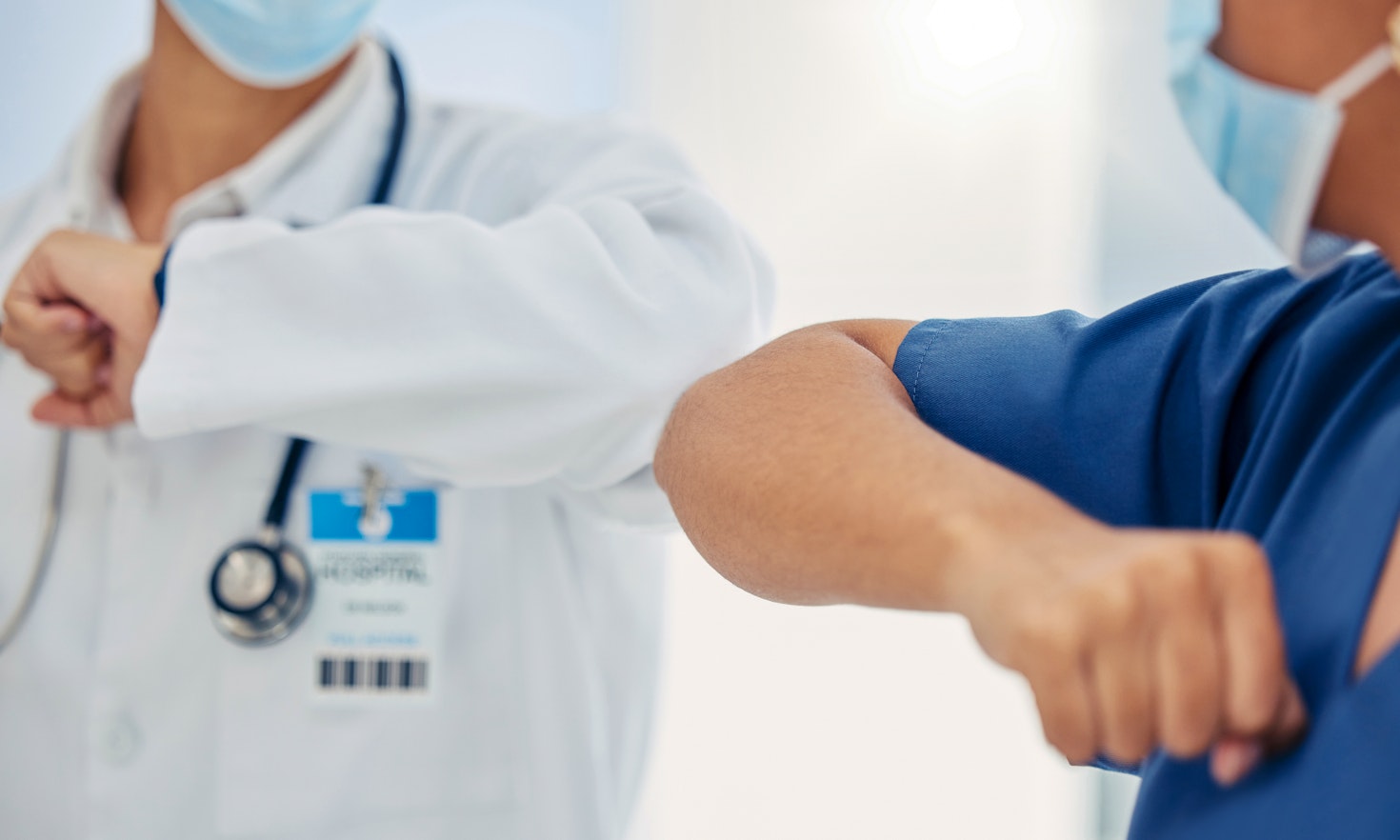
When crisis strikes, the word resilience is often invoked — but what does it truly mean in the daily reality of healthcare? In their article, Veronica Moscon and Fabio Carnelli delve into the lived experiences of healthcare professionals during and after the COVID-19 pandemic. Drawing on insights from the international research project Empowerment for Pandemias, they reveal how resilience is not merely a reaction to emergencies, but a continuous practice embedded in everyday care.
“True resilience is practiced every day; not only when a crisis hits.” Clear statement, powerful and informed: a message straight from a medical doctor reflecting on working conditions during the COVID-19 pandemic. In light of the immense challenges of that time, a research project set out to equip individuals and organizations for future crises: Empowerment for Pandemias. To this end, the research team spoke with fifty healthcare professionals in Austria, Germany, Italy, Portugal, and the United Kingdom. The outcome revealed how resilience was already embedded in everyday practice. Beneath the visible strain – long shifts, protective gear, and emotional fatigue – a deeper strength emerged: the ability to adapt, support one another, and continue work despite uncertainty. What may have started as emergency responses gradually emerged as enduring practices, woven into routines, relationships, and structures that sustain care over time.
Resilience has a human face
Resilience is not only about actions – it’s also about emotions. One nurse put it simply: “In the medical profession, you’re often there for others, so it’s important to also take care of yourself and find little moments of happiness.” This isn’t just self-care. It’s emotional awareness. In the chaos of a pandemic, the ability to recognize and regulate one’s own emotions allowed professionals to stay grounded, compassionate, and present, not just for patients, but for each other.
In high-stress environments, clarity and empathy in communication became lifelines.
Veronica Moscon and Fabio Carnelli
Resilience didn’t happen in isolation. It was shaped by relationships: between colleagues, across departments, and within teams. One interviewee described how they began briefing junior staff before critical situations, offering themselves as a peer for reflection and support. It wasn’t part of their formal responsibilities, but it became a natural extension of their role – an example of how professionals adapted to meet emerging needs within their teams.
Communication, too, took on new weight. One professional recalled explaining new procedures to the incoming night shift – not just what had changed, but why the changes occurred. In high-stress environments, clarity and empathy in communication became lifelines. This “handover” wasn’t just about passing on information, it was about building connection, offering reassurance, and fostering trust. These moments also helped strengthen team spirit.
The organizational backbone
Resilience extends beyond the individual. Resilience can be fostered by the systems around people. The empowerment4pandemias interviews revealed the different degrees of support organizational structures offered.
One nurse described the experience of wearing full protective gear at work, only to board a packed bus to get home. Inside the hospital, staff moved between COVID-19 patients and others without proper isolation – simply because there weren’t enough staff. These situations highlighted a difficult reality: protocols are only effective when backed by adequate resources. But there were also examples of systems that worked well. One interviewee shared that their facility always had backup staff available when someone called in sick. This wasn’t just good fortune, but it reflected careful planning and a commitment to making sure procedures could be applied in practice.
In a crisis, leadership isn’t only about making decisions but also about being there.
Veronica Moscon and Fabio Carnelli
Organizational leadership was crucial, too. In one facility, a senior leader was present every day – walking the wards, checking in with staff, and offering reassurance. That kind of visibility helped build trust. Others, however, felt the absence of leadership and wished for more empathy and presence from those in charge. In a crisis, leadership isn’t only about making decisions but also about being there.
Institutional communication emerged as another key element. Some organizations used multiple channels such as emails, apps, printed notices to keep staff informed. One participant recalled how COVID-19 Taskforce updates were shared in different formats to avoid confusion. In fast-changing situations, clear and consistent communication helped maintain stability under prolonged uncertainties.
Culture mattered as well. A nursing home worker spoke of how their organization prioritized the well-being of both staff and residents. Others felt left to manage alone, especially when seeking mental health support. These differences showed that resilience begins with care – not just for patients, but for those providing it.
Resilience as a shared responsibility
The experiences shared by healthcare professionals show that resilience is not a fixed trait – it’s a set of competencies shaped by both individual practice and organizational support. Emotional awareness, role flexibility, clear communication, and thoughtful leadership are not just personal strengths. They are part of a broader understanding of what helps sustain care during difficult times.
To reflect this, the Empowerment for Pandemias team developed its Competence Model for Pandemic Resilience. It brings together the individual and organizational dimensions described in the interviews and translates them into a practical framework. The model is intended as a tool – for training, management, and planning. It can be adapted to different contexts, whether in hospitals, nursing homes, or public health teams.
The model is designed to be flexible. Not every competency needs to be addressed at once. In fact, we recommend starting small – focusing on a few key areas that resonate most with your team or context. Each person, each organization, will find their own way. What matters is the commitment to begin. Acting on these insights is not just a response to emergencies – it’s a way to enhance the capacity of how care is prepared, supported, and sustained over time.


At a glance: competence model for pandemic resilience
What it shows:
An integrated framework combining individual and organizational strengths that support resilience in healthcare. Resilience is not just personal, it’s systemic.
Why it matters:
The framework translates real experiences into actionable areas for training, planning, and leadership – preparing teams not just for emergencies, but for everyday challenges.
How to use it:
• Select relevant competencies based on your context
• Apply them in training, onboarding, or planning
• Adapt it to your needs – there’s no single path to resilience
References and information:
• Lorenzoni, N., et al. (2025). Development of a Pandemic Resilience Competence Model for Healthcare Professionals - Individual and Organisational Aspects. Int. J. Environ. Res. Public Health, 22(5), 712. c
• World Health Organization (2020). WHO-ASPHER Competency Framework for the Public Health Workforce in the European Region. Regional Office for Europe.
Veronica Moscon
Veronica is a researcher at the Institute for Public Management of Eurac Research and a PhD student in Management at the University of Innsbruck. She has enriched her education with two international experiences in Germany (University of Mannheim) and Canada (University of Lethbridge) and holds a trilingual Master’s degree in Public Policies and Administration from the Free University of Bolzano. Her research focuses primarily on quality management and innovation to enhance stakeholder engagement and satisfaction in public sector organizations. An enthusiast learner and explorer, she never misses an opportunity to hike around the Euregio - with a smile on her face!
Fabio Carnelli
Fabio Carnelli is currently a senior researcher at the Center for Climate Change and Transformation at Eurac Research. With a background in cultural anthropology and sociology of risk and disasters, he is mainly involved in Climate Change Adaptation (CCA) and Risk Governance, to develop a socio-cultural approach to CCA, disasters and risk governance bridging a Disaster Risk Reduction (DRR) and CCA perspective, also through consultancy, applied research and dissemination activities.
Discover
Making research visible.
Find the connected experts, projects, publications, and research areas behind this blog post.


This content is licensed under a Creative Commons Attribution 4.0 International license except for third-party materials or where otherwise noted.








 My cookie preferences