Why the Basque flag flies in Aberystwyth – and 5 other insights from Cymru
My work regularly takes me to different minority contexts and conferences on the subject. Most recently, I was in Aberystwyth, where the PLURILINGMEDIA Training School on journalism in minority languages took place. Here are six insights from my visit to Cymru (Wales).
Shoe my
Before travelling to minority regions, I usually try to learn a few useful words in the respective minority languages. For Cymru, where around 890,000 people speak Cymraeg (Welsh) according to the Annual Population Survey, the task was clear. While searching for resources, I came across the podcast Learn Welsh by Jason Shepherd, which I would definitely recommend. Its simple memory hooks made it easier to learn a few phrases. For example: Shwmae? (How are you?) is pronounced like “shoe my”. Picturing a shoe helps remember it.
Aberystwyth is located on the west coast of Cymru. The name Aberystwyth means "the mouth of the Ystwyth".
A revolutionary radio speech
The Llyfrgell Genedlaethol Cymru (National Library of Wales) in Aberystwyth houses not only the first full Cymraeg translation of the Bible but also the Archif Ddarlledu Cymru (Wales Broadcast Archive). There you can find a permanent exhibition on the history of broadcasting in Cymru. One example from the exhibition highlights the power of media for minorities. On 13 February 1962, writer and political activist Saunders Lewis delivered his BBC radio lecture Tynged yr Iaith (The Fate of the Language), warning that Cymraeg would die out without radical measures: “It will be nothing less than a revolution to restore Cymraeg in Cymru. Success is only possible through revolutionary methods.” The speech played a key role in the establishment of Cymdeithas yr Iaith Gymraeg (Welsh Language Society), which was instrumental in the campaign for S4C (see the next section) and remains active to this day. You can find the English translation of the lecture here.
Film tip: Y Sŵn
Minority rights do not just happen – they often require activism. The story of S4C, the TV channel in Cymraeg, is a case in point. In the 1979 election campaign, both the Conservative and Labour parties promised to establish a channel in Cymraeg. After their victory, however, the Conservatives dropped the pledge. That sparked civil disobedience: some refused to pay the TV licence fee, others attacked transmitters – among them Ned Thomas, who spoke about those events at the Training School. My interview with him can be read here. The film Y Sŵn tells the story of S4C, including how Gwynfor Evans threatened to go on hunger strike in 1980 to get the channel. Spoiler alert! The channel was finally launched in 1982.
The trailer for Y Sŵn
What’s up, BRO?
Bro means area or district in Cymraeg. It is also the name of a major new study on the societal use of Cymraeg. Prosiect BRO examines, for example, statistical data and language policies, studies the use of Cymraeg in the workplace, and gathers data through door-to-door community surveys. It is supported by the Cymraeg 2050 strategy of the Government of Cymru, which aims for one million Cymraeg speakers by 2050. The project is based at the Canolfan Uwchefrydiau Cymreig a Cheltaidd Prifysgol Cymru (University of Wales Centre for Advanced Welsh and Celtic Studies). Drawing in part on research concerning other minority languages, it could itself serve as a model for other contexts in the future. Maddi Dorronsoro Olamusu also wrote about Prosiect BRO in her article for the MIDAS Blog, while reflecting on her research visit to Cymru.
Minority first
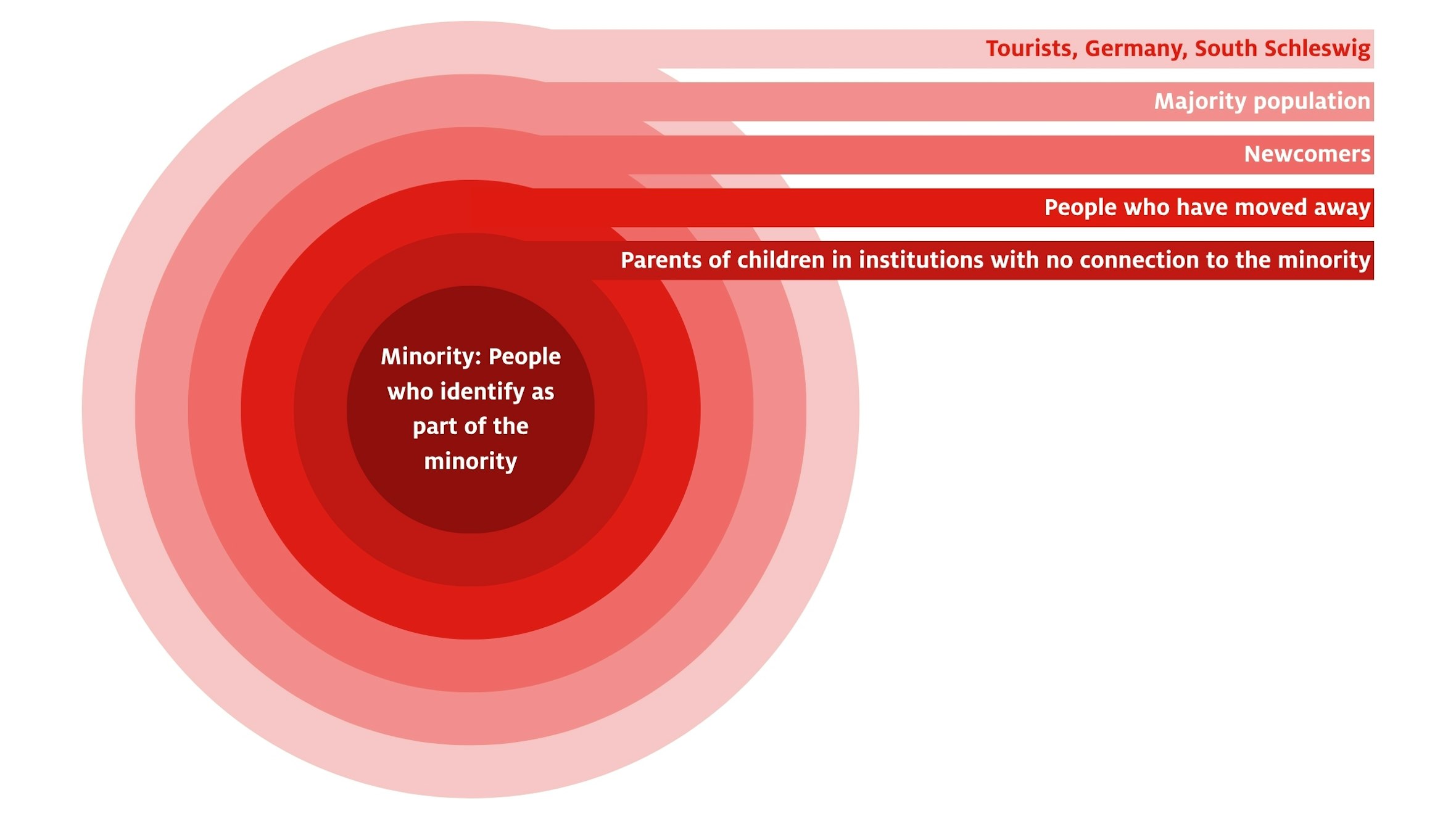
Many topics were discussed during the Training School, too many to cover here. One interesting presentation was given by Gwyn Nissen, the editor-in-chief of Der Nordschleswiger, the newspaper of the German minority in Denmark. Der Nordschleswiger is widely cited as a successful example of a minority newspaper making the transition to digital-only. But, as Gwyn Nissen stressed: “Digitalisation is not about IT, it is about people.” As part of its transformation, the outlet narrowed its focus to target specific audiences. At the heart of its stories, as the picture illustrates, stands the minority itself, but there are also other groups to be considered. This model might inspire other minority language media.

The audience model of Der Nordschleswiger
Minority flags far from home
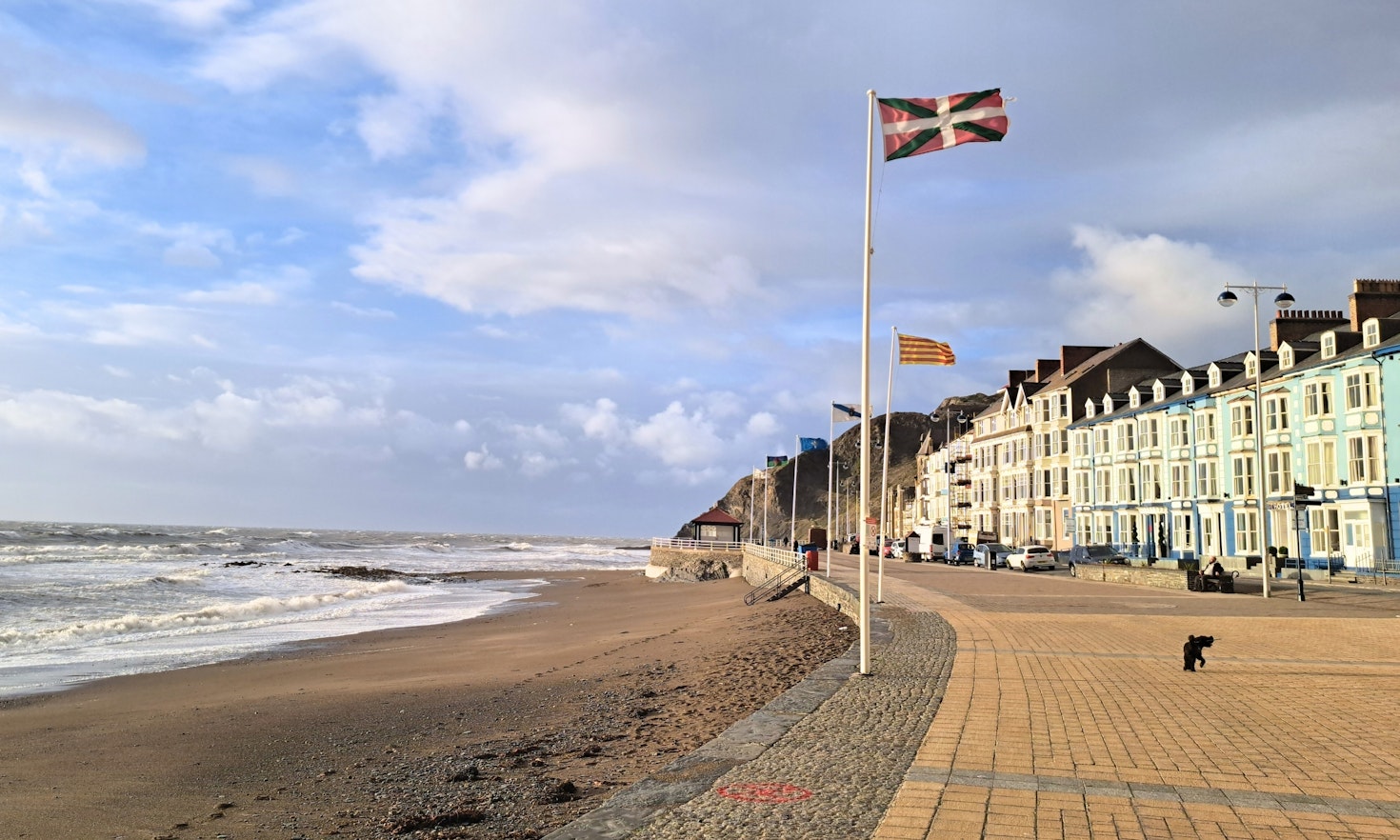
Walking along the seafront of Aberystwyth to Constitution Hill, you may be surprised to see the flags of the Basque Country, Sardinia or Sorbia flying. Aberystwyth Town Council launched the initiative to fly the flags of different minority regions in 1990, as a symbol of “the current richness and cultural diversity of Europe”, according to the explanatory plaque.
A plaque explains the origin of the minority flags in Aberystwyth.
Credit: Jakob Volgger | All rights reservedI could not include everything I saw or learned in Aberystwyth here due to space limitations. If you want to know more about minority language media, consider joining the PLURILINGMEDIA network and take part in a future Training School or other activities yourself.
Note: This article gives the views of the author and does not represent the position of the European Association of Daily Newspapers in Minority and Regional Languages (MIDAS) or Eurac Research.

Jakob Volgger
Jakob Volgger is a junior researcher at the Center for Autonomy Experience of Eurac Research. His work there focuses on issues related to autonomy and minority protection in South Tyrol. As part of his activities for the European Association of Daily Newspapers in Minority and Regional Languages (MIDAS), he also studies the topic of minority language media. He is a member of the research network PLURILINGMEDIA.
Discover
Making research visible.
Find the connected experts, projects, publications, and research areas behind this blog post.
This content is licensed under a Creative Commons Attribution 4.0 International license except for third-party materials or where otherwise noted.