


The Bondi Attack: Media Framing and the Moral Sorting of Migrants
Recent global events reveal a recurring and unsettling pattern. From political repression and foreign intervention to prolonged wars, state violence, and humanitarian tragedies, civilians continue to pay the highest price. While media attention shifts quickly from one crisis to another, forced migration remains a persistent and shared outcome. These events remind us that displacement is not an exception but a structural feature of contemporary conflicts. This blog examines how refugees became central figures in national and international media narratives following the Bondi attack, particularly through contrasting forms of media framing.
Media, Migration, and Moral Judgment
Regardless of where these tragedies take place or how they unfold, they all share a common outcome: migration, displacement, and forced movement. Across different regions of the world, crises and conflicts confront us with a painful truth: anyone, at any time, can become a refugee. Anyone can lose their homeland and be forced to rebuild their life elsewhere. Millions who fled the massacres of the Assad regime now mostly live in Turkey, Lebanon, or various parts of Europe. They have been living in such places that they could probably never have imagined fifteen years ago.
Most of us encounter these realities through the media. The media is often described as the “fourth power,” placed alongside the legislative, executive, and judicial branches. While this label acknowledges its influence, ranking media fourth may actually underestimate its reach. Today, as perhaps traditional media outlets may be losing some of their dominance, they have been replaced by another powerful force: social media. By bypassing the lengthy and bureaucratic mechanisms of conventional journalism, social media has effectively turned ordinary individuals into content producers. This means that almost everyone can act as a journalist. But this comes with clear costs. When everyone becomes a journalist, ethical boundaries blur, and false or misleading content can spread quickly and be accepted as truth. The primary concern shifts to maximizing engagement, often measured in likes, comments, and shares. The extent of the traditional and social media’s power in shaping public opinion is so vast that merely attempting to list the existing studies on this topic would be an impossible task. But there are certain issues and crises where the role of the media becomes especially vital. Migration and asylum are among them. Few issues show as clearly as asylum how media narratives shape public attitudes, emotions, and moral judgments. Media often determines who is perceived as deserving of empathy and who poses a threat to society.
Good Migrant: An Exceptional Episodic Story
A few weeks ago in Australia, during a Hanukkah celebration, two armed men carried out a mass shooting and killed fifteen people. Ahmed Al Ahmed, a Syrian migrant, intervened by tackling one of the attackers with his bare hands. By putting his life at risk, he prevented a greater loss of life. Australian Prime Minister Anthony Albanese publicly praised Ahmed, stating that “Ahmed Al Ahmed … took the gun off that perpetrator at great risk to himself and suffered serious injury as a result of that, and is currently going through operations today in hospital.” This act of bravery quickly became a global media story, with headlines around the world celebrating Ahmed as a “hero.”
Yet declaring someone a hero is not always as good as it may seem. Superman is a hero, but precisely because he is an exception. This implicit emphasis on exceptionality can be dangerous. It reinforces the logic that a handful of “useful” or “extraordinary” individuals can / or cannot justify (either scenario is problematic) the acceptance of an otherwise stigmatized group. The latter option might echo the idea that we cannot, and should not, accept an entire rotten barrel to find a few good apples.
Anti-immigration actors are also not happy with hero narratives, but of course for more obvious reasons. They constantly foreground criminal cases to argue for deportation and more strict immigration policies, but find that such ‘hero stories’ disrupt their framing. For this very reason, anti-immigrant networks on social media expressed particular discomfort with the fact that the person who neutralized the attacker in Bondi was a Middle Eastern Muslim migrant. That is why, almost immediately after the attack, they launched a disinformation campaign claiming that the individual who stopped the assailant was, in fact, a Sydney-born man named Edward Crabtree. They also tried to discredit Ahmed and claimed that the video of Ahmed circulating online was unrelated footage filmed in Gaza in March. The campaign proved effective. Until images of the Australian prime minister visiting Ahmed in the hospital appeared on news websites, even AI chatbots echoed this false narrative.
Bad Migrant: A Stereotype
In the aftermath of the Bondi attacks, the media once again failed its most basic duty: to inform the public. Without even needing fabricated evidence, news outlets increasingly relied on AI-generated images that are nearly indistinguishable from real ones. Rather than informing the public, media coverage drifted toward social engineering. Reporting and commentary became thoroughly entangled. The goal appeared less about enabling informed public choice and more about encouraging audiences to simply uncritically absorb and repeat what they were being fed.
A few headlines illustrate this pattern clearly: “Terrorist’s Million Dollar Home” or “Be Prepared: Australia Will Suffer If Mass Immigration Continues.” Such framing does not merely report events; it actively constructs stereotypes that link violence, insecurity, and social decline to migration itself.
This logic became even more apparent in the immediate aftermath of the attack. Less than two hours after the incident (before victims’ bodies had even reached the morgue, and before authorities had confirmed whether the incident constituted a terrorist attack), a senior reporter posed the following question to Australian Prime Minister Anthony Albanese during a press conference: “In September, you recognized the Palestinian state. You created a special Islamophobia envoy alongside an anti-Semitism envoy. Have you taken antisemitism threats seriously?” By bringing a foreign government’s talking points into a national press conference, the question reframed a domestic tragedy as a political failure.
A similar dynamic unfolded on Sky News. Sharri Markson confronted opposition leader Kellie Sloane with accusatory questions, urging her to place blame beyond the attacker. Even though Sloane supports stricter immigration policies, she refused to politicize the violence and stated that responsibility lay solely with the perpetrator: “Right now, I do not want to blame anyone other than those who committed this crime. No one else should be held responsible.”
After failing to get the answer she wanted from Sloane, the reporter didn’t give up. Unable to link the violence to migration policies or peace protests, she instead targeted Greens Senator Mehreen Faruqi. Addressing her directly, she declared, “Isn’t the blood of those who died on your hands? Shame on you.” In doing so, the reporter abandoned the role of informing the public and instead assigned moral blame, once again casting migrants and their supporters as collectively responsible.
Media Profiling and Its Consequences for Asylum
The narratives adopted by the media play a decisive role in determining who is perceived as an acceptable or “good” migrant and who is cast as a “bad” one. When the distinction between good and bad migrants is invoked, criminality is often the first thing that comes to mind. Yet the issue is not that simple. As Luigi Achilli noted in an interview published on this platform, media narratives operate through specific stereotypical codes that subject migrants to profiling based on race, skin color, and identity. This logic helps explain why those perceived as “European-like,” such as Ukrainians, have been able to move and settle more easily, while others face far greater barriers. In this sense, media framing does not merely reflect public attitudes toward migration; it actively shapes asylum policies and outcomes by normalizing unequal treatment and reinforcing moral hierarchies that determine who is, and is not, deemed worthy of protection.
I would like to finish with the wise words of Australia’s Race Discrimination Commissioner, Giridharan Sivaraman: “When commentary repeatedly frames migrants as a burden, a threat or the reason for economic hardship, it reinforces stereotypes that have real consequences. [We] do not need another migration ‘debate’. We need leaders brave enough to tackle inequality for all.’’
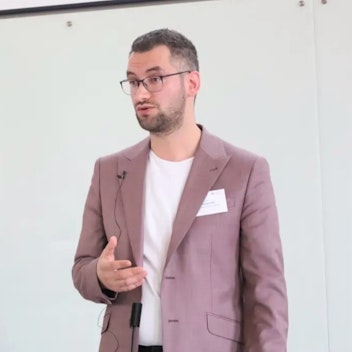
Muhammet Derviş Mete
Muhammet Derviş Mete is currently in the final year of his PhD at the University of Edinburgh, where his research focuses on Constitutional Referendums in Competitive Authoritarian Regimes of Latin America. He earned his LLB from Ankara University in 2014, followed by an LLM from Durham University in 2018. In 2020, Muhammet completed a second LLM in Advanced Studies of Public International Law at Leiden University thanks to the merit-based Jean Monnet Scholarship awarded by the European Commission. For nearly a decade, Muhammet has been working as a practising lawyer in the fields of constitutional and criminal law.
Discover
Making research visible.
Find the connected experts, projects, publications, and research areas behind this blog post.


This content is licensed under a Creative Commons Attribution 4.0 International license except for third-party materials or where otherwise noted.








 My cookie preferences