


Tiny blobs. Huge potential
How clusters of living cells are teaching scientists about how the body functions
From a glance the Eurac Research Biomedicine building looks completely unassuming, however below ground, behind hermetically sealed doors, a world of possibilities exists and is multiplying: tiny replicas of human organs, some as small as a pinhead, are being engineered to test treatments and develop new ways of looking at disease. These are organoids, they’re miniaturized and simplified versions of organs that are produced in-vitro in three dimensions to mimic the key functional, structural, and biological complexity of that organ. But before we go on it‘s important to get something very clear: organoids are NOT organs.
The miniscule 3D models of human tissue which can be engineered to behave like heart or brain cells for example, are being used to test treatments and predict patient responses. The benefits of this branch of biomedical research could speed up drug development and reduce costs. Heart organoids can beat under a microscope, enabling more accurate testing of therapies and disease models. And by engineering specific organ tissue, it is even possible to mimic diseases like Parkinson’s, diabetes, cancers, and neurological and developmental conditions such as autism. Put simply, tests conducted on organoids provide more accurate results than those conducted using conventional 2D cell culture models.
To further investigate these mechanisms and to enhance certain cellular features and behaviors, organoids are often placed on a chip. These small devices contain the tiny, lab-grown tissues and the chip itself enables the environment around cells to be controlled so that the organoids behave like they would in the body. By combining tissue engineering and microtechnology, organs on chips (OoCs) are next-generation experimental platforms for studying diseases and testing drugs. If this wasn’t enough, by using these engineered or natural miniatures of grown tissues, the need for animal models has diminished significantly.
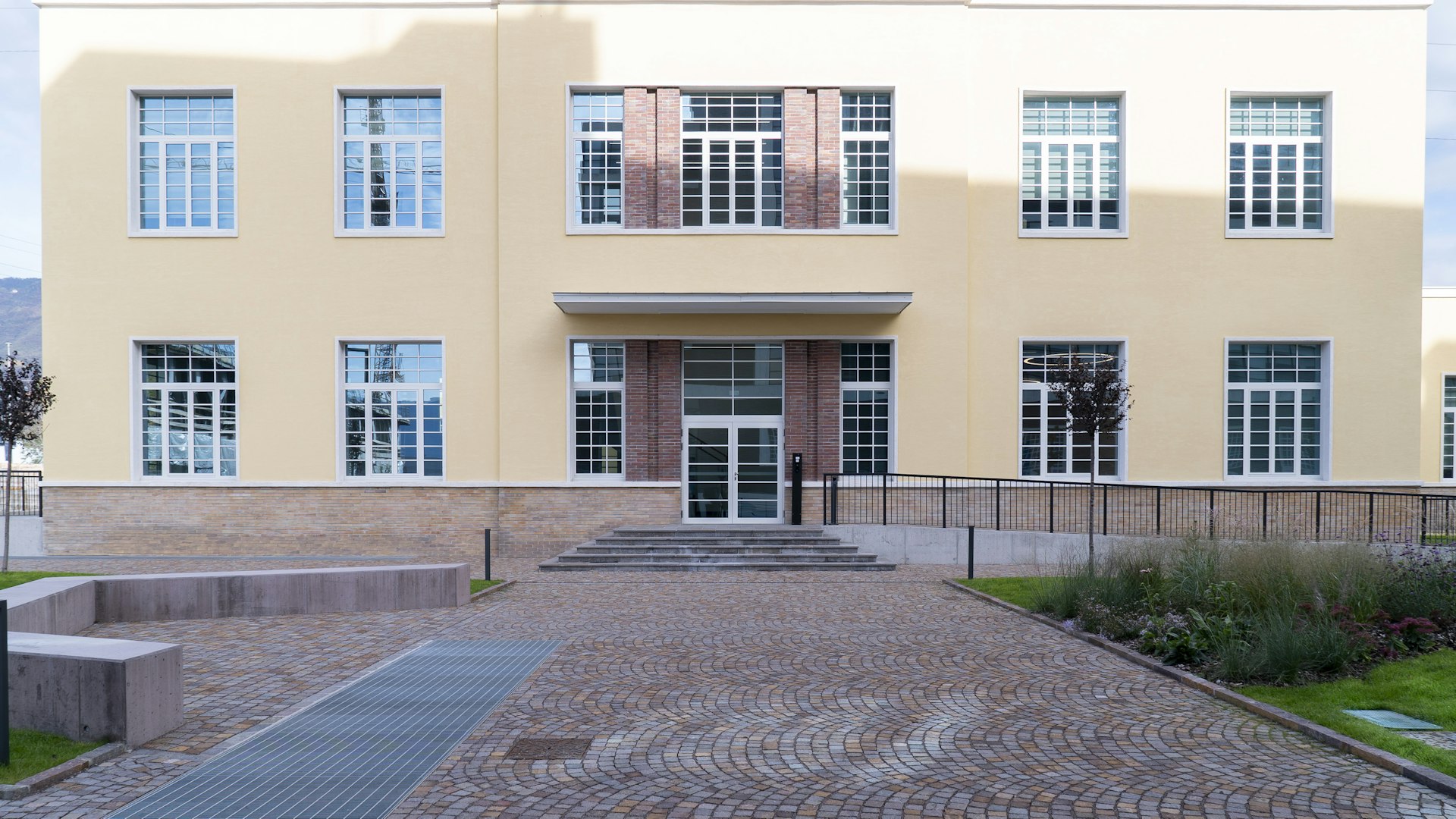
The Institute of Biomedicine at the NOI Techpark
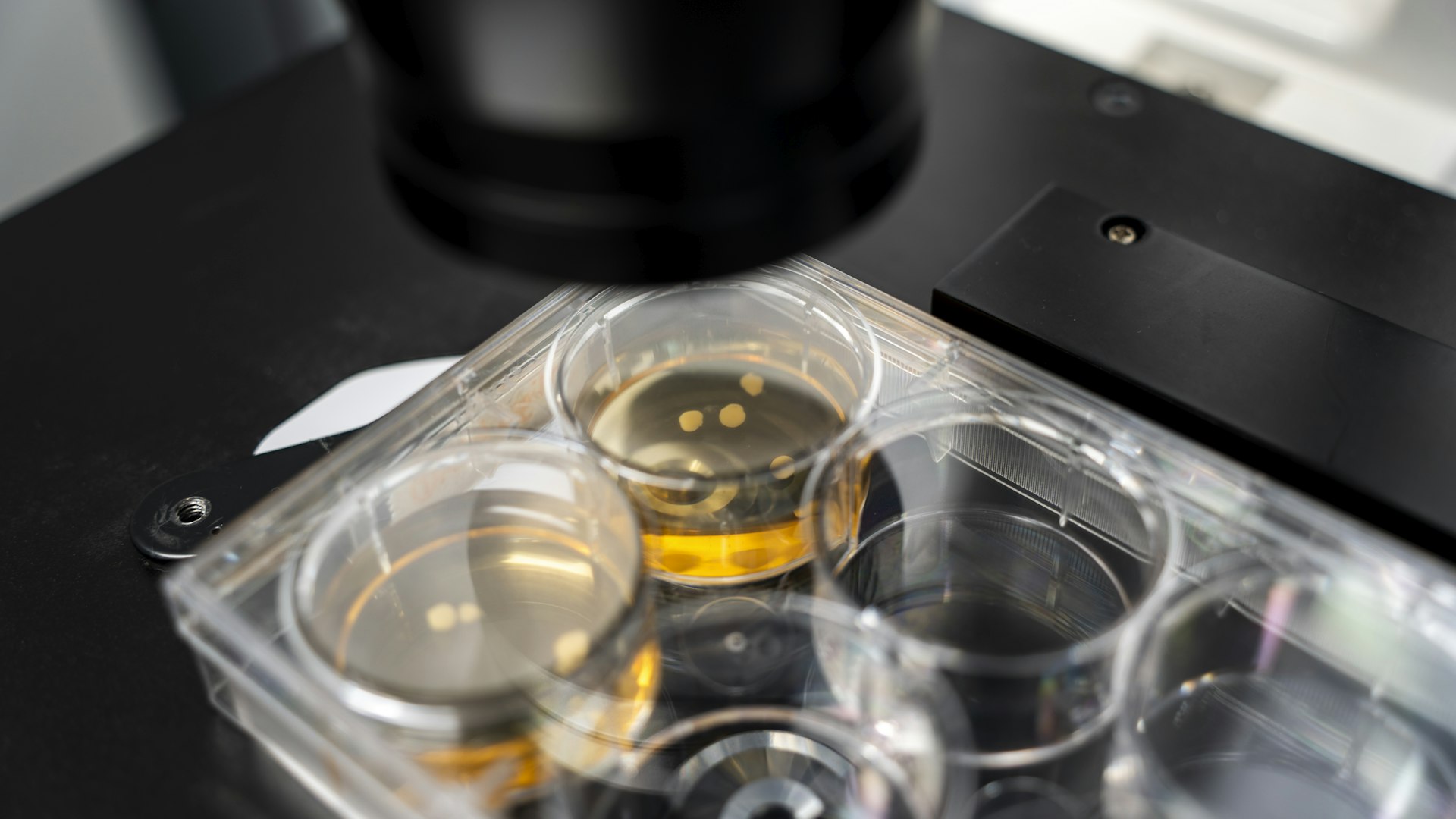
Under a microscope the tissue clusters reveal how cells behave in real time.
Given the FDA’s recent decision this April to phase out animal testing for drug development and to replace it with more effective, human-relevant methods, the trend for alternatives like organoids, computer modeling, and bioprinting is set to pick up the world over. And Bolzano is gaining ground in this exciting new technology. However, at Eurac Research’s Institute for Biomedicine responsible research only happens if science and ethical analysis grow together, which is why a combination of backgrounds and expertise have been vital in creating the ideal conditions and protocols for the organoid labs.


Top left to bottom right: Asiye Malkoc, Francesca Garilli, Paolo Cesare, Marcelo Rosato Siri, Francesca Pischedda, Katja Malfertheiner, Irma Della Corte, Mattia Volta, Sara Pizzi
Credit: Eurac Research | Annelie BortolottiIn 2023, the Principal Investigator Mattia Volta together with the senior researcher Francesca Pischedda, began developing lab protocols to generate brain organoids and conduct experiments at the Institute the ensuring reproducible and reliable experiments, crucial for generating meaningful results.
Francesca also supervises Asiye Malkoc, a junior post-doctoral researcher with a background in neuroscience. Asiye is applying her knowledge of brain science to work with human cells and brain organoids. Her role involves translating traditional neuroscience concepts into the context of organoid models.
The team also benefits from Mattia Volta’s advanced imaging techniques that allow the team to observe the organoids in high detail - essential for tracking changes in their development and function. Together, Mattia, Francesca and Asiye are involved in designing and executing experiments focused specifically on midbrain and brain organoids. One of the team’s foci is Parkinson’s disease (PD), with an emphasis on understanding the molecular mechanisms underlying this debilitating condition.
“What excites me most about this field is how fast it is advancing. New, more advanced tools are constantly being developed, and each step brings us closer to truly understanding how the human brain works.”
Katja Malfertheiner


Electrophysiologist Marcelo Rosato Siri specializes in how the electrical system of brain and heart cells controls neuronal function and cardiac activity. His research visualizes and records bioelectrical signals, offering a noninvasive way to stimulate and monitor cell responses using light and electrical cues. This enables the monitoring of the functional responses of the organoids in real time without disrupting the tissue itself.
Paolo Cesare is another of the Institute’s Principal Investigators, whose work focuses on generating region-specific brain organoids and combining them with advanced technologies. He and his team developed microelectrode arrays that can be used to simultaneously measure electrical activity in 3D brain cells. These advanced tools combine microfabrication, bioelectronics, advanced cell models, and microfluidics. This enables minuscule amounts of fluid to be handled and controlled in order to better define the environment in which organoids are cultivated over long periods of time.
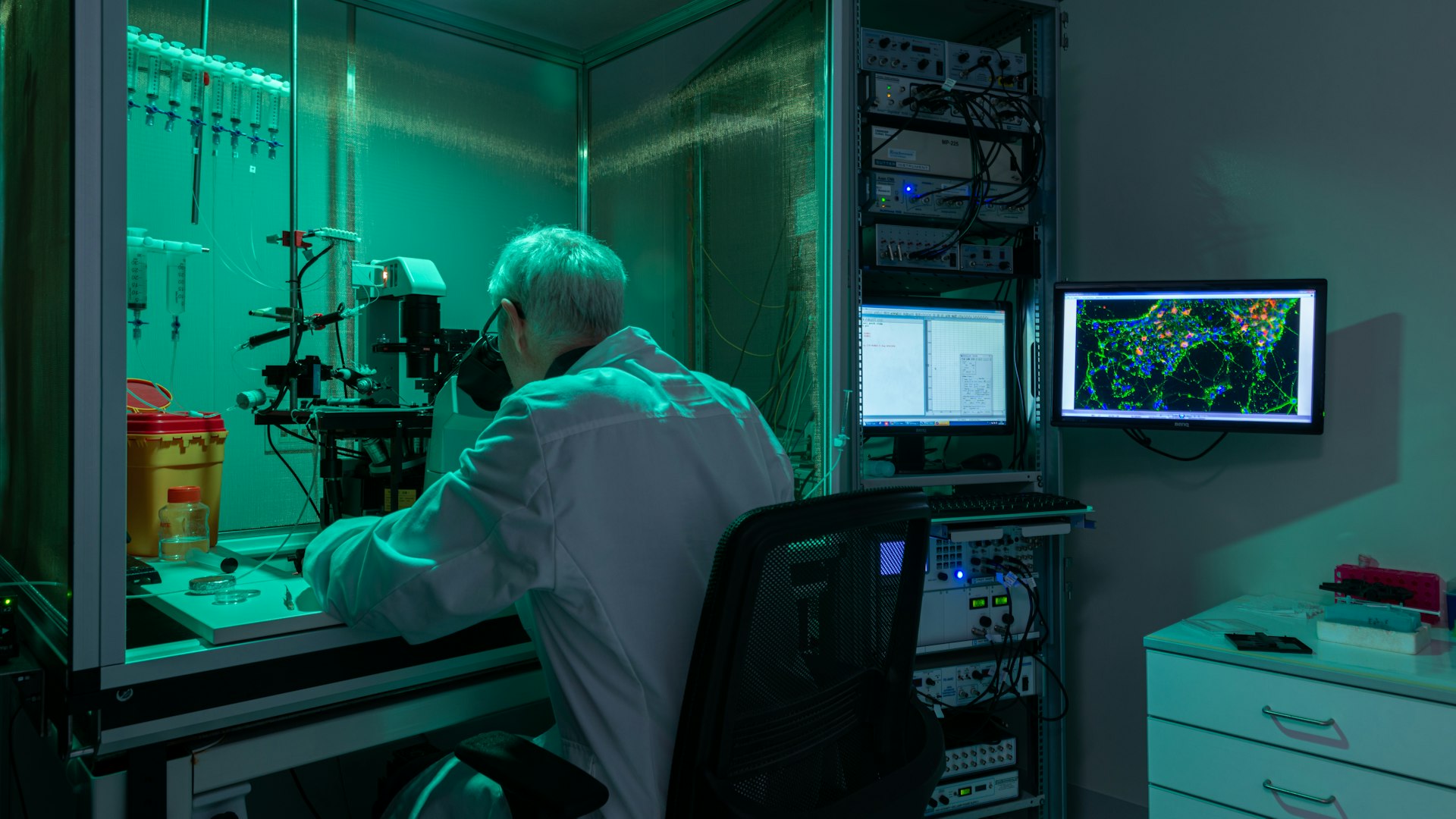
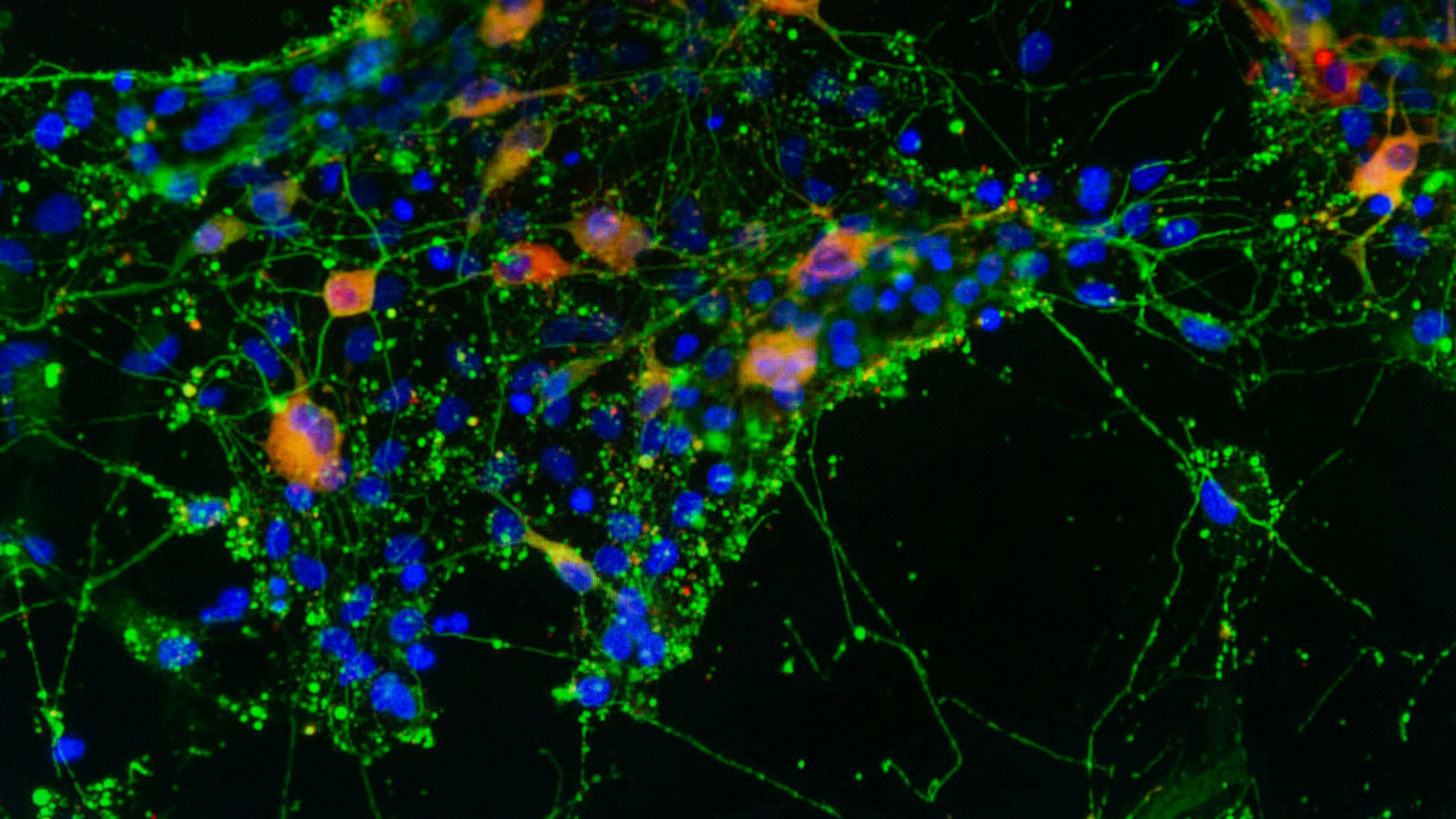
Marcelo Rosato Siri studies cells using light and electrical signals to noninvasively monitor organoids in real time.
Sara Pizzi is developing a research platform that combines microfluidic devices with innovative microelectrodes and 3D neuronal cell models to efficiently study how toxic substances and brain diseases affect nerve cells, focusing on properties like electrical activity and cell structure.
Katja Malfertheiner, a PhD student supervised by Sara is growing simplified versions of the human brain to resemble specific cerebral regions and putting them on chip to study how these areas interact and communicate with each other, both in healthy conditions and in disease. Using this chip technology, it’s possible to track electrical activity, like a mini version of an EEG, but in a dish.
“I really like this project because it represents an innovative application of biomedical engineering, offering a powerful tool for studying neuromuscular interactions as platform for drug screening and disease modeling, in a highly controlled microscale setting.”
Irma Della Corte
Postdoctoral researcher Francesca Garilli has recently started a new project focusing on growing organoids that represent spinal cord tissue. These structures contain neurons that connect the nervous system to skeletal muscles in vivo. However, this connection can be lost due to certain pathological conditions, which can result in serious diseases such as amyotrophic lateral sclerosis (ALS).
Just like the organoids themselves, the Institute is growing and evolving as it explores these systems to transform biomedical research and drug development. Te team of PhD students, researcher, and industry experts is working together with multidisciplinary expertise and creating opportunities for collaboration and innovation.
With future developments in chip design, applications are opening up in pharmacology as well as possibilities for integrating multiple organ models for disease modelling and therapeutic testing.
“It is incredible to know that it is possible to recreate such a complex connection directly in an in vitro system.”
Francesca Garilli
Organoid research represents the future of medicine: ethical and individualized. These tiny, lab-grown blobs mimic the complexity of real tissues, allowing researchers to explore disease, test treatments, and personalize therapies in ways never before possible. By reducing reliance on animal models and enabling more human-relevant discoveries, organoids not only accelerate the path to safer, more effective drugs but also open new possibilities in regenerative medicine. As science continues to evolve, organoid technologies underly a patient-centered approach to healthcare.


INNo-CHIP
Expanding organoid research and regional health tech


The INNo-CHIP project is developing OoC technology, which helps improve medical research and the development of new treatments. Led by the Institute of Biomedicine at Eurac Research and co-financed by the European Union, the project brings together several organizations from Italy and Switzerland, including NOI Tech Park and FEMTOprint SA.
Combining expertise in materials science, biology, and technology., INNo-CHIP draws over 25 organizations together to provide direct support to biomedical researchers in South Tyrol, Canton Ticino, and the surrounding regions.
In the long run, INNo-CHIP hopes to make these regions leaders in OoC research, fostering innovation, economic growth, and stronger cooperation between Italy and Switzerland in the biomedical field.
Creating a prototype of OoC technology that closely mimics human biology could reduce the need for animal testing and speed up the process of discovering new drugs and therapies. The project also aims to enable emerging companies and support the commercialization of these innovations.
CELLMED
Advancing Biomedical Research in South Tyrol

Running from January 2025 to January 2028, CELLMED is a project co-financed by the European Union and led by Eurac Research’s Institute for Biomedicine. Its goal is to expand lab capacity and boost applied biomedical research by developing advanced human cell models and high-throughput technologies, including a state-of-the-art imaging platform.
The project focuses on 2D and 3D neuronal models, such as organoids and microphysiological systems, which are key tools in precision medicine. These models will support detailed cell analysis, drug screening, and the study of disease mechanisms, creating strong opportunities for collaboration with academic and industry partners.
CELLMED aims to raise the impact of biomedical research in South Tyrol and position the region as a leader in precision health.









 My cookie preferences