
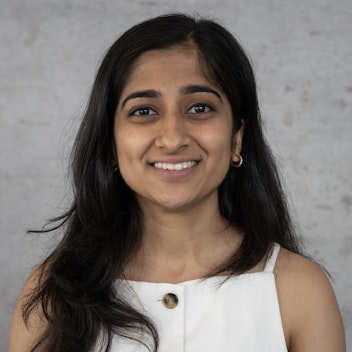
Bhumi Gagnani
Junior Researcher
Institute for Earth Observation
About
Bhumi Gagnani is an environmental engineer and an early-career researcher specializing in climate risk, environmental data analysis and water systems. She is currently pursuing a Master’s degree in Hydro Science and Engineering at Technische Universität Dresden, with academic and professional experience spanning India, Germany, and now in Italy.
Currently serving as a Trainee Researcher at EURAC Research, Bhumi works on the analysis of Alpine-wide high-impact precipitation and flood events using Python-based statistical and spatial methods. Her work focuses on identifying long-term spatial and temporal patterns in extreme precipitation.
Alongside her current role, Bhumi has contributed to interdisciplinary environmental research and education through positions at Technische Universität Dresden and Max Planck Institute for Biogeochemistry. At TU Dresden, Bhumi contributed to the development of open-source hydrogeology learning tools and multilingual educational resources, including Streamlit-based platforms and Python-driven automation workflows designed to improve accessibility for international students. During her research role at Max Planck Institute, she supported environmental modelling efforts through analysis and visualization of long-term water storage variability across multiple regions.
Before moving to Europe, Bhumi worked as an Environmental Engineer, contributing to industrial wastewater management, environmental compliance, pollution management initiatives, regulatory reporting, and stakeholder coordination for a Common Effluent Treatment Plant serving over 130 industries. Her work included research on sustainable textile production report and collaboration on environmental infrastructure upgradation.
Her broader interests include climate resilience, flood risk management, sustainability, and science communication. She is particularly interested in bridging technical environmental research with practical solutions through interdisciplinary collaboration and data-driven approaches to support practical and scalable solutions.








 My cookie preferences