Sviluppo di modelli predittivi causali per dati biomedici ad alta dimensionalità
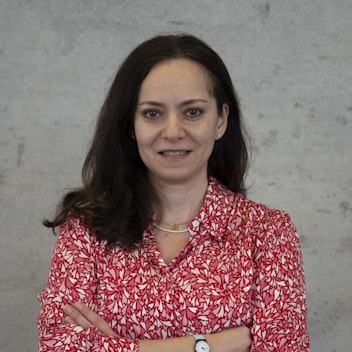
The CPM-HD project has been designed for the incoming mobility of Prof Mousumi Banerjee, Professor at the Department of Biostatistics of the University of Michigan School of Public Health, to implement a framework for causal predictive modeling of data from the Cooperative Health Research In South Tyrol (CHRIS) study, in collaboration with researchers of the Biostatistics & Epidemiology (Biostat&Epi) group at the Eurac Institute for Biomedicine (IfB).
With >13,000 participants and extensive molecular characterization, the CHRIS study is the most complete population-based study in Italy. Focused on cardiovascular, metabolic and neurological health, it accumulated bigdata from health and lifestyle interviews, blood and urine biomarkers, anthropometric measurements, molecular data panels including hundreds of metabolomic and proteomic measurements, comprehensive coverage of complex biological systems, and functional data from digital sensor technologies to assess human functions, including tremor, electrocardiograms and other, encompassing thousands of variables per participant. Such an unparalleled amount of data gives the opportunity to derive predictive models for individuals’ health based on combinations of a mixture of data type and quality.
Modern statistical techniques further allow using predictive models to identify causal factors for specific health conditions. However, endogenous and exogenous complexities related to the nature of the data and to the measurement methods challenge the implementation of appropriate statistical learning models. In CHRIS, the main statistical challenges include: missing data, including censoring due to measurement methods limitations; non-normality (multimodality); correlation between biomarkers; longitudinal data structures (repeated measurements); non-independent observations due to relatedness between study participants or clustering. Combined with the high dimensionality of the data, these challenges make the derivation of simplistic models often unreliable. Thus far, CHRIS, a resource on which Eurac has invested substantially over the years, has been exploited to identify genetic and non-genetic risk factors for health conditions and to estimate prevalence of common conditions.
Causal discovery represents the frontier ahead. Towards this goal, the CPM-HD project aims at defining an operational framework tailored to the CHRIS study. The project will be conducted by Prof. Banerjee in collaboration with senior researchers of the IfB.

- Project duration: -
- Project status:
- Funding: Provincial P.-L.P. 14. Mobility (Province BZ funding /Project)
- Institute: Istituto di biomedicina
Discover
Scopri esperte ed esperti, pubblicazioni e temi di ricerca collegati.








 Preferenze Cookie