


What’s the sound of snow in your language?
Words that imitate sounds are called ‘onomatopoeia’. They are a particular challenge in translation because each language transposes sounds to words differently. Learning the sounds made, for example, by animals in a foreign language can be fun but also puzzling: does a rooster really go ü-ürü-ü in Turkish? Of course it does!
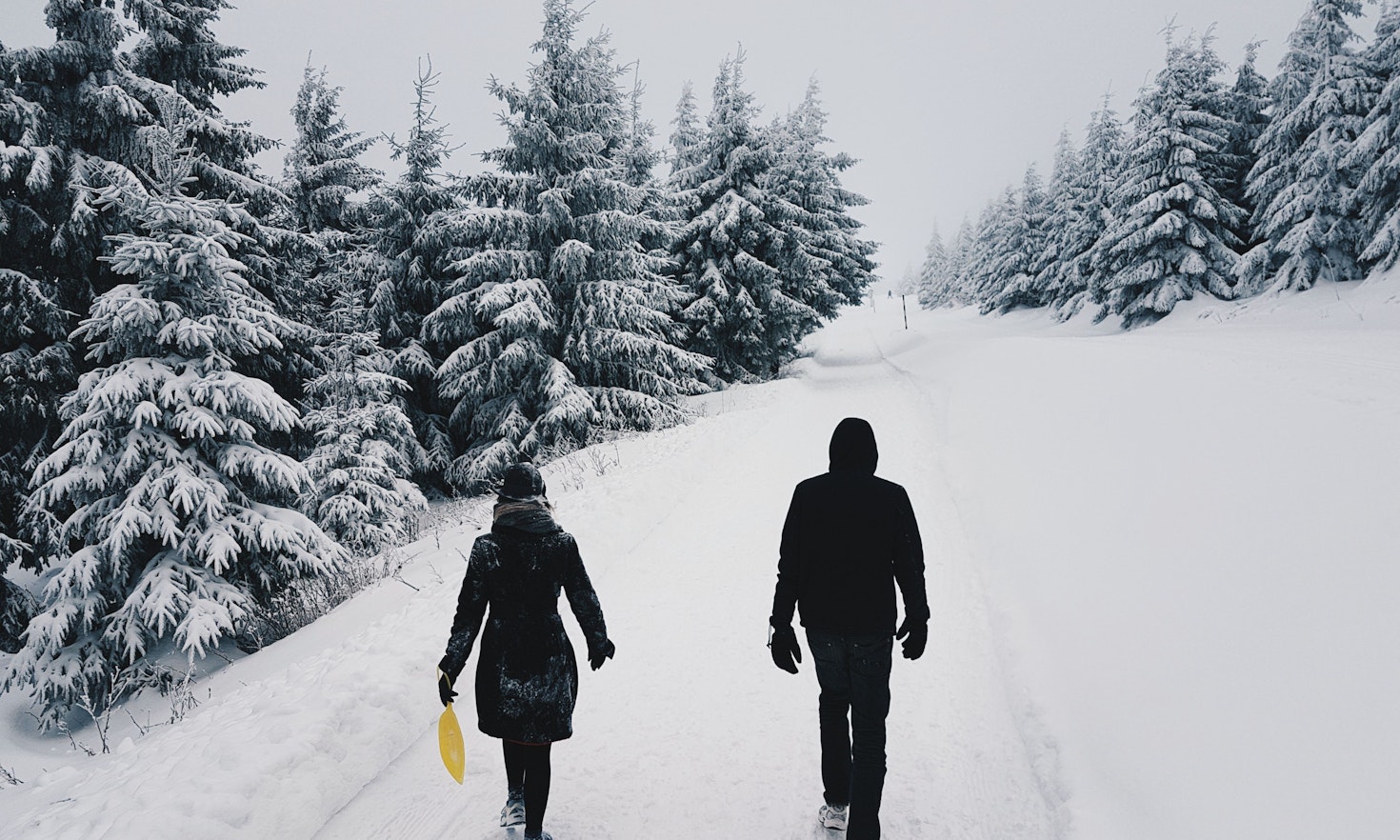
It’s mid-February in Vaasa, Finland. A Finnish colleague is waking us back to our hotels after a workshop. The sun is shining. It’s around minus 15°C. Everything is silent. We only hear the sound of our boots on the cold snow. “We call this sound nirskunarsku”, the Finnish colleague explains. We all feel that the word truly captures the ‘crunching’ under our soles. Or perhaps we should use ‘squeaking’, as in a scientific explanation of why treading on cold snow produces a particular sound.
We immediately think of our own languages to see whether we can match this great new word we’ve just learnt. “We would say that the snow škripa”, our Slovenian colleague states. I add that I would use Knirschen in German and in Italian – I have to think for a moment – maybe scricchiolio. Here we go: a series of onomatopoeic verbs and nouns that imitate the sounds of nature. Yet a bit differently in every language because – even though we probably all hear the same sounds – our languages and linguistic conventions made us select different forms to represent them.
Onomatopoeic words are formed from a sound associated with what is being named. Animal sounds are a typical example and frequent source of amusing cross-linguistic comparisons. Maybe because they have an ancient origin or because we generally learn them as toddlers through songs and books, we are convinced that cats ‘obviously’ meow (English) or miaou (French) or miao (Italian). However, elsewhere they just as obviously go nyan (Japanese) or yaong (Korean). For no apparent reason, the words for pig sounds seem to diverge more than those for cat sounds.
The translation of onomatopoeic words is context-dependent. It can pose a challenge and requires good cultural and translational competences. Imagine a Turkish children’s book where a rooster proudly wakes people with a German kikeriki or French cocorico rather than the expected ü-ürü-ü. Onomatopoeias are particularly relevant in poetry and literature as well as in comics. Quite interesting in this respect is the practice of leaving some of them untranslated in Italian editions of English-language comics. Consequently, gulp or sigh are well-known even by non-English speakers, who are likely to mispronounce them. Onomatopoeic words can be omitted in translation or replaced by non-onomatopoeic words or paraphrases. This can be due to missing correspondents in the target language or to differences in frequency or register. For instance, onomatopoeias are generally more frequent in Japanese than in Swedish, where many of them are regarded as characteristic of child language rather than adult language.
This leaves me wondering whether Inuit languages – given the widespread claim that they have a particularly rich vocabulary related to snow owing to the natural environment their speakers live in – have many more onomatopoeic expressions describing the sound of snow than my own languages. The claim has been widely debated and often invoked in support of linguistic relativism. However, it appears that Inuktitut does have a greater level of detail in naming frozen variants of water than English. Even Scots seems to fare comparatively well with regard to snow-related terminology. To date, however, there is no research on the number of snow-related onomatopoeias. So, what would you call the sound of walking on cold snow in your language(s)?

Elena Chiocchetti
Elena is a researcher in terminology and translation with an interest in smaller and minority languages. Normally she’s the one who asks the language-related questions…
Discover
Making research visible.
Find the connected experts, projects, publications, and research areas behind this blog post.


This content is licensed under a Creative Commons Attribution 4.0 International license except for third-party materials or where otherwise noted.








 My cookie preferences