


Il Duce, honorary citizen: Trento and other failed revocations
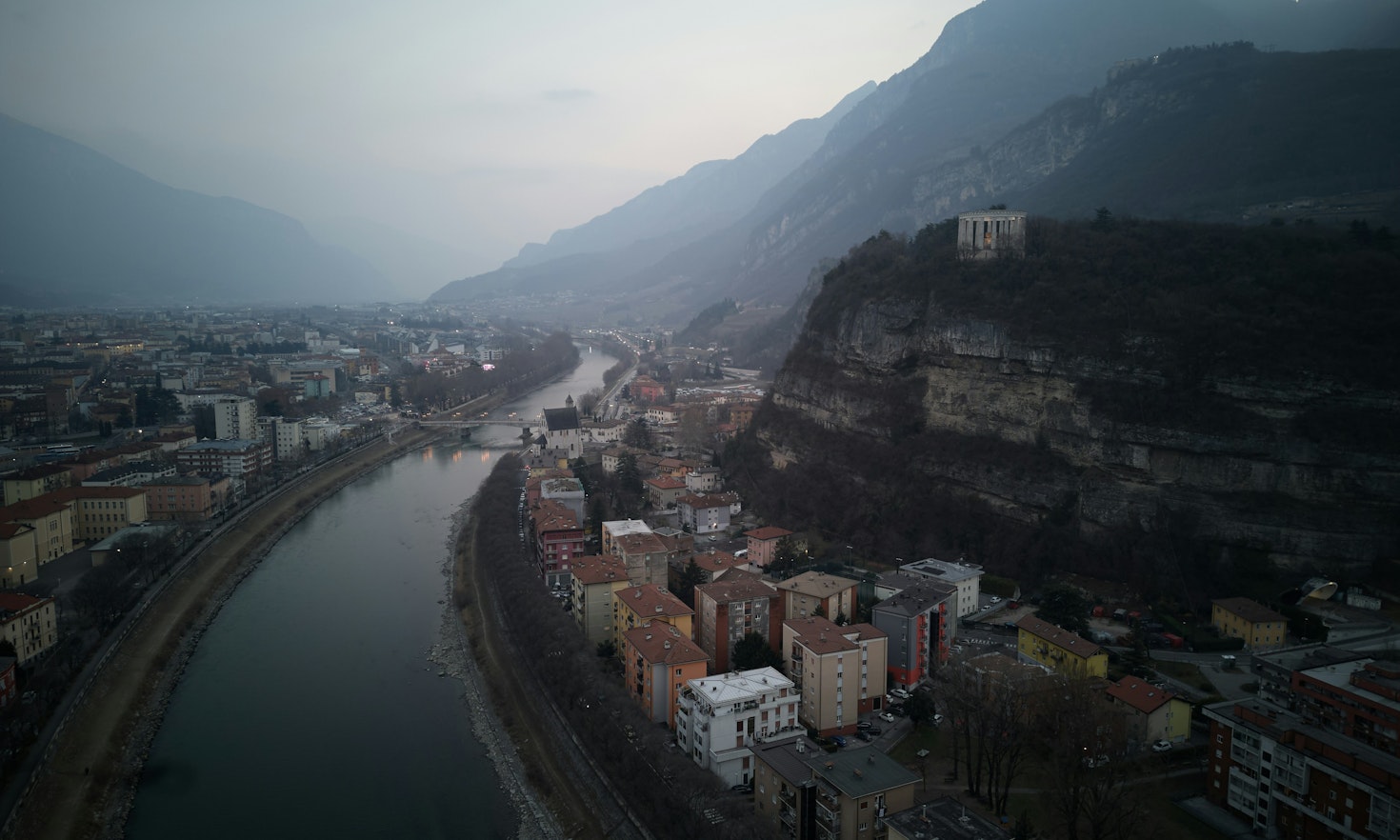
Benito Mussolini remains an honorary citizen in the northern Italian city of Trento. In March 2026, the municipal council of Trento voted on whether to strip Mussolini of the honorary citizenship the city had granted him almost a century earlier. The motion narrowly failed to reach the required majority, setting off debate across the region and beyond, including in Germany and Austria.
This is not an isolated incident. Trento is one of 20 instances in which a municipal council voted on revoking Mussolini’s honorary citizenship and the motion failed. Figure 1 shows, by province, the number of municipalities where such a vote was held in the last 15 years and failed to pass, and where that decision has not since been amended.


Debates about revoking Mussolini’s honorary citizenships arise periodically. Mussolini received honorary citizenship in thousands of Italian municipalities. While exact figures are unknown, it was estimated that in 1924, 6,694 out of the 9,148 municipalities (≈73%) in the Kingdom of Italy granted Mussolini honorary citizenship. This was part of an effort by the National Fascist Party between 1923 and 1924 to bolster Mussolini’s image and demonstrate popular support for the government by strategically conferring honorary citizenship through the local party branches.
It is unknown how many municipalities have since revoked the title. Honorary citizenship in Italian municipalities is purely symbolic, and they are well within their rights to bestow and revoke it as they see fit. It is likely many municipalities are unaware that Mussolini is an honorary citizen at all. There is no central record and municipal record-keeping is often unreliable. This leads to curiosities such as the case of Latina, where revocation was debated in 2021 – although, according to one source, the title had already been revoked in 1946.
Failed votes like Trento’s are, however, only half the picture: many municipalities have succeeded in revoking Mussolini’s honorary citizenship. Figure 2 shows this. While this map is far from complete due to limitations in how the data was collected, it shows that successful revocations are more common than unsuccessful ones.

Importantly, we can only observe the municipalities where this becomes a matter of contention; others may prefer the status quo and keep such issues off the local agenda. Some also hold the view that honorary citizenship expires upon death and consider the matter long concluded.
If the title is purely symbolic and freely revocable, why do these votes stir such controversy? It is especially the cases in which the title is not revoked that carry the topic into the wider political debate.
Events like the one in Trento are viewed critically against the background of the regression of Italian democratic quality since Giorgia Meloni’s Fratelli d’Italia (FdI) took over the government in 2022. The success of FdI and other far-right populist parties, such as Matteo Salvini’s Lega in 2018, has long been associated with Italy’s past. The argument is that Italy failed to sufficiently stigmatize its authoritarian past and is thus less likely to find the authoritarianism associated with many populist parties socially unacceptable. In this view, events such as Trento indicate that some Italians still harbor fascist nostalgia – or that Mussolini, fascist though he was, is viewed favorably as a strong leader. Indeed, Italy’s relationship with the past is a complicated one. Italian collective memory is in part shaped by an anti-fascist experience rooted in the popular armed resistance to fascism. In the final years of the Second World War, a civil war split the country. The fascist Italian Social Republic – led by Mussolini and supported by Germany – fought against the anti-fascist Resistance, backed by the Allies. After the war, members of the armed Resistance directly represented the anti-fascist front in Parliament, shaping the country’s collective memory around this experience. Whether this accurately reflects the average Italian citizen’s involvement in the fascist period is debatable, and it is only part of the story. A revisionist current exists. This has historically been represented by the neo-fascist Italian Social Movement (MSI). The party carried fascist nostalgia into the present day as it merged with other parties, split, and rebranded multiple times. The FdI can trace its party lineage to the MSI. How much MSI remains in FdI is debated: many authors, however, regard the FdI as the inheritor of the MSI’s fascist-revisionist views.
Against this historical backdrop, failed revocations of honorary titles are seen not only as debates about how to commemorate the past, but as occasions to question the political present given the outcome of such votes.
Italy is not the only country that had to examine its past after the Second World War. Germany is the natural comparison. During democratic transitions, the authoritarian past is ostracized and stigmatized in formal ways, such as constitutional bans of symbols or parties. Italy was no different: Transitory and Final Provision XII of the Constitution provides the legal cornerstone by prohibiting the reformation of a fascist party. However, compared with more “militant” democracies such as Germany, Italian law is more permissive regarding fascist symbolism. The comparison extends to honorary citizenship. Adolf Hitler, too, remained an honorary citizen in some towns, yet the Italian case is striking because failed votes on the revocation of Hitler’s honorary citizenship in German towns are almost unheard of. After the war, a directive of the Allied Control Council called for the revocation of all concessions and privileges granted to those convicted of war crimes, leading to widespread revocations of honorary citizenships. Hitler was a famous exception, as he did not live to stand trial, though even in his case, retaining the title is the exception rather than the norm among the roughly 4,000 municipalities that ever made him an honorary citizen. In the rare cases where such votes do fail, they are quickly put to another vote after appearing in the news. Such was the case in Dietramszell in Bavaria, where less than a week after the revocation failed, another vote, this time unanimous, successfully revoked the title. The municipal councilors who originally voted against the motion argued that this would equate to a cancellation of history. A week later, no such concerns were voiced. The stigma of even appearing to honor the dictator in Germany was too high.
This makes Italy’s failed revocations appear all the more curious – something distinctly Italian. As we have said, Trento is not an exception. Periodically, news of failed revocations surfaces, such as this year in Trento, two years ago in Gorizia, or more than ten years ago in Ravenna. Figure 1 showed that at least 20 of them have never been amended. But should they be? Mussolini is long dead, and the title symbolic. What then, is at stake in revoking – or refusing to revoke – the title?
A minority of Italians hold nostalgic views of fascism. Revoking an honorary citizenship is a way to reaffirm the democratic norms that stigmatize such nostalgia. Judging by the attempts that have failed, not all municipalities share this view. The predominant argument against revocation is that it would constitute an “erasure” of history or that no action is needed, as honorary titles end at death. The Regional Council of Trentino-Alto Adige/Südtirol has taken a position on this issue. After the failed revocation in the city of Trento, it passed a motion calling on the regional government to urge municipalities to revoke the honorary citizenships of fascists as a clear signal of support for democracy, the rule of law, and historical responsibility.
Perhaps, then, Mussolini’s days as an honorary citizen of Trento are numbered after all. Ravenna was in the same position in 2014, before revoking his title only four years later, in 2018.

Moritz Sparer
Moritz Sparer is a trainee researcher at the Eurac Research Institute for Comparative Federalism. He studied political science at Heidelberg University. His research interests include political participation, conflict and autonomy with a strong focus on computational methods in the social sciences.
Discover
Making research visible.
Find the connected experts, projects, publications, and research areas behind this blog post.


This content is licensed under a Creative Commons Attribution 4.0 International license except for third-party materials or where otherwise noted.








 My cookie preferences