Reimagining Water Futures: From World Water Day to Europe’s Circular Revolution
Every year on the World Water Day, the global community pauses to reflect on the value of water –our most essential and increasingly fragile resource. World Water Day is observed annually on 22 March to advocate for the sustainable management of water resources. Established by the United Nations in 1993, the day serves as a global call to action, drawing attention to water challenges faced by communities worldwide. Each year, a specific theme guides discussions, inspiring educational campaigns and local initiatives across the globe.
In 2026, this moment carries a special significance as it marks not only the urgency of climate induced water challenges but also the launching of a transformative European initiative: the official launch of the Fostering Water Circularity in peri-urban landscapes (FAIR) project, funded under the EU Driving Urban Transitions (DUT) Partnership to a sustainable future.
At a time when peri urban territories face mounting pressures – from droughts to extreme precipitation, from ecological degradation to rapidly shifting socio economic demands, FAIR arrives with a bold mission: to rethink how water is managed, designed, governed, and shared across the landscapes where cities meet countryside. These transitional areas often suffer the most from fragmented infrastructure and competing water needs, yet they also hold some of the greatest opportunities for circular, regenerative solutions. FAIR steps directly into the themes of resilience and transformation by developing an integrated decision making framework that links hydrological modelling, spatial design, governance analysis, and participatory processes. Rather than treating water as a linear, “take use-dispose” commodity, FAIR champions a circular water paradigm rooted in the 5Rs: Reduce, Reuse, Recycle, Recover, Restore. FAIR stands out for its ability to bridge diverse disciplines – hydrology, landscape architecture, environmental law, governance studies, spatial analytics – and channel them into coherent circular water strategies. Through hands-on workshops, living-lab approaches, and educational exchanges, the project will foster new forms of collaboration between academia and practice, between local communities and decision-makers.
Across selected European pilot areas, i.e. Midden-Delfland (The Netherlands), Weiz (Austria), and Prato (Italy), the project will co-design site-specific strategies that reflect distinct climatic zones and cultural contexts. These three peri urban regions become real-life laboratories where researchers, municipalities, water authorities, landscape architects, and citizens collaborate to map flows, envision alternatives, and test spatial solutions. As the EU advances its climate adaptation, biodiversity, and circular economy goals, peri urban areas remain essential yet often overlooked. FAIR directly supports European ambitions by increasing water security at regional and local scales, promoting nature-based and landscape-based approaches, generating replicable strategies for other European territories, and contribute to water sustainability. The World Water Day reminds us that climate risks are already reshaping our territories. FAIR responds by equipping communities with knowledge, tools, and pathways to build water-wise, resilient futures.
On this World Water Day, the launch of FAIR stands as a pledge to take action, drive innovation, and reimagine our connection with water – embracing approaches that are circular, equitable, and prepared for the challenges of the future.

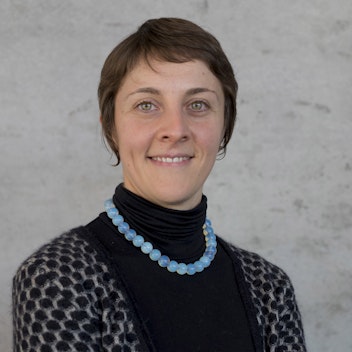
Mariachiara Alberton
PhD in Law and Economics (2007, University of Siena), Mariachiara Alberton is a senior researcher in environmental law at the Institute for Comparative Federalism, Eurac Research. Her research focuses on the multi-level governance of the environment, climate change and energy law, public participation in environmental decision-making, water law.
Discover
Making research visible.
Find the connected experts, projects, publications, and research areas behind this blog post.
This content is licensed under a Creative Commons Attribution 4.0 International license except for third-party materials or where otherwise noted.