


The necessity of qualifying democracy
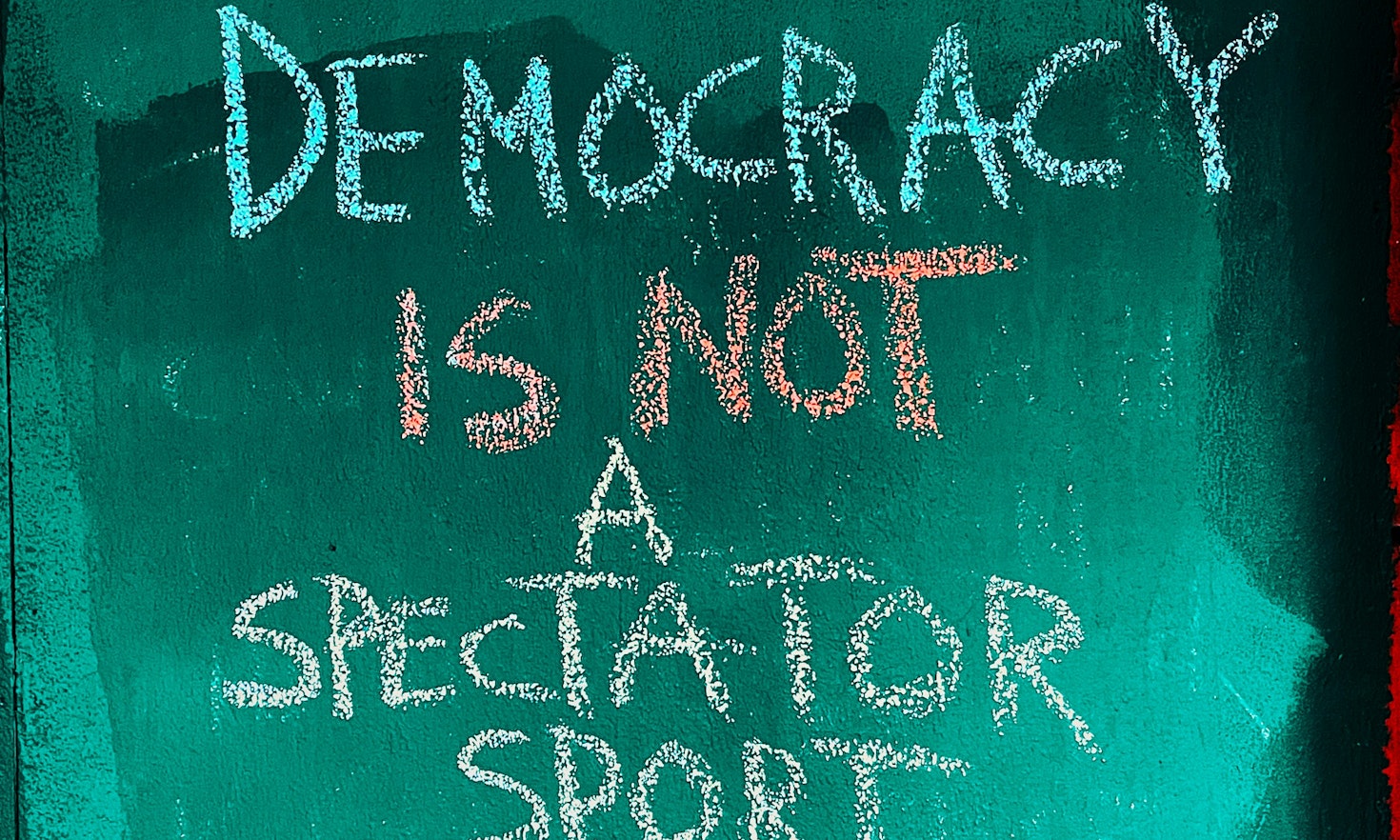
In recent years, global political debate seems to have once again structured itself around a sharp opposition: on one side, democracies; on the other, dictatorships. The term "democracy" is frequently invoked as a synonym for the Western model, contrasted with the various forms of authoritarianism present around the world. Yet, on closer inspection, this word alone is no longer enough.
With the end of the Cold War and the dissolution of the Soviet Union, the concept of democracy ceased to be (and perhaps never was) self-sufficient as a descriptive term. The concrete experiences of various states have shown that under that single label, profoundly different, sometimes even opposing, realities exist. It is from this awareness that scholars have developed the so-called theory of "democracy with adjectives"1 whereby to define a constitutional system exhaustively, the term democracy must be accompanied by a qualifying adjective that specifies and completes it. This article aims to analyze the differences between liberal and illiberal democracy, while also providing a number of further examples of how democratic models can be qualified.
Liberal democracy
The democratic model to which the media most commonly refer when contrasting it with dictatorships is the liberal one, largely developed in the United States and among the member states of the European Union, where its adoption is required as a condition of membership. Defining features of liberal democracy include the existence of a constitution aimed at regulating and limiting the exercise of public power in accordance with fundamental rights known as the constitutional rule of law; the separation of the three principal branches of the state (legislative, executive and judicial); political pluralism and the possibility for parties to alternate in the exercise of public power by winning elections which must be held in a free and competitive manner. Finally, a series of checks and balances oversees the exercise of public power by the majority forces, through a judiciary independent of the executive and legislative branches, and through constitutional justice bodies tasked with ensuring that the exercise of public power conforms to the constitution.2
Illiberal democracy
Over the past thirty-seven years, however, a further model has taken shape alongside the liberal-democratic system just described: illiberal democracy3. This is a system in which public authorities, though originating from a legitimate electoral process, deliberately pursue the dismantling of the mechanisms that limit the exercise of power, with the aim of establishing the long-term control of the dominant party.4
This process typically originates in a context of deep distrust among civil society towards the liberal-democratic system, perceived as incapable of responding to the genuine interests and needs of citizens. In this climate, political forces that present themselves as anti-establishment movements, characterized by a rhetoric of rupture with the traditional ruling class emerge. Electoral victory provides their leaders with a democratic legitimacy that is then used to begin dismantling liberal institutions from within. Elections constitute a paradoxically defining feature of these regimes, it is precisely for this reason that they have been termed illiberal democracies: despite the progressive erosion of most elements characteristic of a democratic state, electoral competition is formally maintained, albeit increasingly hollowed out of any real competitiveness by the dominant party.
Once power is consolidated, illiberal forces intervene in constitutions, amending or replacing them in order to neutralize their function as a limit and discipline on public power, transforming them into instruments serving the government’s program. A systematic attack on the principle of separation of powers invariably follows: parliament, controlled by the governing majority, is reduced to an implementing body for the will of the dominant party, while the judiciary is subjected to reforms aimed at curtailing its independence and its capacity to uphold the rule of law.5 Paradigmatic examples of this process have been evidenced in Poland and Hungary, both European Union member states, the former under the governments of the Law and Justice Party led by the Kaczyński brothers, the latter under the leadership of Viktor Orbán.6 A further defining feature of these systems is the systematic restriction of civil and political rights against those who oppose the majority’s agenda. In Hungary, under the Orbán government, the LGBTQ+ community was the target of markedly repressive policies: sexual orientation was legally equated with pedophilia, and in 2025, the Hungarian parliament adopted legislation aimed at preventing the LGBTQ+ Pride from taking place7 within the country.
Nonetheless, the Hungarian case offers a particularly interesting observation from a theoretical standpoint. In the elections of 12 April 2026, the Tisza party led by Péter Magyar defeated Orbán after his sixteen years of uninterrupted government, obtaining the two-thirds parliamentary majority sufficient to amend the very constitution upon which the illiberal regime had been built.8 This outcome demonstrates how illiberal democracy contains within itself a structural contradiction: by formally preserving elections as a tool of legitimation, it exposes the dominant party to the risk of being overthrown through that very same mechanism it had progressively employed. The survival of electoral competition, however compressed and distorted, thus proves to be not merely a defining characteristic of the model, but also its potential Achilles’ heel.
Further classificatory models
The divide between liberal and illiberal democracy represents the principal fault line within contemporary democratic systems, but it is not the only one. Scholars have developed further qualifications that deserve at least a mention. Electoral democracy describes systems in which electoral competition is formally present but coexists with significant restrictions on civil and political freedoms: elections are held, but in a context in which pluralism, freedom of the press and the rights of the opposition are constrained. Pseudo-democracy pushes this reasoning to its extreme, denoting regimes in which the outward forms of democracy – elections, parliaments, constitutions – are maintained as a façade, while power is in practice exercised in an authoritarian manner and without genuine contestability.9
In conclusion, the concrete experiences analyzed in this article demonstrate that any reference to today’s democratic model requires additional qualification. The simplistic opposition between democracies and dictatorships, however useful for communicative purposes, risks obscuring substantial differences within the very category of democracy: alongside the liberal model, hybrid illiberal democracies which share significant traits with dictatorships have emerged in which the curtailment of civil rights, attacks on the independence of the judiciary, control of the media, and the hollowing out of mechanisms that check power abound. The cases of Poland and Hungary, both European Union member states, have offered a clear illustration of this. Qualifying democracy is therefore not merely a doctrinal exercise, but an analytical and political necessity: without such qualification, the term risks becoming a screen behind which realities profoundly different from the liberal tradition it purports to invoke conceal themselves.
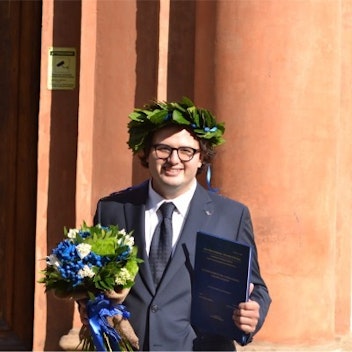
Agostino Gasperoni
Agostino Gasperoni, 28, holds a single cycle master degree in Law from the Alma Mater Studiorum University of Bologna. His thesis examined the value of the Rule of Law within the European Union, focusing on Hungary and Poland as case studies of democratic backsliding and analysing the responses of EU institutions in defence of the Rule of Law. Since his early academic years, he has specialised in comparative constitutional law, with a focus on democratic erosion and regime transitions. In February 2026, he took part in the Winter School on Federalism and Governance "Federalism and Innovation", organised by the Eurac Research Institute for Comparative Federalism and the University of Innsbruck.
Discover
Making research visible.
Find the connected experts, projects, publications, and research areas behind this blog post.


This content is licensed under a Creative Commons Attribution 4.0 International license except for third-party materials or where otherwise noted.








 My cookie preferences