


The Power of Play
Serious games as tools for conversation and change
War, fascism, homophobia, racism, sexism, division, discrimination, isolation, the threat of AI: all on the rise. It might not seem like a time for games. And yet, games can help us make sense of a complex world. Games are as old as humanity itself. They are not just a form of entertainment; they are also a fundamental way in which humans learn and connect. From ancient bones used as dice to stone-carved board games, early games were tied to rituals, fate and survival. They taught strategy, mirrored belief systems, and helped societies pass on knowledge and values.
Humans need games and that means serious games too – designed to achieve specific objectives such as education, training, or behavior modification, serious games blend gaming elements with learning strategies by creating spaces where people meet as equals: students, asylum seekers, and local communities. What makes serious games powerful is deceptively simple – they invite participation.
Roberta Medda-Windischer is a senior researcher and group leader for equality and diversity in integrated societies at the Eurac Research Institute for Minority Rights. As an international lawyer her works focuses on minority rights, minority issues, old and new minorities, diversity governance, civic education, non-discrimination policies. As part of her research, she has developed several serious games. Talking to her on the subject - her enthusiasm is palpable:
“Rather than explaining inequality or discrimination, serious games place you inside it – they are not just games, but tools for self-awareness, prompting reflection on shared values and one’s own beliefs.”
Roberta Medda Windischer
Take The House of Common Values. Players gather around a symbolic “house” and build narratives from everyday scenarios, connecting them to fundamental European values like dignity, equality, and solidarity. It sounds simple – and it is – but in that simplicity lies its strength. People who might never otherwise speak to one another begin sharing personal experiences, reflecting on values not as abstract concepts but as lived realities.
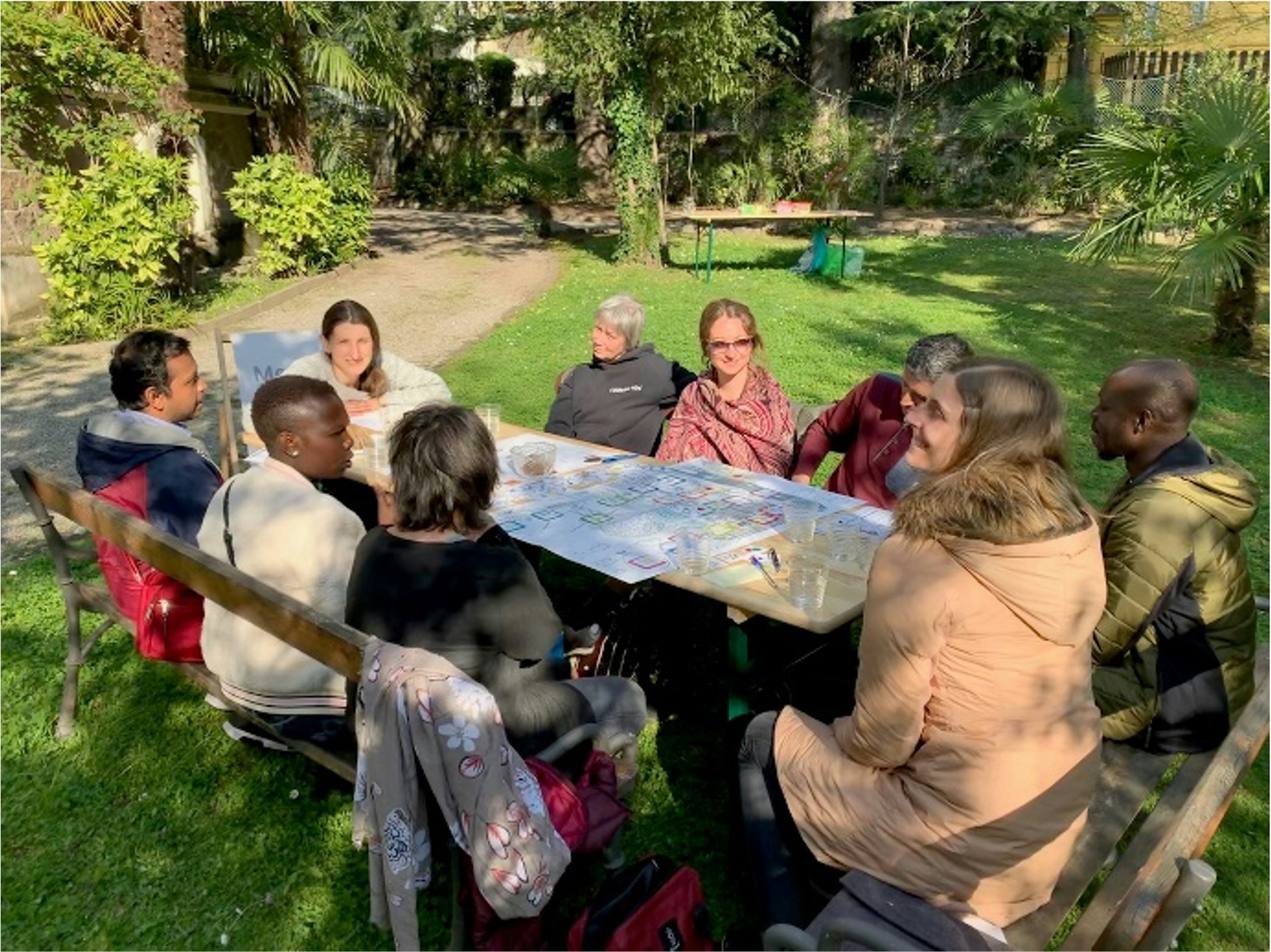
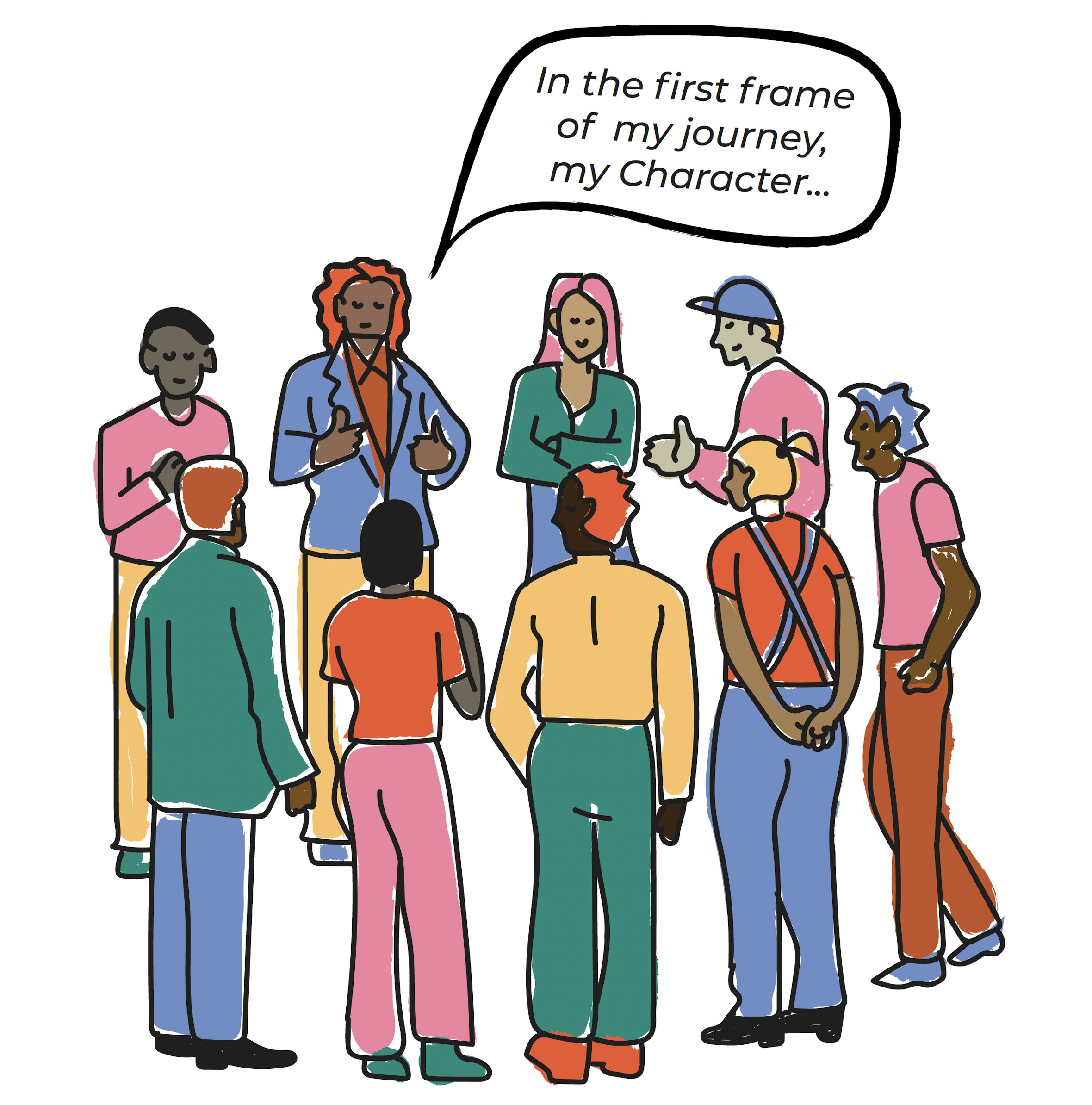
Consider In Search of the Lost Past – a role-play that reconstructs stories through backward journeys. Players begin with “possible endings” and work in reverse to build the scenarios that led there, exploring motivations by completing a character questionnaire. The process encourages discussion, participation, and a genuine effort to understand. Scenarios range from standing up for a mistreated teammate, to being drawn into and sharing extreme political views online, to framing a disliked colleague for theft.
An important dimension of Lost Past is peer interaction. Facilitators guide the process, but the real exchange of views happens among participants themselves – typically middle- and high-school students. Through this dialogue, teenagers develop critical thinking, discussion skills, and creativity, while becoming more aware of the consequences of their actions – or inaction. This peer-driven dynamic is one of the game’s core strengths.
Space Migrants is a serious game that simulates the exploration of stereotypes and discrimination in a safe, engaging way, encouraging reflection on cultural diversity by immersing participants in a fictional conflict between three communities on a distant planet. As tensions rise, players unknowingly reproduce stereotypes, power dynamics, and exclusion. Through guided reflection, participants uncover how prejudice operates and develop a more critical understanding.
Medda-Windischer recalls an example in which an illustration of a woman reclining on a couch while a man cooks or washes up in the background prompted divergent reactions. One participant – a woman with a migrant background – felt affronted by the scene, while a male participant with a similar background used it to reflect on how living in South Tyrol has given him the freedom to take on roles often seen as feminine – he loves cooking.
And then, perhaps the most disarming of them all, there is The Elevator – a recent example of a game developed by Eurac Research’s Center for Advanced Studies. On the surface, it is a game about moving up and down in a large apartment block. In reality, it is a sharp reflection of social mobility – or the lack of it. Players spin a wheel, face challenges, and rise or fall accordingly, but not always fairly. Some begin ahead, others behind – some are suddenly forced to compete with added disadvantages, hopping on one leg or playing with restrictions that make success frustratingly elusive. It is amusing, slightly chaotic, and unmistakably unfair – which is precisely the point.
Video: Eurac Research | Valeria von Miller
Elisa Piras, senior researcher at the Center for Advanced Studies at Eurac Research, explores social justice, identity, and power dynamics at the crossroads between political philosophy and international relations. In response to a request from the Le Mille e Una Scienza festival, she coordinated the taskforce that has developed The Elevator. She explains the purpose of the game:
“We didn’t want people to just learn about inequalities; we wanted them to feel what it’s like when the elevator doesn’t even stop at your floor. And in the meantime, we provided sound data on various aspects of inequality, sparking conversations that involved the players – many of them were kids – and their families.”
Elisa Piras
In a world shaped by binary algorithms and echo chambers, serious games ask people to put devices aside, look at one another, listen and engage. They do not eliminate disagreement, but they change how disagreement is expressed and experienced. This matters, the challenges surrounding diversity and integration, and social cohesion are not simply political or economic – they are deeply human. Policies can guide, frameworks can support, but neither can replace the moment when two people sit across from each other and begin to understand.
/








 My cookie preferences