
The 4th edition of the "Understanding Globalization" series delves into the production and dissemination of knowledge in a globalized world


Roland Benedikter, Tommaso Durante, Christoph Kircher, Kathleen Schlütter, Harald Pechlaner, Manfred Steger, Mirjam Gruber, Ingrid Kofler, James Mittelman, Zoe Krueger Weisel, Chiara Paris and Jennifer Altehenger
Credit: Eurac Research | Valeria von Miller
Opening of the conference with Harald Pechlaner and Roland Psenner
Credit: Eurac Research | Valeria von Miller
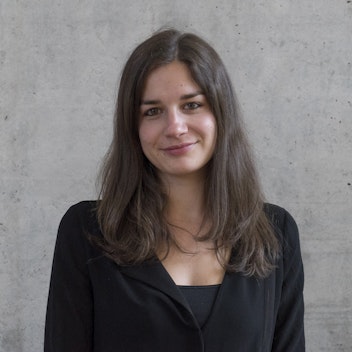
Kathleen Schlütter, Research Fellow at the Leipzig Research Centre Global Dynamics, Leipzig University
Credit: Eurac Research | Valeria von Miller
Kathleen Schlütter, Research Fellow at the Leipzig Research Centre Global Dynamics, Leipzig University
Credit: Eurac Research | Valeria von Miller
Jennifer Altehenger, Professor at the Faculty of History, Oxford University
Credit: Eurac Research | Valeria von Miller
Discussion with the audience at the "Understanding Globalization"
Credit: Eurac Research | Valeria von MillerNo signs of an end to globalization
Globalization researcher Manfred B. Steger, a returning guest at Eurac Research, analyzed globalization from a differentiated perspective, emphasizing the need of a theoretical framework first. Differentiation must be integral to globalization. Specifically, the concept of "social symbiosis" can be applied to globalization theory: "symbiosis" refers to the connection and interaction between different globalization formations, where no formation can exist without the others. He also highlighted that there are no signs of deglobalization — an end to globalization — nor indications of stronger regionalization.
Political philosopher Sebastiano Maffettone also presented a theoretical approach to globalization. He discussed political realism, liberal democracies, pacifism, and the possibility of a just war, particularly when it defends liberal democracies. Economist Henning Vöpel concluded his lecture on the waves, paradigms, and narratives of globalization with an outlook on the future of liberal democracies. They face a massive crisis of trust, where many citizens no longer believe that democracy can address the numerous crises in favor of the population. To renew this trust, new narratives are needed.

Discussion with the audience at the "Understanding Globalization"
Credit: Eurac Research | Valeria von Miller
Manfred Steger and Harald Pechlaner
Credit: Eurac Research | Valeria von Miller
James H. Mittelman, Professor at the School of International Service, American University
Credit: Eurac Research | Valeria von Miller
Discussion with the audience at the "Understanding Globalization"
Credit: Eurac Research | Valeria von Miller
Zoe Krueger Weisel, Manfred Steger, Ingrid Kofler and Tommaso Durante
Credit: Eurac Research | Valeria von Miller
Joint discussion with Tommaso Durante, Jennifer Altehenger, Henning Vöpel and Roland Benedikter
Credit: Eurac Research | Valeria von Miller
Henning Vöpel, Chairman of the Center for European Policy and Professor of Economics at the BSP Business and Law School
Credit: Eurac Research | Valeria von Miller
Christoph Kircher, Sociologist at the Center for Advanced Studies, Eurac Research
Credit: Eurac Research | Valeria von Miller
Roland Benedikter, Co-Head of the Center for Advanced Studies and UNESCO Chair in Interdisciplinary Anticipation and Global-Local Transformation, Eurac Research
Credit: Eurac Research | Valeria von Miller
Eric Gianaroli and Helena Nerl
Credit: Eurac Research | Valeria von MillerPromoting new generations in Globalization studies
Political economist James Mittelman presented possible scenarios for the future of globalization: the liberal, the catastrophic, and the hopeful scenarios. The future of globalization will be primarily a battle of ideas and a struggle of material and social forces, he emphasized. How can the decolonization of globalization succeed? The conference provided a pragmatic answer: it can only begin if white men step back and focus their energy on promoting new generations that do not share their profile.
The conference also featured the book presentation of "Globalization – Past, Present, Future" published by the University of California Press. Zoe Krueger Weisel, a political scientist at the Center for Advanced Studies, moderated a discussion with editors Manfred B. Steger and Ingrid Kofler, along with Tommaso Durante, researcher in Globalization and Mediatization. Finally, the journal "New Global Studies" (NGS, De Gruyter), published in collaboration with researchers at the Center for Advanced Studies at Eurac Research, was introduced. Christoph Kircher, a sociologist at Eurac Research and Managing Editor, provided insights into the journal's origin, thematic focus, and publication criteria.
Contact








 My cookie preferences